Which Is the Best Culinary School in Switzerland?
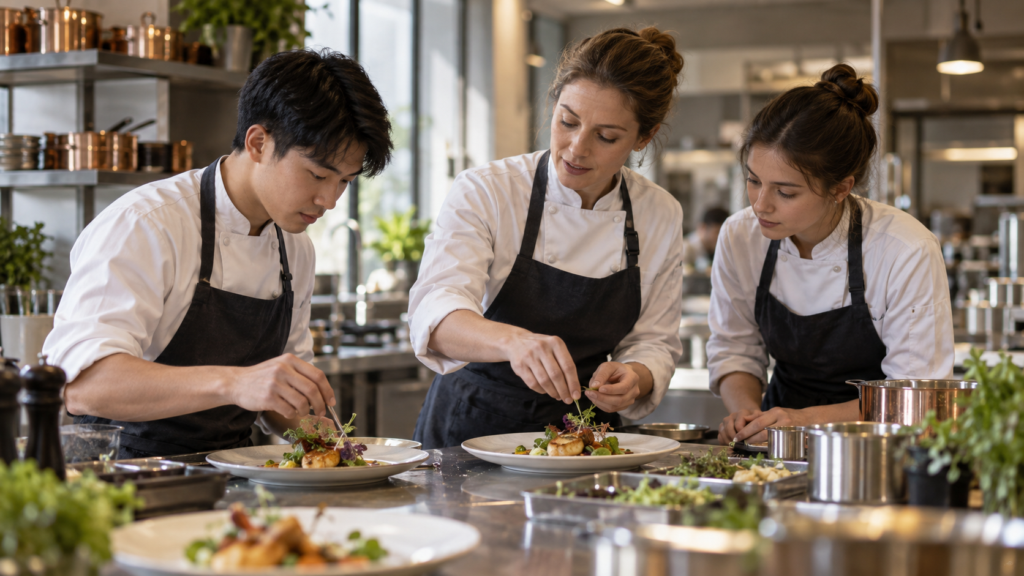
Ask chefs, admissions advisers and former culinary students which is the best culinary school in Switzerland, and their answers will likely differ. There is no single definitive answer, but there are some objective ways to compare culinary schools in Switzerland: rankings, programme breadth, practical training, industry links and graduate outcomes.
Among the schools shaping that picture, Culinary Arts Academy Switzerland (CAAS) holds a distinct position, as the only dedicated Swiss culinary school ranked in the QS Hospitality and Leisure Management top ten. On the shores of Lake Geneva, the teaching kitchens at Le Bouveret introduce students to the rhythm, precision and discipline of professional culinary life. Further into the bachelor’s programme, senior students combine creative, culinary and service skills to manage the public-facing Alpina restaurant in downtown Brig.
How Do You Choose the Best Culinary School in Switzerland?
Switzerland has a select number of culinary schools, many of which are closely connected to the country’s established hospitality sector. That alone makes the country worth serious consideration, even for students who did not expect to look there first.
Before comparing individual schools, it helps to understand what separates a good culinary programme from an exceptional one. A handful of criteria surface again and again in the research of prospective students and their parents. Students comparing the best culinary schools in Switzerland need to consider programme structure as carefully as reputation.
- Rankings and academic reputation. International rankings such as the QS World University Rankings by Subject offer an independent signal of how a school is regarded by employers and academics alike.
- Programme range. The strongest schools offer more than a single route in, from short diplomas to full bachelor’s and master’s degrees.
- Practical kitchen training. Cooking remains a craft learned by doing, so the number of kitchen hours and the calibre of the facilities matter as much as anything taught in a classroom.
- Internships and industry links. Structured internships place students in professional environments and can lead to valuable references, industry contacts and employment opportunities.
- Graduate outcomes. Where alumni go on to work says a great deal about how well a programme prepares its students.
- Language of instruction. Most international students look for English-taught courses, though some Swiss schools also teach in German or French.
- Cost and duration. Tuition fees, living costs and programme length vary considerably, so students need to assess the overall financial commitment at an early stage.
None of these factors stands alone. A school may rank well yet offer limited practical training, or have excellent facilities but a limited range of programmes. Weighing them together gives a far clearer sense of the best culinary school in Switzerland for a given student’s goals. For those planning to study culinary arts in Switzerland, the balance between kitchen training, internships and business education can shape the value of the experience.
Why Culinary Arts Academy Switzerland Stands Out
According to the 2026 QS World University Rankings by Subject, Culinary Arts Academy Switzerland (CAAS) is ranked 9th in Hospitality & Leisure Management, making it the only dedicated culinary school in the global top ten for the discipline. Most institutions ranked alongside CAAS concentrate on hospitality management more broadly, giving the academy a distinctive place within the global top ten.
What gives the ranking weight is that CAAS structures its bachelor’s programmes around a deliberate pairing of culinary technique and business education, covering entrepreneurship and restaurant management alongside knife skills and kitchen discipline. A student may begin by mastering classical techniques in Le Bouveret, test those skills during an international internship and later arrive in Brig ready to develop a restaurant concept and business plan.
This combination tends to appeal to students who want more than a chef’s qualification. It matters to anyone who eventually hopes to open a restaurant, lead a kitchen team or build a food business, rather than work exclusively within an established kitchen.
Faculty background is another point to bear in mind when comparing culinary schools. CAAS faculty members bring experience from professional kitchens, hospitality businesses and culinary education. The school maintains an ongoing connection to chef Anton Mosimann, whose personal archive lives on campus: decades of recipes in his own hand, menus from state banquets and private dinners, the kind of culinary history most students only ever encounter in books. For those who care about mentorship and industry contacts, that proximity to a working legacy can matter as much as a ranking position.
Graduate outcomes also merit attention. CAAS alumni have gone on to open and run restaurants, work in Michelin-starred kitchens, and win national culinary awards in their home countries after finishing their studies. Such outcomes do not guarantee an identical path for every graduate, but they do illustrate the range of directions a CAAS qualification can support.
What Can You Study at Culinary Arts Academy Switzerland?
The range of culinary courses in Switzerland extends from focused professional diplomas to bachelor’s and master’s study, and CAAS provides several entry points for students at different stages of their careers.
- Professional Swiss Diploma in Culinary Arts or Pastry Arts
- Bachelor of Arts in Culinary Arts
- Bachelor of Arts in Pastry, Bakery & Chocolate Arts
- Master of Arts in Culinary Business Management
Intake dates and entry requirements should always be confirmed directly with the school, as these can shift from year to year.
Where a student studies also shifts with the stage of their programme. Within the Culinary Arts bachelor’s programme, the first two years take place in Le Bouveret before students move to Brig for the final business-focused stage. Neither campus has the scale or pace of a major city, creating an environment in which students can concentrate closely on their training. Though for those intent on experiencing city life alongside their studies, it’s something to take into account.
Professional Swiss Diplomas
The Professional Swiss Diploma in Culinary Arts and the Professional Swiss Diploma in Pastry Arts are one-year, full-time programmes that include an internship. They are built for students who want focused, hands-on training without committing to a multi-year degree.
This route often appeals to career changers, or to students who already have some professional kitchen experience.
Bachelor’s Degrees in Culinary Arts and Pastry
The Bachelor of Arts in Culinary Arts and the Bachelor of Arts in Pastry, Bakery & Chocolate Arts both run for three years and include two internships along the way. The pastry pathway may also appeal to those seeking a specialist pastry school in Switzerland, with focused training in pastry, bakery and chocolate arts.
On the Culinary Arts pathway, students complete around 1,100 hours of practical kitchen work over the course of the degree: a considerable span of time at the stove, and one that reflects CAAS’s approach of pairing technical training with business subjects rather than treating the two as separate tracks.
Master’s in Culinary Business Management
The Master of Arts in Culinary Business Management is a one-year programme that includes one internship. It is aimed at career changers, aspiring food entrepreneurs and culinary professionals who already have industry experience and want to move into leadership or business roles.
Alongside approximately 240 practical kitchen hours, the programme places greater emphasis on business planning, management and entrepreneurship. It is particularly relevant to those whose long-term ambition is to lead or establish a food business.
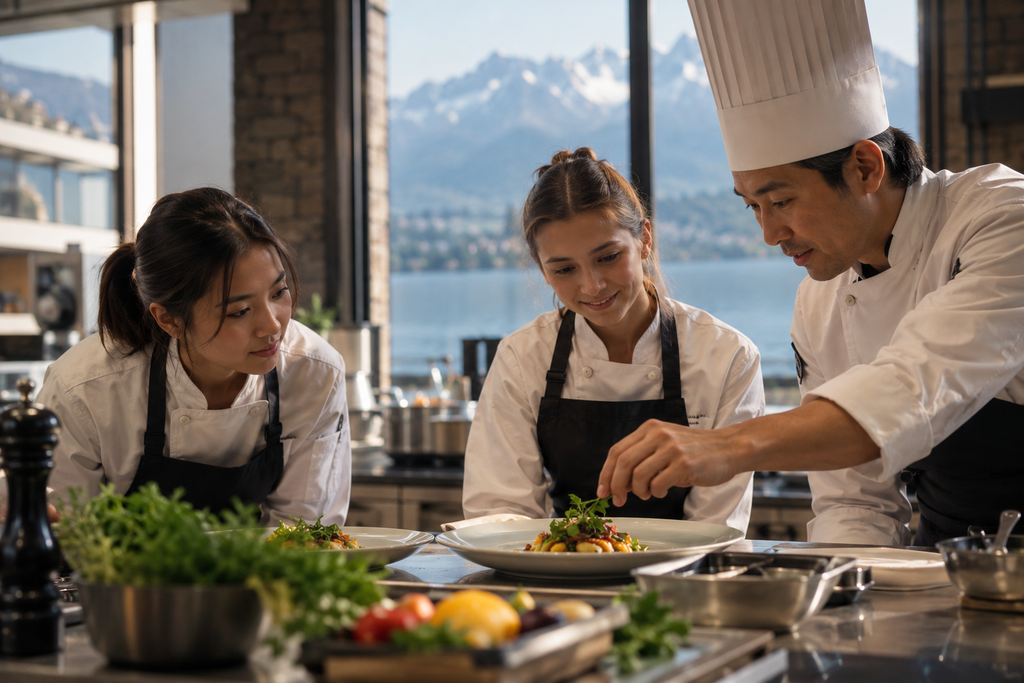
With programmes ranging from professional diplomas to bachelor’s and master’s degrees, CAAS allows students to shape their studies around their culinary interests and long-term ambitions.
How Much Practical Training Do Culinary Students Get?
Practical training is often the truest test of a culinary programme, more revealing than any list of modules on a prospectus. Cooking is learned by doing, and the amount of practical kitchen training a student completes can vary considerably between schools.
At CAAS, the Bachelor of Arts in Culinary Arts combines approximately 1,100 practical kitchen hours with restaurant operations and two six-month industry internships.
Internships matter for several reasons.
- They expose students to the pace and pressure of a professional kitchen, which differs markedly from a teaching kitchen.
- They build habits around teamwork, timing and consistency that are difficult to teach from behind a desk.
- They can lead to job offers, references or contacts that help graduates secure their first role after finishing their studies.
This kind of exposure connects to broader culinary and hospitality career opportunities, where hospitality graduates from Swiss schools have gone on to build careers well beyond the kitchen, in fields such as brand management, human resources and entrepreneurship.
At CAAS, placements are coordinated through the school’s career services team rather than left entirely to students to source on their own. Placements may be in Switzerland or abroad, depending on the programme and the student’s preferences, and past placements have included hotels, restaurants and catering companies connected to the school’s industry partners.
A worthwhile question during the application process to a culinary school is how internships are arranged, and who bears responsibility for finding them.
What Makes a Culinary Degree Different From Chef Training Alone?
Learning to cook well is one skill. Running a kitchen, a restaurant or a food brand is another entirely, and this is where a culinary degree tends to reach further than chef training on its own.
At CAAS, the bachelor’s curriculum includes subjects such as:
- Entrepreneurship
- Financial accounting
- Strategic marketing
- Restaurant design
- Food and beverage concept management
- Culinary events
These subjects sit alongside technical cooking modules rather than replacing them. The intention is that graduates leave equipped to open a restaurant, launch a food brand, move into product development or eventually take on a management role, alongside the ability to cook and create culinary concepts to a professional standard.
This model reflects a wider pattern across Swiss hospitality education, where schools tend to combine technical or service skills with business training rather than teaching the two in isolation.
If your sole ambition is to become a line cook or progress through professional kitchen roles, a shorter diploma may deliver that faster. But for anyone considering ownership, management or building something of their own in time, the business content woven into a degree of this kind can help them develop those capabilities during their studies rather than acquiring them later through professional experience.
Is Culinary Arts Academy Switzerland the Right Choice for You?
CAAS will not align equally with every student’s priorities, making a balanced assessment essential before applying.
It tends to appeal to those seeking:
- English-language study, with French or German included in selected programme stages
- Intensive, hands-on culinary training rather than a largely theoretical course
- A Swiss diploma or an internationally awarded degree through the CAAS pathway
- International internships built into the programme
- Business and entrepreneurship content alongside cooking skills
- Pastry or chocolate specialisation, where that is a particular interest
- A global student environment, with classmates drawn from many different countries
Before deciding, the final comparison should consider entry requirements, total budget, programme length and career direction across the available options. A one-year diploma and a three-year bachelor’s degree serve different professional aims, even within the same school. If you already have professional kitchen experience and want a fast, focused qualification, the diploma route will serve you better. A student beginning without previous culinary training, wanting a broader foundation that includes business skills, may find more long-term value in the bachelor’s pathway.
If CAAS seems to align with your ambitions, the natural next step is usually a campus visit or open day, followed by a direct conversation with the admissions team about entry requirements and start dates.
FAQ: Culinary Schools in Switzerland
What is the best culinary school in Switzerland?
There is no single official ranking that names one school as the best for every student, but Culinary Arts Academy Switzerland is the only dedicated culinary school currently listed in the QS World University Rankings by Subject for Hospitality & Leisure Management, ranked 9th globally in 2026. That places it among the strongest options for students seeking a recognised, career-focused qualification.
What is the number one culinary school in Switzerland?
Rankings shift from year to year, but CAAS has consistently held a strong position among culinary-specific schools, remaining the only one to appear in the QS Hospitality & Leisure Management top ten in recent years. Other Swiss schools rank highly for hospitality management more broadly, though they are not culinary-specific.
Is Switzerland a good place to study culinary arts?
Yes. Switzerland has a long-established tradition of hospitality education, strong industry connections across Europe, and several schools offering English-taught programmes with internships built into the course. That combination makes it easier for international students to gain professional experience alongside their studies .
Can international students study culinary arts in Switzerland?
Yes. CAAS teaches in English and welcomes students from many countries. Applicants typically need proof of English proficiency alongside academic documents and a passport copy.
What culinary degrees can you study in Switzerland?
Options range from one-year professional diplomas to three-year bachelor’s degrees and one-year master’s programmes, spanning culinary arts, pastry, bakery and chocolate, and culinary business management, depending on the school.
Do culinary schools in Switzerland include internships?
Internship structures vary between institutions. At CAAS, the bachelor’s programmes include two internships, while the professional diplomas and master’s programme each include one.
What is the difference between a culinary diploma and a culinary bachelor’s degree?
A diploma is shorter, usually around a year, and centres mainly on technical kitchen skills with one internship. A bachelor’s degree runs for around three years, includes further internships and practical hours, and adds business subjects such as marketing, accounting and restaurant management alongside the cooking curriculum.