Best International Schools in Switzerland
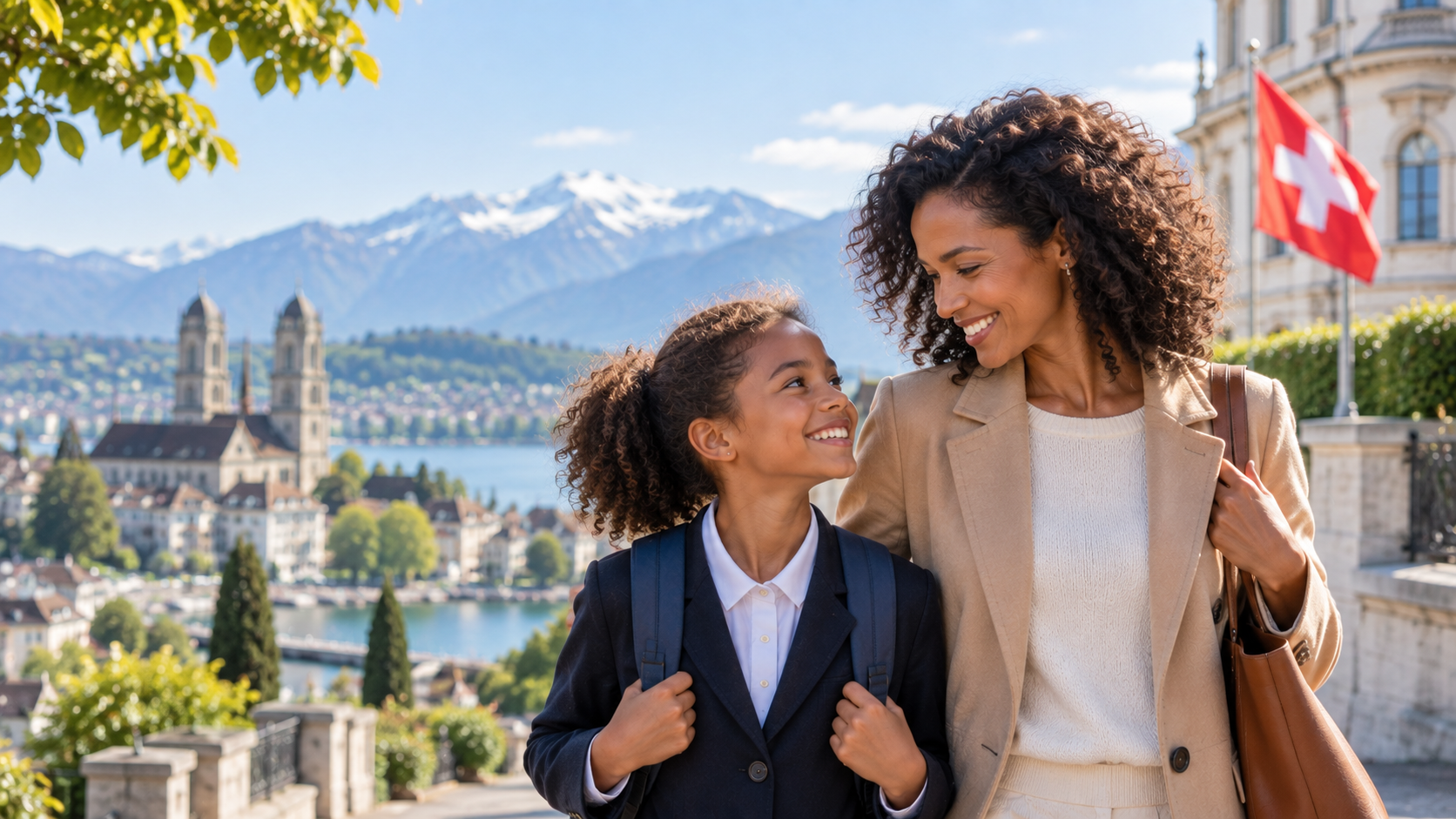
If you’re relocating to Switzerland with children, you’ve probably already noticed just how many options lay before you. Switzerland is one of the leading destinations for international education in Europe, home to international schools with long histories that cater to expat families, diplomatic postings, globally mobile households, and parents who want boarding or multilingual education for their child.
Some schools follow the International Baccalaureate, others prepare students for British, American, or Swiss qualifications, and many teach in two or three languages at once. Cities like Geneva, Zurich, Lausanne, and Zug each have their own concentration of schools, shaped by the international organisations and companies based there.
This guide walks through how international schools in Switzerland are structured, what to look for when narrowing down your options, and which schools tend to suit different types of families. The goal isn’t to hand you a single “best” answer, but to help you figure out which school is the best fit for your child.
Education system in Switzerland
Switzerland doesn’t run one single national curriculum. Each of the 26 cantons manages its own state school system, usually taught in the local language: German, French, Italian, or Romansh.
This is exactly why international schools exist for many international families. They offer instruction in English (often as well as French or German), follow curricula recognised abroad, and make it easier for children to switch countries again later without losing academic continuity.
Most international schools in Switzerland follow one or more of these pathways:
- International Baccalaureate (IB) – Primary Years, Middle Years, and Diploma Programmes
- British curriculum – IGCSEs and A-Levels
- American curriculum – leading to a High School Diploma, often with AP courses
- Swiss Matura – the Swiss school-leaving qualification, useful for Swiss university entry
- French Baccalaureate or German Abitur – for families planning to return to France or Germany
Many schools combine two or three of these, so don’t assume a school only offers one path.
How we selected the best schools
The best international school in Switzerland depends on your child’s age, language background, preferred curriculum, university goals, need for boarding, and the canton or city you live in. There’s no single right answer that applies to every family.
With that in mind, we compiled this list by looking at:
- Curriculum, qualifications, and accreditation
- IB, British, American, and Swiss Matura pathways
- Academic results and university destinations
- Boarding provision and pastoral care
- Language of instruction and multilingual support
- Age range, fees, and location
- Campus facilities and extracurricular activities
- Student wellbeing and parent reputation
- Support aimed specifically at expat and globally mobile families
Top international schools in Switzerland
Switzerland’s international schools are spread across French, German, and Italian speaking regions, so where you choose to live will naturally narrow your shortlist. Below are some schools to consider, representing different cities and curricula.
- Institut Le Rosey (Rolle, Vaud) is a full boarding IB school for ages 3–18, known for splitting the year between campuses in Rolle and Gstaad.
- Aiglon College (Chesières-Villars, Vaud) combines British and IB pathways for ages 7–18, with outdoor education built into the weekly timetable.
- TASIS The American School in Switzerland (Lugano, Ticino) provides an American curriculum in addition to the IB Diploma for ages 3–19, one of the few established options in Italian-speaking Switzerland.
- Zurich International School (Wädenswil, Zurich) covers ages 3–18 with American, IB, and Swiss strands, taught bilingually in English and German, and is a common choice near the Zurich financial and tech corridor.
- Institut auf dem Rosenberg (St Gallen) serves ages 6–19 with American, British, and IB pathways, with fees at the higher end reflecting a low student-to-teacher ratio.
- Collège du Léman (Versoix, Geneva) is one of the larger schools on this list, with around 1,900 students aged 2–18, offering IB alongside American, French, and Swiss routes for families unsure how long they’ll stay.
- Ecole Internationale de Genève (Ecolint) runs three campuses in Geneva, each teaching the IB in English and French, so families with children at different ages can find a campus suited to each stage.
- International School of Lausanne (Le Mont-sur-Lausanne) teaches the IB from age 3–18 in English and French, popular with families working in Lausanne’s biotech, sport, and hospitality sectors.
- International School of Basel (Reinach) covers ages 3–19 and appeals to families connected to Basel’s pharmaceutical and life sciences industry.
- Institut Montana Switzerland (Baar, Zug) combines Cambridge, IB, and Swiss curricula for ages 6–19 with flexible boarding, reflecting the international mix drawn by Zug’s low corporate tax rate.
Quick comparison table
The table below offers an at a glance comparison of some of Switzerland’s leading international schools, making it easier to compare their location, curriculum, boarding options, and key strengths.
| School | City / Region | Curriculum | Ages | Language | Day / Boarding |
|---|---|---|---|---|---|
| Institut Le Rosey | Rolle, Vaud | IB | 3–18 | English, French | Full boarding |
| Aiglon College | Chesières-Villars, Vaud | British, IB | 7–18 | English, French | Day, full boarding |
| TASIS | Lugano, Ticino | American, IB | 3–19 | English | Day, full boarding |
| Zurich International School | Wädenswil, Zurich | American, IB, Swiss | 3–18 | English, German | Day |
| Institut auf dem Rosenberg | St Gallen | American, British, IB | 6–19 | English | Day, boarding |
| Collège du Léman | Versoix, Geneva | IB, American, French, Swiss | 2–18 | English, French | Day, boarding |
| Ecolint (3 campuses) | Geneva | IB | 2–18 | English, French | Day |
| International School of Lausanne | Le Mont-sur-Lausanne | IB | 3–18 | English, French | Day, boarding |
| International School of Basel | Reinach | American, IB, Swiss | 3–19 | English, German | Day |
| Institut Montana Switzerland | Baar, Zug | Cambridge, IB, Swiss | 6–19 | English, German | Day, flexi/full boarding |
Rather than treating this as a ranking, use it to narrow your options. The best choice will depend on factors such as your budget, where you live, and your child’s age and language requirements.
Types of international schools in Switzerland
Switzerland’s variety of international schools each has a different mix of curricula and approach to learning. Understanding your options will help you choose the school that best fits your child’s needs and future goals.
IB schools in Switzerland
The IB is the most widely available international curriculum in Switzerland. Many families choose it because it’s recognised by universities worldwide, which matters if you expect to move again. Ecolint, Collège du Léman, and the International School of Lausanne all run IB programmes from the primary years through to the Diploma.
British international schools in Switzerland
Schools offering IGCSEs and A-Levels tend to appeal to families planning a return to the UK, or applying to UK universities later. Aiglon College and the British School of Geneva both follow this route, often combined with IB options.
American international schools in Switzerland
TASIS, along with sections of Zurich International School and Institut auf dem Rosenberg, offer American High School Diplomas, often with Advanced Placement courses, suiting families connected to US universities or employers.
Swiss curriculum and Swiss Matura schools
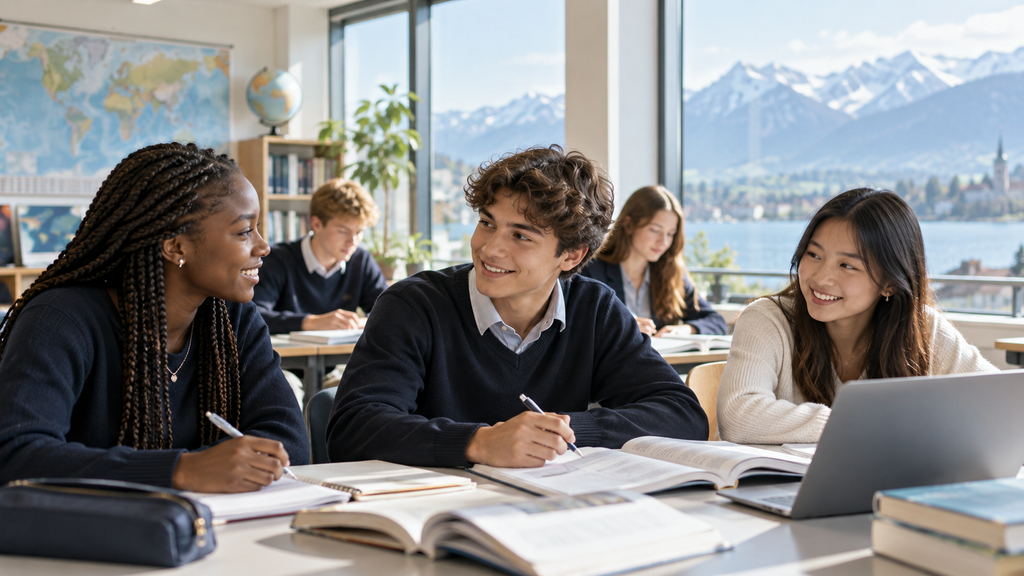
If there’s a reasonable chance your family will stay in Switzerland long-term, the Swiss Matura is worth asking about. Schools like Institut Montana and Zurich International School offer it alongside international options, keeping that door open without committing to it early.
French, German and bilingual international schools
Several schools in Geneva and Lausanne teach bilingually in English and French, while schools around Zurich and Basel often combine English and German. This can build genuine fluency, though it means a heavier workload in the early years while both languages are being established.
Boarding international schools in Switzerland
Switzerland has a long-established boarding sector, including Le Rosey, Aiglon, and TASIS, each with a different balance of academics, outdoor life, and pastoral structure. For a closer look, read our full guide to the best boarding schools in Switzerland.
By comparing the different school types, you can make a more confident decision and find the best fit for your child and your family.
International school fees in Switzerland
Fees vary a lot, and the range can catch new arrivals off guard. Day tuition generally starts around CHF 12,000–20,000 a year for younger year groups, rising toward CHF 35,000–40,000 for secondary students. Boarding fees run considerably higher, often CHF 60,000–100,000 annually, with a small number of schools charging well beyond that.
A few factors drive these differences:
- Age group – secondary and diploma years cost more than early years
- Boarding versus day – full boarding includes accommodation, meals, and pastoral supervision
- Curriculum breadth – multiple qualification pathways often mean higher fees
- Class size – smaller teacher to student ratios naturally lead to higher costs
- Location – Geneva and Zurich schools are generally pricier than those in smaller towns
On top of tuition, ask about registration fees, building levies, uniforms, transport, and trips, as these can add a meaningful amount to the headline figure.
How can parents make the right choice?
Choosing the right school is one of the most important decisions you will make for your child. By focusing on your family’s priorities and your child’s individual needs, you can make a choice with greater confidence. It helps to work through this in a rough order:
- Start with logistics. Where will you be living and working, and how far are you willing to commute daily?
- Think about curriculum continuity. If you might move again, IB or a curriculum matching your likely next destination can reduce disruption.
- Consider your child specifically. Some children do better at a smaller, closer-knit school; others thrive with a larger, more resourced campus.
- Factor in language goals. Decide whether you want immersion in French or German, or an English-medium environment right now.
- Visit if you can. Photos and websites rarely capture the daily rhythm of a school, and an open day often tells you more than a prospectus.
No school will tick every box. Your family may end up prioritising two or three factors and treating the rest as acceptable trade-offs.
How does the admissions process in Switzerland work?
Admissions timing varies by school, but a few patterns are common across most international schools in Switzerland.
- Applications usually open 6–12 months before the intended start date, earlier at schools with limited spaces.
- Documentation typically includes school reports, references, and sometimes test results.
- Assessments are common for older students, often covering language, maths, and an interview.
- Waitlists are normal at popular schools, particularly in Geneva and Zurich, so apply early for flexibility.
- Mid-year entry is often possible, useful if your relocation date doesn’t align with the usual September start.
Contacting the admissions office directly, rather than relying on the website, is usually the fastest way to get a clear answer on availability.
FAQ
Are international schools in Switzerland worth it?
For families who expect to relocate again, or who want their child to continue in English, they’re often worth the cost. Whether they’re worth it for you depends on your budget, how long you plan to stay, and whether local Swiss schools might meet your needs just as well.
Which curricula can families choose from?
Most schools offer the IB, British (IGCSE/A-Level), American (High School Diploma), or Swiss Matura pathways, often combining two or more. Check exactly which route a school offers at the age your child will be entering.
Is the IB available in Switzerland?
Yes. It’s the most common international curriculum in the country, offered at schools including Ecolint, Collège du Léman, and the International School of Lausanne, among many others.
Are there boarding schools for international students?
Yes. Switzerland has a well-established boarding sector, including Le Rosey, Aiglon College, and TASIS, offering full, weekly, or flexi-boarding depending on the school.
Are these schools a good choice for expat children?
Generally yes, particularly for families who may relocate again. Pastoral teams tend to be experienced with transitions, and the student body is usually more internationally mixed than at local Swiss schools.
Which Swiss cities are best for international schools?
Geneva, Zurich, Lausanne, Zug, and Basel each have a strong concentration of schools, shaped by the international organisations and companies based there. Smaller Alpine towns like Villars and Leysin are known more for boarding schools than day schools.
Do schools in Switzerland teach in English?
Many teach primarily in English, often alongside French or German depending on the region. Bilingual programmes are also common, particularly for younger children, so check the language balance if fluency in a second language matters to your family.