Running a Hotel Before You Graduate: The Power of Experiential Learning
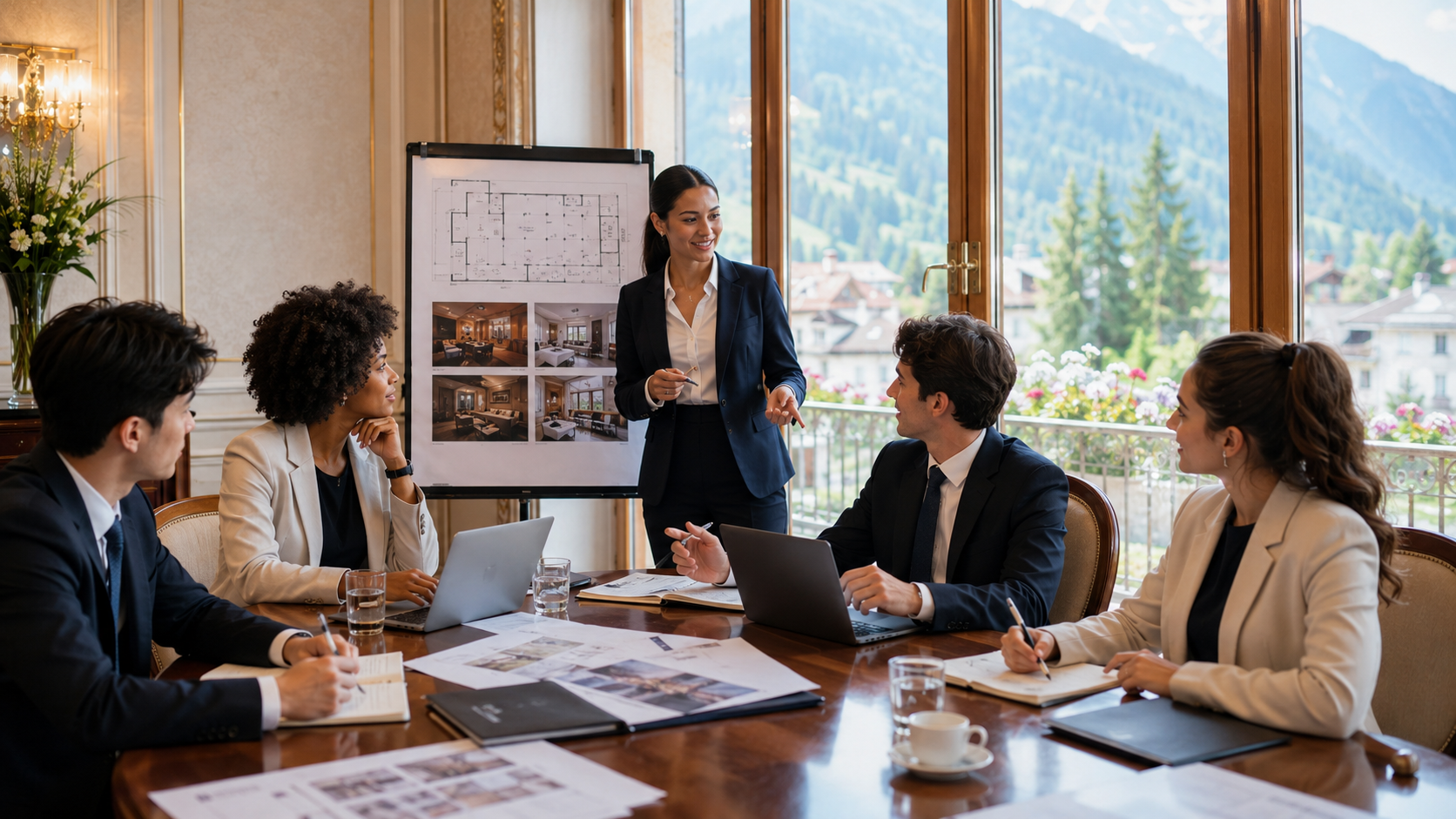
Experiential learning in hospitality is redefining the future of hospitality education. In an industry shaped by human connection, operational precision, and exceptional service, true expertise is rarely developed through lectures alone. Hospitality is learned through experience, through the rhythm of service, the orchestration of operations, the anticipation of guest needs, and the quiet discipline required to deliver excellence consistently.
At its heart, hospitality is “the expression of care and consideration, the art of making others feel valued and welcomed, no matter the context,” as defined by Swiss Hotel Management School (SHMS). This is why experiential learning in hospitality is one of their defining pillars of modern hospitality management education.
At Swiss Hotel Management School students begin developing leadership, operational awareness, guest relations expertise, and business decision making abilities long before entering the industry professionally. Immersed in environments that mirror the realities of luxury hospitality, they gain firsthand insight into hotel operations and the art of creating exceptional guest experiences.
Why Experiential Learning Matters in Hospitality Education
Hospitality is unlike most industries in that it intricately combines elements of business, psychology, culture, and service. Every detail matters, and every interaction leaves an impression. A guest isn’t, and shouldn’t, be aware of the operational complexity behind a seamless stay. Instead, they remember how they felt welcomed upon arrival, and the attentiveness, warmth, and efficiency demonstrated during their stay. Delivering such experiences requires far more than theoretical knowledge.
Experiential learning in hospitality education bridges the distance between academic understanding and professional instinct and allows students to move beyond observing hospitality into actively practising it.
Within immersive hospitality learning environments, students begin to understand:
- How service excellence is sustained
- How leadership functions during high pressure operations
- How guest experience influences reputation and loyalty
- How departments operate in harmony
- How hospitality businesses balance elegance with operational efficiency
This approach transforms hospitality education from passive learning into lived experience.
The modern hospitality industry increasingly seeks graduates who possess both emotional intelligence and commercial awareness. Employers expect future professionals to lead teams confidently, communicate across cultures, respond to operational challenges with composure, and understand the financial realities behind luxury service.
These qualities are cultivated through repetition, responsibility, observation, and real operational exposure.
What Does “Running a Hotel Before You Graduate” Really Mean?
The phrase may initially sound aspirational, yet within leading Swiss hospitality schools, students participate in remarkably authentic operational experiences long before graduation.
This doesn’t imply that students independently manage luxury properties without guidance. Rather, they are gradually immersed into operational environments designed to reflect the standards, expectations, and pace of the global hospitality industry.
Learning Through Real Hospitality Operations
At Swiss Hotel Management School, education extends well beyond the classroom.
Students engage directly with hospitality operations through experiences that may include restaurant and fine dining service, front office procedures, guest service simulations, event coordination, banqueting operations, hospitality design projects, spa and wellness operations, resort management exposure, and luxury guest experience training.
Within these environments, students begin to understand the cadence of hospitality. They learn how elegance is maintained even during demanding operational periods. They discover how exceptional service depends upon precision, communication, and anticipation.
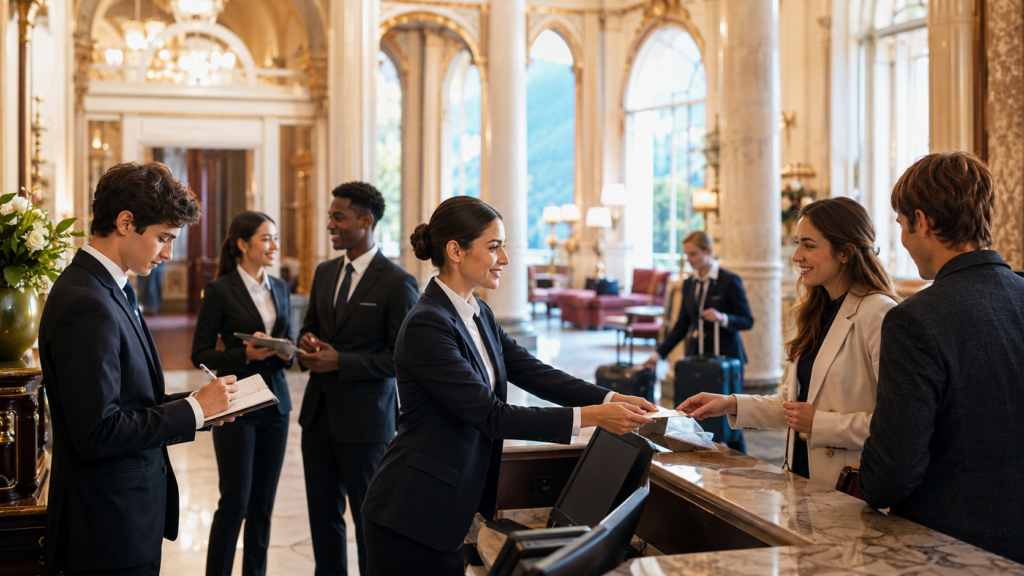
Practical hospitality training transforms abstract concepts into instinctive professional habits.
Understanding How Hotel Departments Work Together
Luxury hospitality operates as a carefully choreographed ecosystem. From the moment of arrival to departure, every interaction is influenced by the coordination between front office teams, housekeeping, food and beverage operations, events departments, wellness facilities, guest relations, and management.
Experiential learning allows students to witness how interconnected these systems truly are. A delayed room preparation may affect restaurant reservations. A large-scale event may influence staffing across multiple departments. A guest concern at reception may require collaboration between operations, housekeeping, and management simultaneously.
Understanding this interconnectedness is one of the defining advantages of experiential learning in hospitality. Students begin to think beyond individual departmental roles, developing the perspective and confidence needed to oversee the guest journey as future hospitality leaders.
Taking Responsibility in a Supported Learning Environment
One of the most valuable aspects of hands-on hospitality education is the opportunity to take responsibility within a structured and supportive environment. Students are encouraged to make decisions, solve operational challenges, and respond to guest expectations while guided by experienced faculty and hospitality professionals.
At Swiss Hotel Management School, learning extends beyond individual departmental roles, cultivating the perspective and confidence needed to oversee the guest journey as future hospitality leaders. The experience of managing real scenarios, even within an educational setting, creates a level of preparedness that traditional classroom learning alone cannot replicate.
This is made possible in part through close collaboration with industry partners. As Patrick Taffin d’Heursel, Dean of SHMS, explains: “By partnering with industry leaders, SHMS delivers world-class programs like this Master, empowering students with the skills to stand out and succeed. This is the essence of our core value: mastery.”
How SHMS Brings Experiential Learning to Life
Swiss Hotel Management School has built its educational philosophy around immersive Swiss hospitality education and operational learning.
A Hospitality School Built Around Practical Learning
SHMS embraces a philosophy of “learning by doing,” placing experiential learning at the centre of hospitality education.
Rather than separating theory from practice, students continuously apply academic knowledge within operational and experiential settings throughout their studies.
Students participate in hospitality projects, simulations, and operational learning experiences that mirror international hospitality management. This comes to life through student-led events such as “Hearts Behind the Masks,” a charity gala supporting the ICRC’s Ukraine family-links programme, and International Day, a bi-annual multicultural talent show and culinary banquet. These events give students hands-on experience in event coordination, guest flow, and service orchestration.
Particularly distinctive is the school’s exposure to spa management and resort management. Within luxury hospitality, wellness and resort operations continue to expand rapidly, yet relatively few hospitality schools offer meaningful operational insight into these sectors.
SHMS stands among the very few hospitality schools in the world to offer students access to an on-campus spa learning environment, allowing them to experience firsthand how wellness operations function within luxury hospitality.
This level of operational exposure gives students a rare understanding of the growing intersection between hospitality, wellbeing, and luxury guest experience.
Learning in Historic Swiss Palace Hotels
The learning environment itself forms part of the educational experience at SHMS.
Students study within historic Swiss palace hotels transformed into immersive hospitality campuses.
The Caux campus is housed within the iconic Caux Palace overlooking Montreux, originally built in 1902 as one of Europe’s grand luxury hotels. Historical guests included Rudyard Kipling and John D. Rockefeller.
In Leysin, students study within former Belle Époque palace hotels set against the Swiss Alps and connected by a private Skytrain.
These environments offer far more than visual beauty. They immerse students in the traditions, atmosphere, and standards associated with Swiss hospitality excellence.
Practical Projects, Events and Simulations
Experiential learning at SHMS is deeply integrated into student life.
Students may participate in fine dining operations, hospitality events, guest service simulations, hospitality concept development, operational planning exercises, spa and wellness experiences, and hospitality design projects that reflect the breadth of the luxury hospitality industry.
From planning a charity gala banquet to producing a full-scale multicultural celebration, students gain real ownership over budgets, menus, entertainment, and guest experience from concept to execution.
These experiences encourage students to think creatively while maintaining the discipline and professionalism expected within luxury hospitality.
Internships and Industry Exposure
Hospitality internships remain one of the most influential elements of hospitality management training.
SHMS maintains strong partnerships across the global hospitality industry, allowing students to gain exposure to internationally recognised luxury brands and hospitality employers.
These experiences allow students to translate operational learning into professional environments while building international industry networks. The results reflect the effectiveness of this approach. According to SHMS, 90% of graduates receive more than one job offer before graduation.
Key Skills SMHS Students Develop Through Experiential Learning
Experiential learning in hospitality develops a unique combination of technical capability and human centred leadership.
Leading a Team When the Pressure Is On
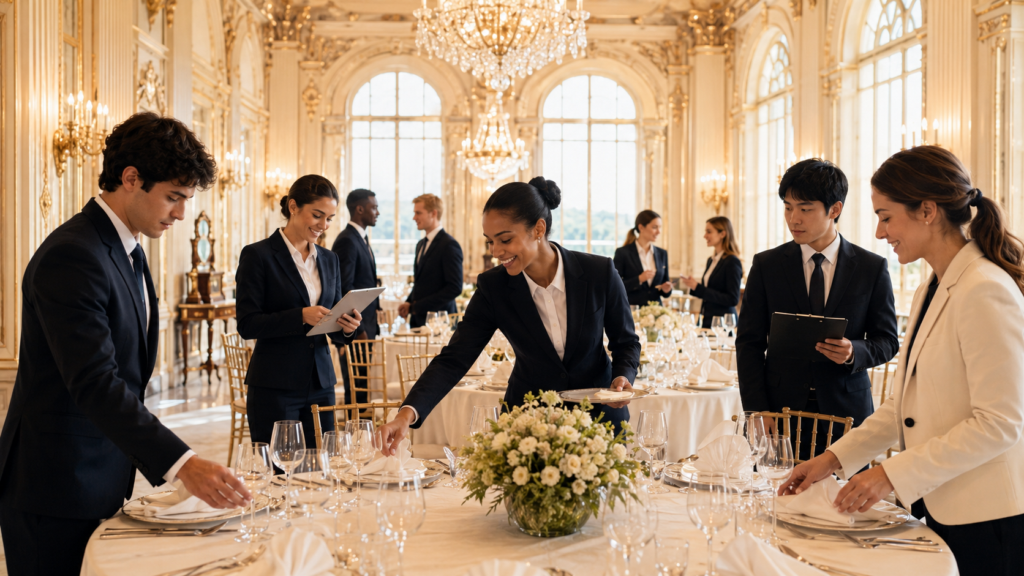
A fully booked banquet hall, a last-minute staff shortage, and guests arriving within the hour is where hospitality leadership actually happens. Guiding a team calmly through pressure like this, while still holding service standards steady, is a skill students build through repetition: coordinating with others, making fast decisions, and adjusting when plans change.
What Makes a Guest Feel Truly Welcomed
Luxury is rarely just about aesthetics or facilities. More often, it’s expressed through attentiveness, anticipation, and thoughtful service. When students organised International Day, for instance, delivering a seamless multicultural banquet meant reading the room, adjusting to unspoken guest needs, and treating every cultural detail with care. Guest relations training sharpens this instinct further, covering personalised service, professional etiquette, and cross-cultural communication until service excellence becomes second nature rather than a checklist.
Staying Composed When Plans Fall Apart
What happens when a demanding timeline collides with an unexpected guest request?
Hospitality operations are dynamic by nature, and unexpected changes are the norm rather than the exception across hotels, resorts, and events. Experiential learning teaches students to stay composed, prioritise quickly, and protect the guest experience even as circumstances shift. Over time, these moments build a resilience that carries through an entire hospitality career.
Understanding the Business Behind the Service
Service expertise alone isn’t enough. Students also need to understand how day-to-day operations connect to profitability, brand positioning, and long-term business performance.
Through practical exposure, including budget awareness, revenue management, and strategic decision-making, students start to see the commercial logic behind luxury hospitality standards. It’s this balance of operational sophistication and business understanding that prepares graduates for leadership roles across the industry.
Experiential Learning Beyond Hotel Operations
Hospitality experiential learning today extends far beyond traditional hotel functions.
Orchestrating a Flawless Event
Behind every polished gala or banquet is a tight web of decisions made in real time. Students involved in event and banqueting operations learn how atmosphere, timing, logistics, and service interact to shape memorable occasions.
Running events like Hearts Behind the Masks means managing guest flow, coordinating suppliers, and keeping service seamless even as details shift right up to the moment guests arrive. These skills extend naturally into luxury events, tourism, brand experiences, and international hospitality management.
What Happens Behind the Kitchen Door
Few areas of hospitality demand as much coordination under pressure as food and beverage. Students gain practical insight into restaurant operations, service sequencing, guest interaction, culinary coordination, revenue optimisation, and the standards that shape luxury dining experiences. This hands-on exposure sharpens both commercial instinct and the finer points of service.
Hospitality’s Next Chapter
Guest expectations don’t stand still, and neither does the industry. Experiential learning encourages students to engage with hospitality business development, innovation concepts, guest experience enhancement, hospitality technology, luxury branding, and sustainability initiatives shaping the future of the industry. SHMS supports this forward-looking mindset through its recognition as an Apple Distinguished School, built around creativity, collaboration, and innovation in learning environments.
Earning a Guest’s Trust
While service excellence is about the moment, guest relations is about what lingers after it. Students learn how to anticipate expectations, handle concerns with professionalism, and navigate cultural nuances with confidence, building the kind of trust that turns a single stay into lasting loyalty.
Why Experiential Learning Prepares Future Hospitality Leaders
Hospitality leadership isn’t something you can pick up by watching from the sidelines. It has to be practised.
Leadership Learned in the Moment
Leadership within hospitality requires presence, judgement, adaptability, and emotional intelligence. Students who participate in operational environments begin developing these qualities naturally through experience. A student coordinating a charity gala doesn’t read about accountability, they feel it the moment a vendor is late and thirty guests are already seated.
Confidence builds through repetition, and composure builds through pressure, until leadership stops being something students study and becomes something they simply do.
Where Service Meets Strategy
Exceptional hospitality leaders understand both operational elegance and commercial performance. Behind every flawless banquet is a budget that had to balance and a client relationship that had to be cultivated.
Experiential learning draws that connection out early: guest satisfaction and business success, service quality and brand reputation, all become part of the same decision rather than separate concerns. This is precisely the kind of thinking a student develops while planning something like a large-scale charity event, where hospitality and business sense have to move together.
Ready for a Global Industry
Hospitality remains one of the world’s most international industries. Organising an event like International Day, where cultures and cuisines from across the student body come together in a single celebration, gives students a preview of exactly this kind of environment. Beyond operational practices, they gain exposure to global perspectives, communication styles, and cultural expectations that carry directly into their careers.
Graduates from SHMS pursue careers across luxury hotels, wellness resorts, hospitality consultancy, events, tourism, and international hotel groups. Alumni have gone on to work with organisations including Marriott International, Hilton Worldwide, Jumeirah, and InterContinental Hotels Group.
How to Choose a Hospitality School With Strong Experiential Learning
Students considering hospitality education should look beyond rankings alone.
A strong hospitality school should provide:
- Immersive operational learning
- Structured hospitality internships
- Exposure to luxury hospitality standards
- Leadership development opportunities
- International learning environments
- Industry connected projects
- Practical business experience
- Guest relations training
- Spa and resort management exposure
The learning environment itself also matters profoundly.
Historic campuses, real operational facilities, luxury hospitality settings, and experiential simulations often provide a far richer educational experience than purely classroom based programmes.
Conclusion
Experiential learning in hospitality represents far more than an educational trend. It reflects the reality of how hospitality excellence is truly developed.
Through immersive operational experiences, leadership opportunities, guest relations training, and business exposure, students cultivate the judgement, confidence, and sophistication required within global hospitality careers.
At Swiss Hotel Management School, students experience hospitality education within historic Swiss palace hotels where learning becomes deeply connected to the realities of luxury hospitality itself.
From fine dining and guest experience to spa management, events, and international operations, students begin shaping their professional identity long before graduation.
At SHMS excellence is not merely studied. It is practised, refined, and lived.
Frequently Asked Questions (FAQ)
What is experiential learning in hospitality?
It’s an approach to hospitality education where students learn through hands-on involvement in hotel operations, such as front office work, guest service, and event coordination, rather than through lectures alone. This builds professional instinct alongside academic knowledge.
Why is practical experience important in hotel management?
Hotel management blends business, culture, and service delivery in ways that are hard to grasp through theory alone. Practical experience shows students how departments coordinate and how decisions affect guests and profitability, building real judgment and confidence.
Can hospitality students really run hotel operations before graduating?
Not independently, but through guided immersion. Students take on real responsibilities in operations like dining service, front office, and events, supported by experienced faculty throughout.
How does experiential learning prepare students for hospitality careers?
It helps students connect service quality with business results and builds the composure needed to lead teams under pressure. Immersive, multicultural learning environments also prepare them for international careers.
What skills do students gain from hands-on hospitality education?
Key skills include leadership and teamwork, guest experience and service excellence, problem-solving under pressure, and business and operational thinking. Together, these combine technical know-how with people-centred leadership.
Why choose SHMS for experiential hospitality education?
SHMS is built around “learning by doing,” with campuses in historic Swiss palace hotels like Caux Palace and Leysin’s Belle Époque properties, plus rare access to an on-campus spa. Strong industry ties help 90% of graduates receive more than one job offer before graduation.