From Boxes To Belonging
Moving abroad involves more than logistics, as families also need time to adjust emotionally to a new home and community. A few thoughtful choices before and after the move can help everyone settle in and feel at home sooner.
Written by Ivana Zady, Zen Interiors
You have done this before. The passports are stamped, school uniforms ordered, and the shipping container is somewhere midocean. In a few weeks, you will walk into an empty house in a new city and begin again.
However well you know the logistics by now, the customs forms, the utility accounts, the school enrolment deadlines, the emotional side of a move rarely gets easier. Children grieve leaving their friends behind. Partners quietly absorb the weight of rebuilding while finding their feet in an unfamiliar city. Everyone holds their breath, waiting for the moment the new place finally starts to feel real.
The good news? That moment doesn’t have to take as long as you fear. Research into how families adjust to international relocation, including a 2018 review in Frontiers in Psychology, consistently finds that the families who settle fastest are not the ones who unpack quickest. They are the ones who make a handful of deliberate choices: before they leave, and in each of the four weeks after they arrive.
Before You Leave: The Groundwork
The weeks before a move are chaotic by nature. But within that chaos there is a window for a few simple things that pay enormous dividends once you arrive.
Have the conversation
Sit down with your family, over dinner, on a walk, and ask everyone, including the youngest, what makes a place feel like home to them. The answers are almost never about furniture. Children tend to name rituals: Saturday morning pancakes, a particular bedtime story, the Sunday evening film. Adults usually talk about rhythm, a morning coffee routine, a familiar meal at the end of a long day. These are the things that travel with you. Knowing what they are, means you can protect them deliberately, rather than losing them in the chaos of the move.
Declutter together
Involve your children in decisions about their own belongings, letting a child choose which toys to donate to a local school, rather than having things quietly disappear, makes them a participant in the move rather than someone it is simply happening to. Fewer boxes also means less overwhelm at the other end.
Pack a ‘first night’ bag for everyone
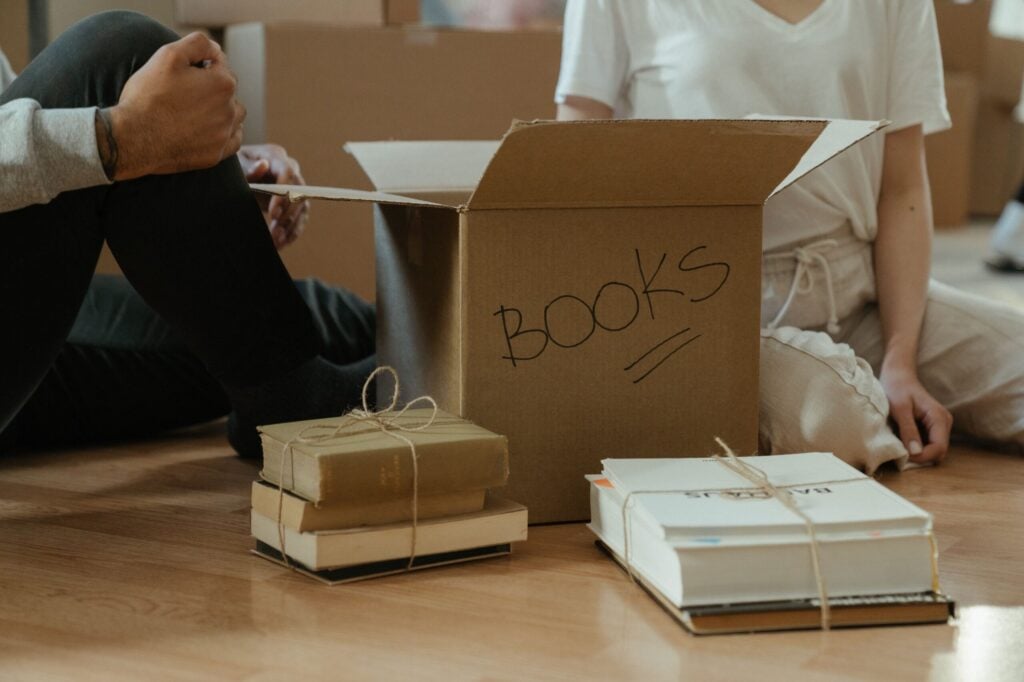
Before anything goes into the container, set aside a bag for each member of the family. A favourite soft toy, a particular pillow, the coffee you like, the book on your nightstand. On the first night in a strange place, each person can reach for something that feels like theirs. It’s a small act, but it carries real weight. It says: home travels with you.
Week One: ANCHOR
Focus this week: Bedrooms, One cosy corner, Familiar food
Week one has a single priority: sleep and food. That’s it. The urge to unpack every box and have the house fully functional within days is understandable, but it almost always leads to exhaustion and the particular despair of unpacking in a state of overwhelm.
Set up the bedrooms first. Make the beds as soon as you can. Let the children unpack their first night bags and arrange their things, this small act of claiming a space matters more than it might seem. Stock the kitchen with enough to cook familiar meals. And before the week is out, create one cosy corner somewhere in the house, a sofa with a throw, a rug with cushions, somewhere the family can sit together even while everything else is still in boxes. That corner becomes the emotional heart of the home in those early days.
Week Two: FLOW
Focus this week: Daily routines, School bag spots, Light, Explore the neighbourhood
By week two, the focus shifts from surviving to settling. This is the time for the small decisions that reduce daily friction: where do the school bags live? Where will homework happen? What does the morning routine look like in this new space?
These feel like minor logistics, but they are not. Studies on family wellbeing during periods of disruption, including research published in Frontiers in Psychiatry, consistently show that predictable daily routines are one of the most effective ways to support children through stressful change. Knowing where things are and what happens next is genuinely stabilising, especially for younger children.
Attend to light too. Open the curtains, add lamps to rooms that feel dim or institutional. The quality of light in a home has a measurable effect on mood, and a bright, warm interior sends a signal, to the family and to the nervous system, that this is a living space, not a waiting room.
This is also the week to start exploring. Find the nearest bakery, the local market, the park. Let the children lead some of these discoveries. The moment a place starts to have a ‘your’ café or a ‘your’ route home, it stops being a strange city and starts being somewhere specific and known.
Week Three: PERSONALISE
Focus this week: Photographs up, Children’s rooms, Plants, Memory objects
An empty wall is what makes a temporary house feel temporary. Week three is the time to layer in the visual identity of your family. Hang the photographs. Put up the artwork, the pieces collected over years of travel, the drawings your children made last year, the print you have moved with you three times already. Use removable adhesive hooks if you need to; the fact that you are renting is not a reason to live in a visual blank.
Give children ownership of their own rooms. Let them hang what they want and arrange their things however they like. For a child navigating a new school and a new social world, having a room that genuinely reflects who they are provides a stability that nothing else quite replicates.
Add a plant,or pick up flowers from the local market. There is something about tending to a living thing that anchors people to a place. And when you are ready, unpack the memory objects: the souvenirs from previous postings, the heirlooms, the things that carry your family’s particular history. A home layered with the artefacts of a well-travelled life tells a story. That story is what makes a house unmistakably yours.
Week Four: CONNECT
Focus this week: Open the door, Coffee morning or playdate, Build beyond the school gate
A home does not exist in isolation. One of the clearest findings in research on how internationally mobile families adjust is that building connections beyond the household, even early, tentative ones, is one of the strongest predictors of how well a family settles.
Once the house is functional enough, invite people in. A casual coffee morning for a few school families, a playdate, it doesn’t need to be more than that. The state of your interior is irrelevant. A halfsettled home can be just as warm and welcoming as any other if the people in it are present and generous. In fact, there is something disarming about inviting people into a house that is still a work in progress. It signals that connection matters more than performance. Most people find it a relief.
CHILDREN AND THE MOVE
Children absorb the emotional state of the adults around them. When parents are anxious or resistant, children feel it, even when nothing is said. When parents approach a move with steadiness and intention, children are far more likely to follow.
Younger children often settle faster than parents expect, as long as the basics are in place: sleep, routine, physical comfort, and the people they love nearby. Older children and teenagers tend to take longer, and their adjustment is more likely to depend on social connection than on anything happening at home. For them, what matters most is whether they have begun to feel seen at school, and whether they have at least one friendship that feels real.
THE BIGGER PICTURE
Families who move repeatedly across international postings are developing, whether they realise it or not, one of the most valuable things a family can have: the ability to create a sense of belonging wherever they land. They begin to understand that a home is not a fixed address, it’s a set of rituals, relationships, and small daily habits that travel with you.
Children who grow up watching their parents build a home in one country, then another, then another absorb a quiet confidence: that unfamiliar places are interesting rather than threatening, that who you are doesn’t depend on where you are.
The boxes will be unpacked. The photographs will go up. The children will, eventually, stop mentioning the old house. The local café will learn your order. Home doesn’t wait for all of that to happen. It starts on the first night, when someone reaches into their box and finds the thing that makes them feel safe. It grows from there.