From Concept to Masterpiece: How Modern Chefs Are Trained for the Future of Culinary Arts
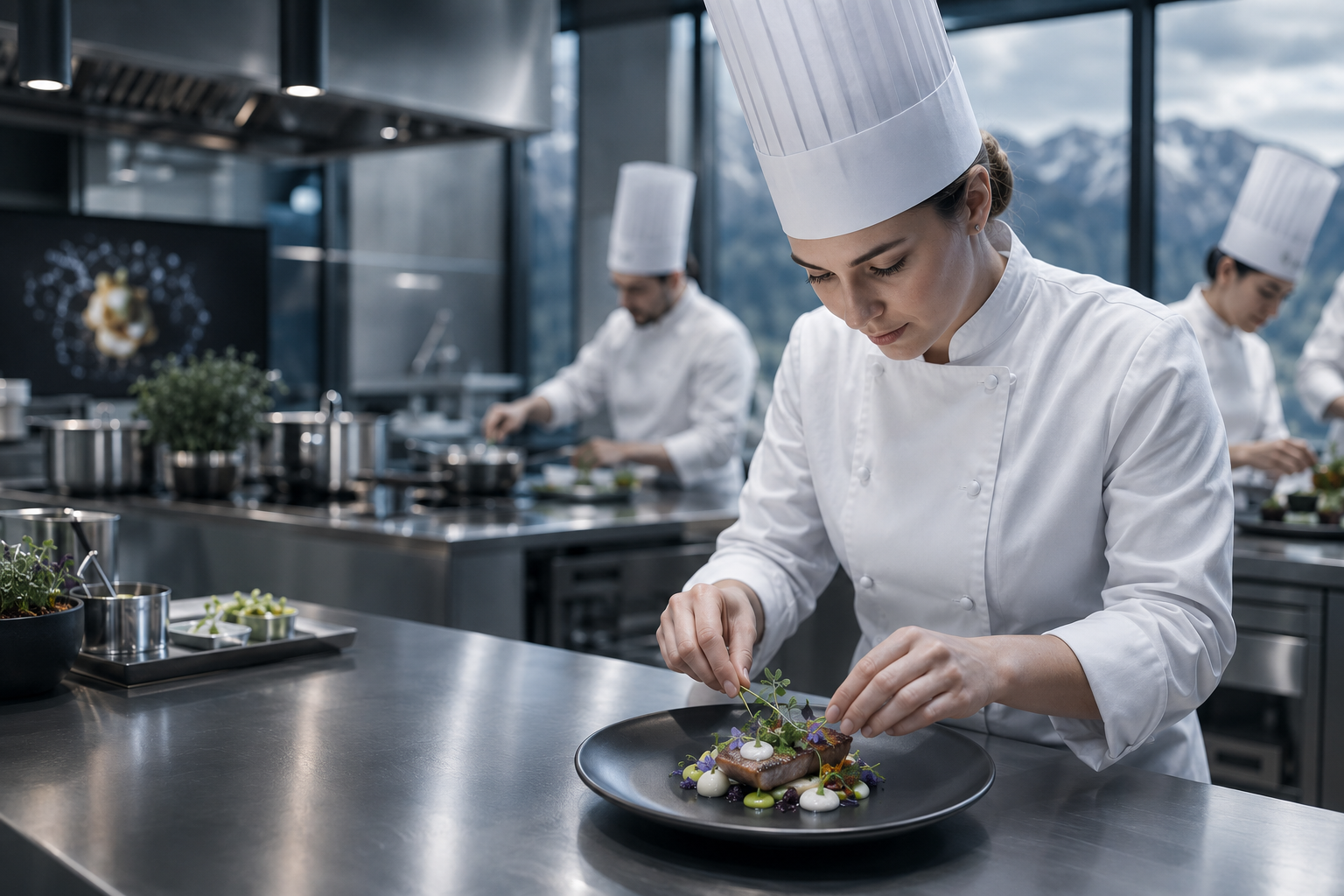

The great chefs of today are not simply cooks. They are storytellers, innovators, and entrepreneurs. They are professionals who must move with equal fluency between the fire of a kitchen and the strategy of a boardroom. Modern chef training has evolved to reflect this reality, demanding far more than technical mastery alone. Today’s culinary leaders are expected to bring together creativity, precision, sustainability, leadership, and entrepreneurial intelligence within one of the world’s most sophisticated and competitive industries.
At Culinary Arts Academy Switzerland, this evolution forms the foundation of the institution’s educational philosophy. Recognised among the world’s foremost culinary institutions, CAAS trains students to move from an original idea to a refined, professional masterpiece. Students are handed a vision, and then taught, through rigorous practice and world class mentorship, how to realise it. Students develop the skills, perspective, and vision required to lead in luxury hospitality, food entrepreneurship, and the global culinary arena.
Modern Culinary Training: More Than Learning to Cook
The culinary world has always rewarded those who can adapt. But the pace of transformation over the past decade, driven by the rise of fine dining as storytelling, the mainstreaming of sustainability, the explosion of digital food culture, and the relentless evolution of global culinary trends, has fundamentally changed what it means to enter this industry as a professional.
Modern culinary education has evolved to meet this moment. Students must now learn how to think with originality, adapt to shifting consumer expectations, lead teams with confidence, and understand the commercial forces shaping the industry they are entering. The modern chef is expected to balance technical craftsmanship with creativity, leadership, and strategic vision while creating distinctive culinary experiences.
Building Strong Technical Foundations
Every accomplished chef begins with a mastery of technique. Professional chef training continues to rely on the essential skills that form the foundation of culinary arts education, where precision, consistency, and discipline are developed through continual practice.
These foundational skills include:
- Knife skills and ingredient preparation
- Classical cooking methods and sauce work
- Pastry and baking techniques
- Food safety and hygiene standards
- Flavour development and balance
- Kitchen organisation and service timing
- Plating and presentation
“I learned the most about how a kitchen actually functions… I would not be where I am today without the amazing education I had.” — Hannah Corado, Pastry Chef
At Culinary Arts Academy Switzerland, students refine these abilities through practical culinary training in professional kitchen environments, where repetition develops skill, instinct, consistency, speed, and precision under the pressure of professional service.
Technique, at this level, is the language through which a chef’s creative vision eventually speaks.
Developing Creativity and Culinary Identity
Modern culinary careers reward those who bring something original to the table. Increasingly, chefs are expected to blend creativity, storytelling, and technical precision into distinctive dining experiences. This is why culinary concept development has become a central pillar of contemporary chef training.
Students are challenged to explore and refine skills such as:
- Combining flavours with creativity and cultural awareness
- Drawing inspiration from global culinary traditions
- Understanding the rhythms of ingredient seasonality
- Creating dishes that are as visually compelling as they are delicious
- Developing signature dining concepts that carry a clear point of view
- Adapting menus thoughtfully to evolving consumer preferences
At CAAS, technical excellence and creativity are developed together through a learning environment that values innovation, precision, and original thinking. Students take part in food concept development projects that guide them through the process of transforming a creative idea into a fully realised culinary experience. Alongside this, exposure to international cuisines, evolving industry trends, and innovation driven workshops helps students refine their individual culinary style while strengthening their understanding of the modern hospitality industry.
Why Business Skills Matter for Chefs
Talent, on its own, is not enough. A chef of exceptional creative ability who cannot manage a food cost, position a brand, or lead a kitchen team will find their vision difficult to sustain beyond the first service. The culinary industry is filled with brilliant cooks whose restaurants have closed not from a lack of passion, but from a lack of business understanding.
The modern culinary industry is inseparable from the world of business. Whether opening an independent restaurant, overseeing a luxury hotel kitchen, developing a food brand, or managing catering operations at scale, today’s chefs must command a working knowledge of budgeting, operations, marketing, and leadership.
This is precisely why culinary business management has become an increasingly essential dimension of modern culinary education. The skills now expected of professional chefs extend well beyond the kitchen:
- Financial planning and cost control
- Pricing strategy and revenue management
- Leadership and team development
- Brand positioning and communication
- Customer experience design
- Sustainability planning and supply chain awareness
- Entrepreneurship and new venture development
A chef of exceptional talent but limited business understanding may find their vision difficult to sustain. At CAAS, programmes combine culinary mastery with business education to prepare students for leadership across the global hospitality industry.
Why Culinary Concept Development Matters for Modern Culinary Careers
Exceptional dining experiences are built on far more than culinary technique alone. They are narratives, carefully conceived worlds built from flavour, atmosphere, visual identity, and emotional resonance.
Restaurants, luxury hotels, artisan bakeries, and hospitality brands all compete through the power of storytelling and original thinking. Culinary concept development is the discipline that enables chefs to build these experiences from the ground up.
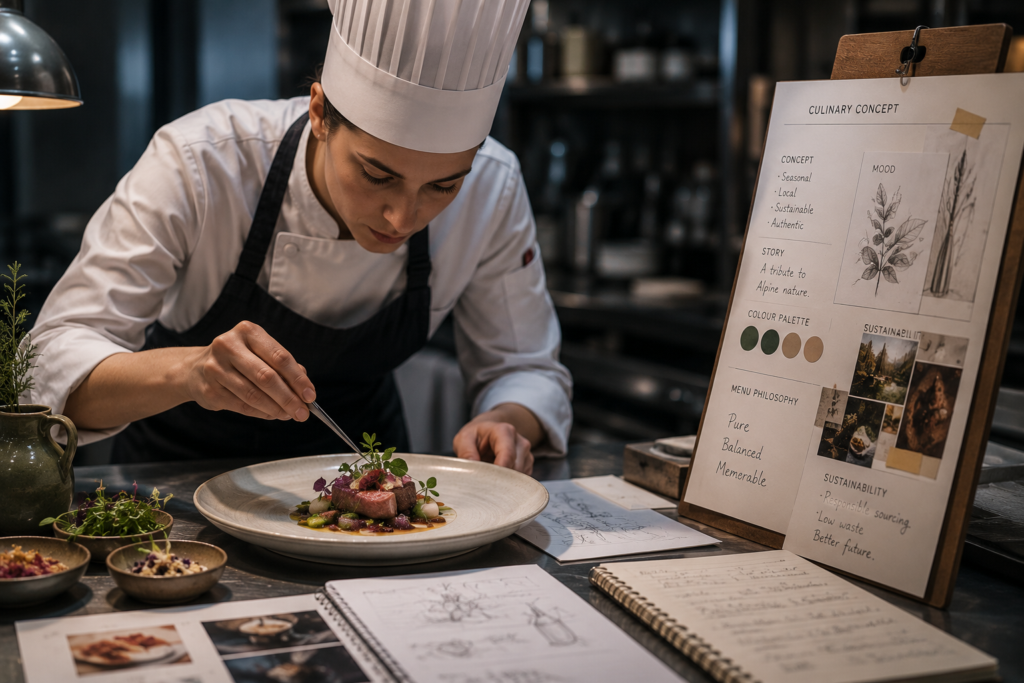
A strong culinary concept typically encompasses:
- A clear and authentic culinary identity
- A deep understanding of the intended audience
- A coherent menu philosophy
- Visual presentation and aesthetic language
- Brand storytelling and positioning
- Sustainability values and responsible sourcing
- An intentional service experience
This capacity to transform an idea into a fully realised culinary world is what elevates many modern culinary leaders beyond the role of traditional kitchen professional.
At CAAS, students learn to bring together culinary creativity and business strategy in precisely this way, developing concepts that are both artistically meaningful and commercially sustainable.
How CAAS Prepares Students for Modern Culinary Careers
Modern culinary careers require a rare combination of creativity, technical precision, and business intelligence. Culinary Arts Academy Switzerland prepares students for this reality through a premium education model that integrates hands-on culinary mastery with leadership development and entrepreneurial thinking.
A Culinary School Focused on Craft and Business
One of the defining qualities of CAAS is its integrated approach to culinary arts education. Students do not study cooking techniques in isolation. Programmes are designed to bring together culinary mastery, hospitality knowledge, and business education in a cohesive, purposeful curriculum.
This breadth of preparation equips students for a wide range of modern culinary careers, including:
- Fine dining and luxury hospitality kitchens
- Pastry arts and artisan baking
- Food entrepreneurship and start-up ventures
- Culinary consulting
- Catering and event management
- Restaurant operations
- Food media and brand development
CAAS offers a portfolio of programmes including:
- Bachelor of Arts in Culinary Arts
- Master of Arts in Culinary Business Management
- Swiss Diploma in Culinary Arts
- Swiss Diploma in Pastry Arts
Each of these pathways reflects the growing demand for culinary professionals who can lead with both creative vision and strategic clarity.
Hands-On Training in Cutting-Edge Culinary Facilities
Practical culinary training remains at the heart of the CAAS experience. Students train in modern, industry-standard kitchen environments designed to replicate the demands of professional service, building not only technical skill but the confidence, discipline, and adaptability that careers in luxury hospitality require.
Through this immersive approach, students develop:
- Technical accuracy and consistent execution
- Speed and organisation under service pressure
- The teamwork essential to professional kitchens
- The creative freedom to experiment and refine
- Meticulous attention to plating and presentation
The two CAAS campuses offer distinctly enriching environments.
- Le Bouveret, set on the shores of Lake Geneva and close to the French border, combines natural beauty with modern culinary facilities and a sense of European cultural breadth.
- Brig, nestled in the Rhone Valley near the Alps, offers a deep connection to Swiss heritage, alpine landscapes, and the rhythms of traditional hospitality.
Each campus contributes to a learning experience that combines rigorous culinary training with the lifestyle, culture, and hospitality traditions that define Switzerland.
Learning From World-Class Chef Instructors
The quality of mentorship shapes the quality of a chef. At CAAS, students learn from professionals who have worked in Michelin-starred restaurants, leading luxury hotels, and international culinary environments of the highest distinction.
Learning alongside these instructors gives students access to:
- Real-world insight drawn from the finest professional kitchens
- Exposure to the standards that define luxury hospitality
- Thoughtful mentorship and personalised career guidance
- A nuanced understanding of evolving culinary trends
- The tacit knowledge that can only be passed from practitioner to student
“It was an incredible experience because it was an opportunity to learn from real professionals.” — Lavr Kozlov
Industry masterclasses and guest experiences extend this exposure further, connecting students with influential culinary figures and innovative thinkers from across the global food world.
Developing Food Concepts and Business Plans
Among the most valuable capabilities a modern chef can possess is the ability to think strategically, to move beyond individual dishes and conceive of an entire culinary experience with commercial purpose.
CAAS guides students through the process of developing complete culinary concepts that unite creative vision with operational planning. This work may involve:
- Designing menus with coherence and intent
- Building restaurant or hospitality concepts from the ground up
- Identifying and understanding a target audience
- Developing brand identity and communication strategies
- Planning budgets, pricing, and financial projections
- Creating sustainable and responsible operational models
- Pitching food business ideas with clarity and confidence
Through these projects, students gain the confidence and business understanding required to turn ambitious culinary concepts into professional realities.
Career Paths for Modern Culinary Graduates
The modern culinary industry offers a landscape far broader and more varied than the traditional restaurant kitchen. Today’s graduates pursue careers across luxury hospitality, entrepreneurship, consulting, media, and food innovation.
Professional Kitchen and Pastry Careers
Many graduates follow the classical culinary path into professional kitchens, where the technical foundations and creative disciplines developed at CAAS prove immediately valuable.
These career paths include roles such as Chef de Partie, Sous Chef, Executive Chef, Pastry Chef, Bakery Specialist, Fine Dining Chef, Private Chef, and Luxury Hotel Culinary Specialist.
CAAS alumni work in prestigious kitchens, Michelin-starred restaurants, and celebrated hospitality organisations around the world, a testament to the quality and rigour of the school’s professional chef training.
Food Business and Entrepreneurship
For a growing number of graduates, culinary education is the beginning of a business story. Many choose to establish ventures of their own, including:
- Independent restaurants and dining concepts
- Artisan bakeries and patisseries
- Catering companies and event food businesses
- Food product and retail brands
- Culinary consulting practices
- Hospitality start-ups
- Digital food platforms and media
This is where the integration of culinary business management becomes particularly consequential. Graduates who arrive in the market with a command of branding, operations, finance, and leadership are significantly better positioned to convert creative vision into lasting, sustainable enterprise.
CAAS alumni have gone on to found companies, lead culinary programmes, and build hospitality businesses that span continents.
Culinary Roles Beyond the Restaurant
The culinary world now intersects meaningfully with sectors far removed from the traditional dining room. Modern culinary education, at its best, prepares graduates to pursue opportunities across this expanded landscape:
- Food styling and culinary media
- Culinary education and instruction
- Luxury event and experience management
- Food product development and innovation
- Sustainability and food systems consulting
- Embassy and diplomatic culinary roles
- Hospitality management
- Culinary research and innovation
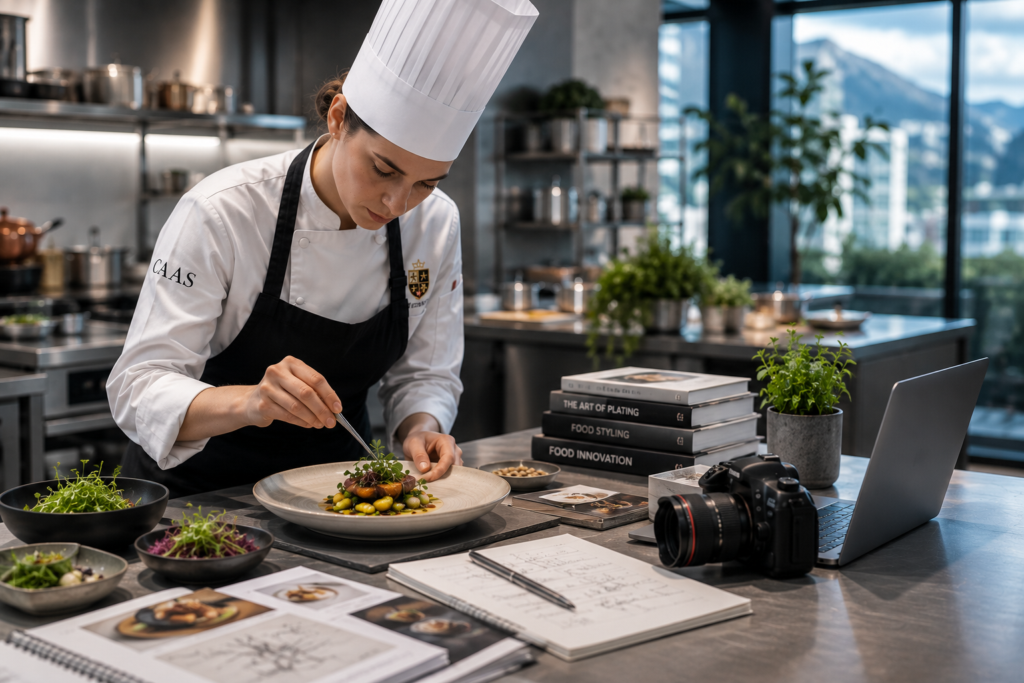
The breadth of a CAAS education ensures that graduates are not confined to a single career trajectory, but rather prepared to move with authority across many of them.
How to Choose the Right Culinary School
The decision to invest in culinary education is one of the most consequential a student can make. Choosing the right institution requires looking well beyond rankings and reputation to consider how genuinely a school prepares its graduates for the realities of the modern industry.
Look for a Balance Between Craft and Business
The finest culinary schools no longer focus exclusively on cooking technique. Students should seek programmes that offer a meaningful integration of:
- Culinary skills and technical mastery
- Leadership and team management
- Entrepreneurship and business thinking
- Hospitality knowledge and service culture
- Industry exposure and professional networks
A curriculum that balances craft with commercial understanding produces graduates with more flexible, resilient, and ultimately more rewarding career paths.
CAAS distinguishes itself precisely through this integration, ensuring that every student leaves with both the artistry to inspire and the acumen to lead.
Check Facilities and Hands-On Training Opportunities
Practical, hands-on culinary training remains irreplaceable. When evaluating a school, prospective students should look for:
- Professional-standard kitchen facilities
- Substantial practical training hours
- Real project-based learning
- Small group instruction and close mentorship
- Simulated industry service environments
- Access to modern culinary technology and methods
No volume of classroom theory can replicate the learning that comes from working in a professional kitchen. CAAS places hands-on training at the centre of its educational experience, in facilities designed to prepare students for the environments they will encounter in the world’s finest establishments.
Consider Industry Exposure and Career Support
The relationships formed during training often prove as valuable as the skills themselves. When evaluating a culinary school, students should examine:
- Internship opportunities and industry placements
- Partnerships with leading culinary and hospitality brands
- The depth and reach of the alumni network
- Career development and placement support
- Access to guest chef experiences and masterclasses
- Opportunities for international exposure
“Looking back now, I especially appreciate the way the chefs taught us by putting us in high-pressure situations. They truly showed us how to survive in the real world.” — Alumna from CAAS
As part of Swiss Education Group, CAAS connects students to a global hospitality network and an international community of alumni and industry partners, giving graduates a professional head start that extends far beyond the diploma.
Conclusion
The future of culinary arts will belong to those who bring far more than technical cooking ability to the table. The chefs, entrepreneurs, and culinary leaders of tomorrow must combine creativity, precision, sustainability, leadership, and business intelligence, and they must be trained by institutions with the vision and rigour to develop all of these qualities in equal measure.
At Culinary Arts Academy Switzerland, students are prepared for precisely this future. Through immersive practical culinary training, world-class mentorship, integrated business education, and deep industry exposure, CAAS guides each student from concept to masterpiece, equipping them not only to succeed within the professional culinary world, but to shape its next chapter.
Frequently Asked Questions
What skills do modern chefs need?
Modern chefs require a combination of technical culinary mastery, creative thinking, leadership, business acumen, communication skills, sustainability awareness, and operational management capability. The role demands both artistry and strategic intelligence.
Is culinary education only about cooking?
Far from it. Contemporary culinary education encompasses business management, leadership development, food concept development, hospitality operations, brand strategy, sustainability, and entrepreneurship. Cooking is the foundation, but it is only the beginning.
What is culinary concept development?
Culinary concept development is the process of transforming an original idea into a complete, cohesive dining or food experience. It encompasses menu design, brand identity, customer experience, visual presentation, operational planning, and the storytelling that brings a concept to life.
Why do chefs need business skills?
Business skills enable chefs to manage budgets, control costs, lead teams, position brands, and build sustainable enterprises. As culinary careers increasingly extend into entrepreneurship and leadership, business understanding has become as essential as any kitchen technique.
How does CAAS prepare students for culinary careers?
CAAS combines rigorous hands-on culinary training with business education, industry partnerships, mentorship from world-class chef instructors, and access to state-of-the-art facilities, preparing students comprehensively for global culinary careers across a wide range of professional pathways.
What careers can you pursue after culinary school?
Graduates may pursue careers in fine dining, pastry arts, luxury hospitality, food entrepreneurship, culinary consulting, catering, hospitality management, food media, product development, sustainability, and many other culinary-related fields. The possibilities are as broad as the industry itself.