Meet the Director General of Ècole Mosaic: Jean Francois Lopez
Founded in 2004 in Champel, Geneva, École Mosaic offers a bilingual French– English education for children aged 3 to 12, welcoming students from more than 40 nationalities. The school follows a bespoke curriculum drawing on both the PER– Plan d’études romand and the English National Curriculum, combining strong academic foundations with linguistic fluency.
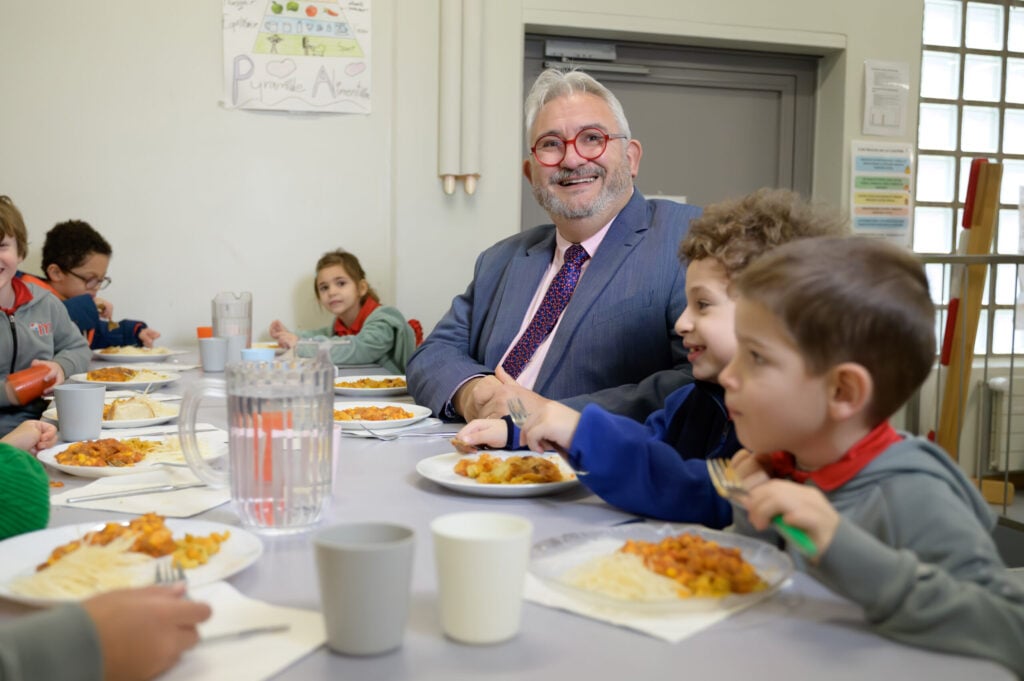
In August 2026, École Mosaic will open a new bilingual Middle School, responding to growing demand from families seeking continuity beyond primary education. We recently spoke with Jean-François Lopez, Director General, to learn more about his extensive experience in bilingual education, the school’s educational philosophy, and the vision behind the new Middle School.
Can you tell us how your personal journey in education has shaped your vision for École Mosaic?
Having grown up in France and spent much of my career working internationally, including time in Saudi Arabia, the United States and now Switzerland, I have always worked in bilingual or multilingual school environments and with highly diverse student communities. These experiences have shaped my core educational belief: that developing empathy and compassion in young people requires a genuine effort to understand others, their cultures and their beliefs. Language plays a central role in this. At École Mosaic, we believe that learning in two languages, while valuing the many others spoken at home by our students, is key to nurturing open-mindedness and curiosity – essential qualities for global citizenship.
My vision has also been influenced by sport. As a rugby player and coach for nearly twenty years, I learned the value of teamwork and the importance of recognising that different people contribute in different ways. Every role matters, whether on the field or within a school community. This belief underpins how we work at École Mosaic, where we aim to create an environment in which students, teachers and staff alike feel valued and respected.
Finally, my leadership style draws strongly on my practice of judo, in which I hold a black belt. Judo emphasises discipline, respect and perseverance, but also humility and balance – known as “the gentle way.” I strongly believe that a school’s role goes beyond academic excellence. Through sport, the arts and extracurricular activities, we must also support children in developing creativity, resilience, self-discipline and self-expression.
École Mosaic emphasises a truly bilingual and multicultural education. How would you define the school’s ethos, and what does it mean for students and families?
At École Mosaic, our mission is to support the holistic development of every child. We aim to nurture intellectual curiosity alongside artistic expression, emotional wellbeing and sensitivity to others, ensuring students are prepared not only for the next stage of their education, but for a balanced and meaningful life beyond school.
Our ethos is grounded in a clearly defined set of values that we actively model every day. Central to these are respect and autonomy. We encourage students to act with empathy, tolerance and compassion, and to make choices guided by a strong ethical compass. While children do not always make wise decisions, we believe it is essential to provide a safe and supportive environment where they can learn from mistakes, develop resilience, and take responsibility for their actions. Students are encouraged to express their views and be respected as individuals, while also reflecting on the impact of their choices.
We also strongly believe that education is a collective endeavour. The best outcomes are achieved when schools work in close partnership with families, when every member of staff contributes as an educator, and when students learn to support one another through collaboration. By living these values, we aim to create a school
community that feels like an extended family – one rooted in care, kindness and shared responsibility – where children grow into thoughtful, responsible members of society.
“We encourage students to act with empathy, tolerance and compassion, and to make choices guided by a strong ethical compass.”
Your bespoke curriculum blends the Plan d’études romand (PER) and the English National Curriculum. How does
this bilingual model benefit student learning and prepare them for future academic pathways?
It is important to distinguish between curriculum content and pedagogy. At École Mosaic, our bespoke curriculum is carefully mapped to both the Swiss Harmos framework and the English National Curriculum, offering clear practical advantages for families in Geneva. This alignment allows students to transition smoothly into either the local public system or into francophone or anglophone programmes elsewhere, should their educational journey take them beyond Mosaic.
All students complete standardised assessments aligned with both frameworks at key stages. By the end of primary school, all students exceed the target levels set by the English National Curriculum, while results in Geneva cantonal assessments are equally strong, enabling students to progress confidently to the highest academic tracks in lower secondary education.
These outcomes are closely linked to our pedagogical approach. Teaching at École Mosaic is student-centred and active, encouraging children to learn through discussion, problem-solving and real engagement rather than passive instruction. In every class, subjects are co-taught by two teachers; one francophone and one
anglophone. This dual-teacher model supports deep linguistic development while also helping students understand, from an early age, that ideas can be viewed from different perspectives, fostering intercultural awareness and a love of lifelong learning.
Educational technology also plays a carefully considered role. As part of the International Schools Partnership, École Mosaic is one of only eleven ISP EdTech Lab Schools worldwide, contributing to the testing and evaluation of tools designed to improve learning outcomes. From digital devices and robotics to software and
traditional learning aids, technology is used selectively and purposefully. Our guiding principle is simple: technology must add value to student learning and never be used for its own sake.
Language acquisition is central to Mosaic’s identity. How do you support students in becoming confident bilingual communicators, even if they join without prior knowledge of French or English?
Given the international nature of École Mosaic, many students join us at a young age without prior knowledge of either French or English. Immersion plays a powerful role, and it is remarkable how quickly children begin to absorb language through daily interaction with teachers and peers.
Alongside this natural immersion, students who need additional support benefit from our dedicated language tutoring programme. Specialist teachers work with learners in small groups several times a week, collaborating closely with classroom staff to identify individual needs and tailor support accordingly. These sessions are designed to be engaging and confidence-building, ensuring language learning feels positive and achievable. As our academic results consistently show, this combined approach enables students to progress quickly and reach strong levels of fluency in both languages.
With over 40 nationalities represented in your community, how doesÉcole Mosaic nurture intercultural understanding and inclusion, both inside and outside the classroom?
Intercultural understanding sits at the heart of our values at École Mosaic. We actively encourage students to see the world from different perspectives and to show respect for others’ cultures, languages and beliefs. This is embedded not only in daily classroom interactions, but also through dedicated multicultural projects that
deliberately expose students to a range of viewpoints and lived experiences.
Throughout the year, the school marks a variety of cultural celebrations, from international events such as Diwali or Thanksgiving to local traditions including Geneva’s Escalade. These moments are woven into learning through classroom projects, creative activities and shared experiences, helping students connect
culture with curiosity and respect.
Inclusion at Mosaic also extends beyond cultural diversity. We place strong emphasis on recognising and respecting different learning profiles and abilities. Our student health and wellbeing coordinator works closely with teachers, families and external specialists to ensure that students with specific learning needs, such as dyslexia, dyscalculia or autism, are fully supported within mainstream classrooms. This tailored approach benefits not only the individual students, but also the wider class community, fostering empathy, understanding and a genuine appreciation of difference from an early age.
How do parents and families participate in the life of the school? Are there particular traditions or events that help
build community spirit?
Partnering closely with families is a core value at École Mosaic. Beyond regular communication about each child’s progress, parents are actively invited into school life and learning. Throughout the year, families are welcomed into classrooms to engage with student projects, from multicultural initiatives to science and class-based work. These moments allow parents to see learning in action and to share in their children’s achievements.
One recent example was a Year 5 project focused on water sustainability, developed as part of Mosaic’s commitment as a recognised Eco-School. Parents were invited into school ahead of the winter break to explore the project, interact with students, and discuss their work — a meaningful way to connect learning with real-world issues.
Community spirit is also strengthened through shared celebrations. Two highlights of the school year are the end-of-year show, bringing together theatre, music and the arts, and the annual sports day, both of which bring families and students together in a spirit of joy and collaboration. Parents also regularly contribute to school life by sharing their own cultural backgrounds or professional experiences with students, offering valuable real-world perspectives.
An active parent association further enriches the Mosaic community, organising events such as bake sales, charity fundraisers and the annual Mosaic Grand Party in June, as well as supporting communication and connection through the Mosaic Forum. Together, these initiatives help create a school environment where families feel engaged, valued and truly part of the community
Could you share some examples of the facilities and programmes that enrich the student experience at École Mosaic, such as STEAM, arts, theatre or sports?
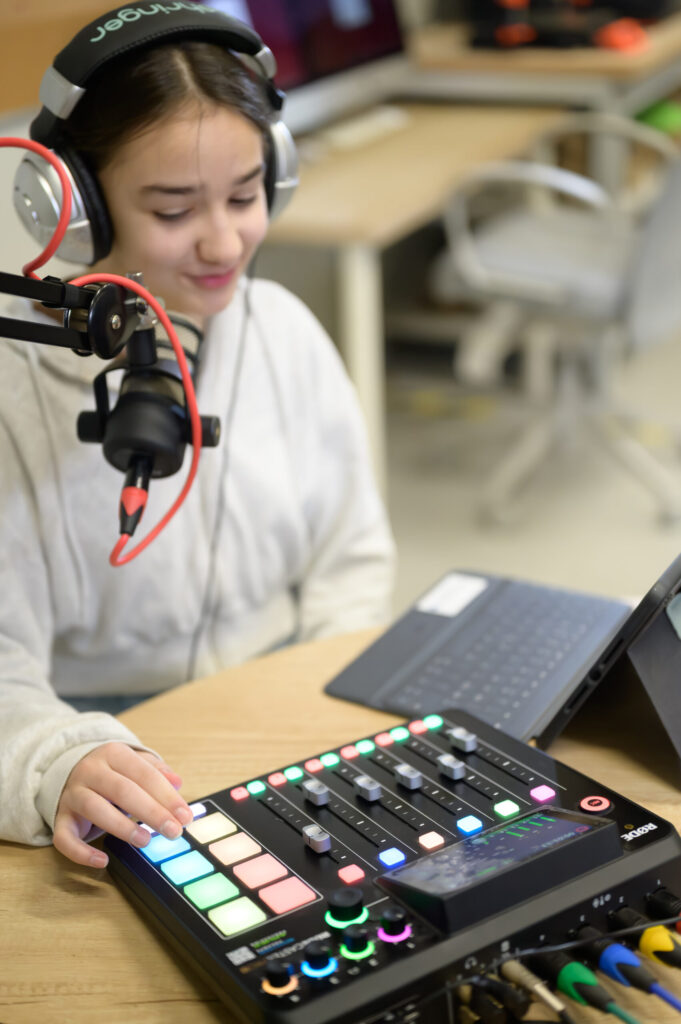
Alongside our regular classrooms, École Mosaic offers a range of specialised spaces designed to enrich learning across disciplines. Our STEAM lab, opened in 2023, gives students access to advancedtools such as 3D printers, laser cutters and a recording studio. These facilities are used regularly for hands-on projects, including podcast creation, supporting both technological skills and oral expression.
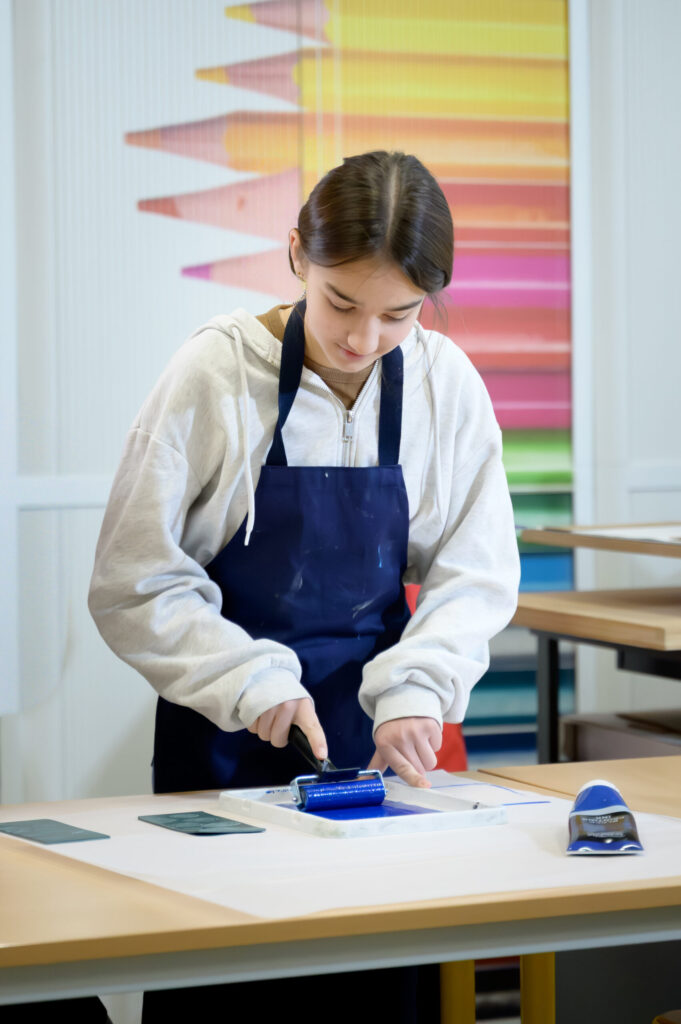
Creative learning is equally well supported. Our dedicated art room provides space for students to explore both traditional and contemporary forms of expression, from drawing, sculpture and printmaking to animation and computeraided design. For physical and performing arts, the school has four purpose-built rooms used for indoor sports, theatre, dance and music. We also make the most of our city-centre location, working with
professional external facilities for activities such as swimming, rock climbing and skiing, and using nearby parks for outdoor learning and recreation.
As part of the International Schools Partnership, students also benefit from global enrichment programmes, including international chess tournaments, maths challenges and collaborative exchanges with partner schools around the world. In addition, École Mosaic is proud to be a recognised Eco-School, with students and staff working together on longterm sustainability projects that engage every class and foster a strong sense of responsibility for the environment.
How do you see the school evolving over the next few years, and what priorities will shape its future direction?
École Mosaic’s development over the coming years is guided by a clear set of strategic priorities focused on academic excellence, innovation and continuity for families. A key area of growth is the integration of the Cambridge International Curriculum, which will further strengthen English-language teaching and broaden students’ international academic pathways.
At the same time, we are deepening our commitment to digital citizenship through innovative projects in educational technology and the continued development of our EdTech Lab School. This ensures technology is integrated into learning in a thoughtful, purposeful way that genuinely enhances outcomes.
Language remains central to our identity, and this year we are launching a major linguistic research partnership with MLRC, using scientific data and proven practices to continually refine and improve our bilingual teaching.
Finally, the opening of our new bilingual lower secondary programme marks a natural extension of École Mosaic’s offering. Designed in response to strong family demand, these purpose-built spaces will support students through the next stage of their academic journey, offering continuity, ambition and the flexibility to pursue a wide range of future pathways including the IB, French Baccalaureate, or Swiss or English school curriculums at high school level.
Our Middle School will be a deliberately small school, allowing us to focus on the individual needs of each student. Students will receive strong linguistic support based upon their competency in either French or English. Beyond academics we will support our students’ wellbeing including their physical, emotional and mental health.
What advice would you give to families when choosing an international school in today’s global landscape?
There is no one-size-fits-all approach to choosing a school, but I encourage families to look beyond short-term outcomes and consider how well a school prepares their child for the future. Strong academics, qualified teachers and a safe, caring environment are essential foundations. What truly matters, however, is how a school develops the skills and character children need to thrive in a fast-changing and interconnected world.
Intercultural understanding and multilingualism are central to this, with strong English skills playing a key role. Students must also learn to engage confidently with technology while developing critical thinking, ethical judgement and environmental responsibility. Just as important is wellbeing: families want to know that a school will help their children grow into kind, resilient and well-balanced individuals who strive to do the right thing.
This philosophy is captured by the judo principle of Jita-Kyoei — mutual benefit and shared progress — which strongly reflects our approach at École Mosaic. Looking ahead, the school continues to evolve through clear strategic priorities, including strengthening English-language provision, advancing digital citizenship, deepening research-led language teaching, and expanding into bilingual lower secondary education. Together, these developments ensure continuity, ambition and a strong foundation for whatever path students choose next.
“Intercultural understanding sits at the heart of our values at École Mosaic.”