Meet the Principal: Sophia Hatfield-Giraux, British School of Geneva
Before she became a school leader, Sophia Hatfield-Giraux studied Sociology — the workings of communities, relationships and identity — and then Human Resource Management, the practice of helping people thrive within an organisation. It is an unusual route into the principal's office, but it is precisely why her leadership feels less like an administrative appointment and more like a continuation of one lifelong question: what allows a person to become their fullest self?
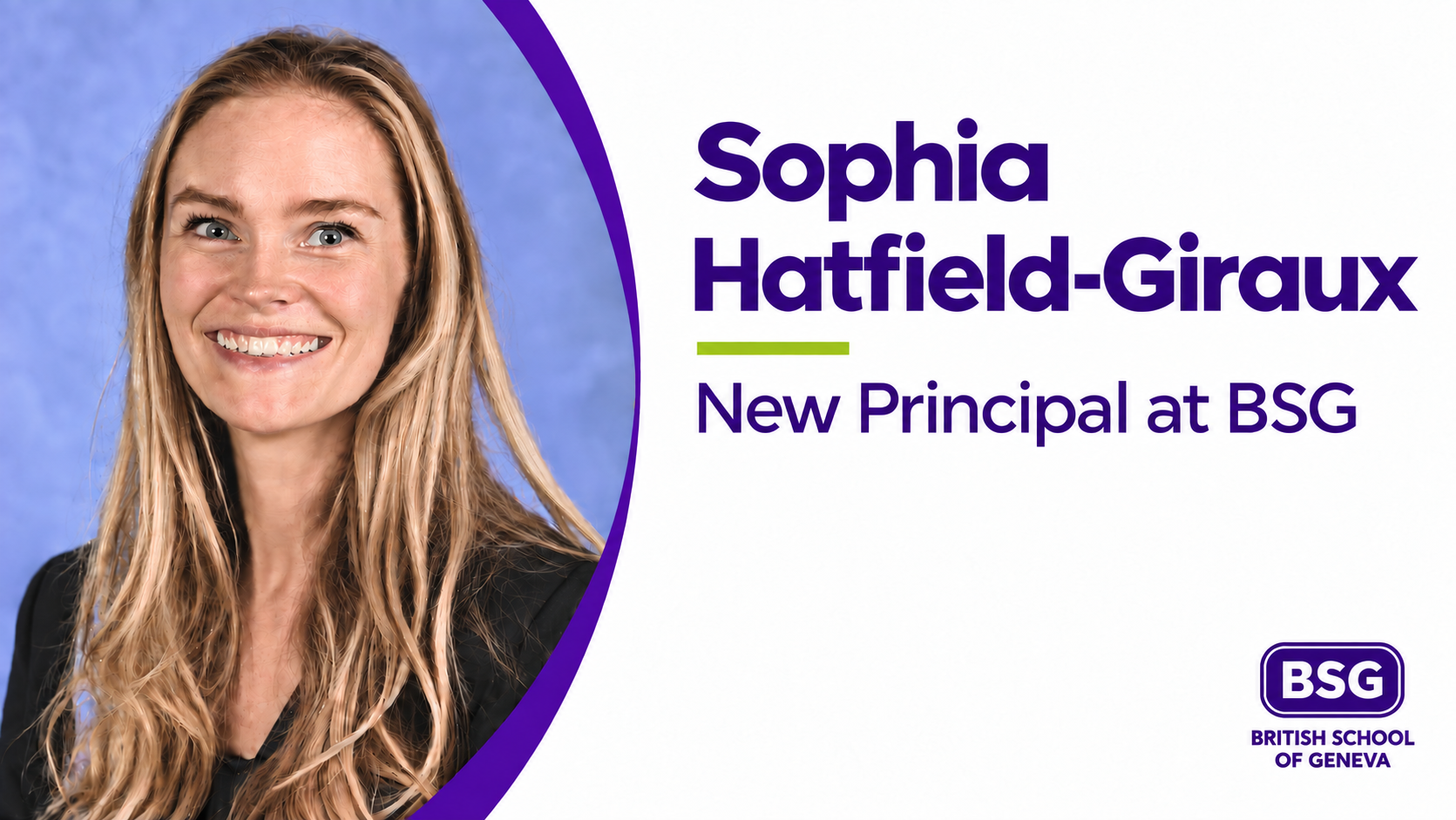
At the British School of Geneva, she has built her answer into a single phrase, Belonging Sparks Growth, and a leadership style in which no student is ever just a name on a register.
We spoke with Sophia Hatfield-Giraux, the new Principal of BSG, about how this approach works in practice, from easing a new student’s first-day nerves to guiding a Sixth Former through their university choices.
You joined BSG as Head of Sixth Form and quickly became an important part of the school’s leadership team. What made you want to take on the role of Principal?
I had already developed a very strong connection with BSG during my time as Head of Sixth Form. What I loved about the role was the opportunity to get to know students as individuals – understanding their aspirations, helping them identify their strengths and supporting them as they made important decisions about their futures. I also really valued working alongside colleagues and families across the wider school community.
When the opportunity to become Principal arose, it felt like a natural next step. I wanted to build on what makes BSG special while also helping the school continue to grow and develop. I believe very strongly that every young person has something exceptional within them, and my role as Principal is to create the environment, opportunities and relationships that allow them to discover what that is.
Being part of the International Schools Partnership also aligns with my own vision of what a school should be: fostering curious, confident minds and a love of lifelong learning in a truly international context, with opportunities to experience different cultures and perspectives and develop leadership, and a focus on multilingualism.
My own journey has always been about continuous learning and development, from studying Sociology for my Bachelor’s, to completing a Master’s in HR Management, and then moving into teaching and school leadership. Each stage has reinforced for me how important people, relationships and a sense of purpose are to success. I see the role of Principal as an opportunity to bring all of those experiences together.
Your vision for BSG is to be a school where “Belonging Sparks Growth.” What does that phrase mean to you personally?
For me, “Belonging Sparks Growth” captures something I have believed throughout my career: people achieve their best when they feel that they are valued, understood and genuinely part of something. Research consistently shows that when a child feels that they belong at school, they achieve more. I still remember my university student number from 20 years ago (N0102337!) which never felt comfortable. Students are people, not numbers.
My academic background in Sociology has always made me interested in people – how communities work, how relationships shape us and how our environment can influence our opportunities and sense of identity. Later, studying HR Management reinforced the importance of creating environments where staff also feel supported, recognised and able to develop.
Throughout my teaching career I have observed that when students feel that their teachers know them, believe in them and genuinely want them to succeed, they are much more likely to take risks, challenge themselves and develop confidence. The same is true of adults.
So “Belonging Sparks Growth” is not simply a slogan. It is about creating a culture where students and staff feel, “This is my school. These people know me. I am valued here. I can be myself here – and I can become more than I am today.”
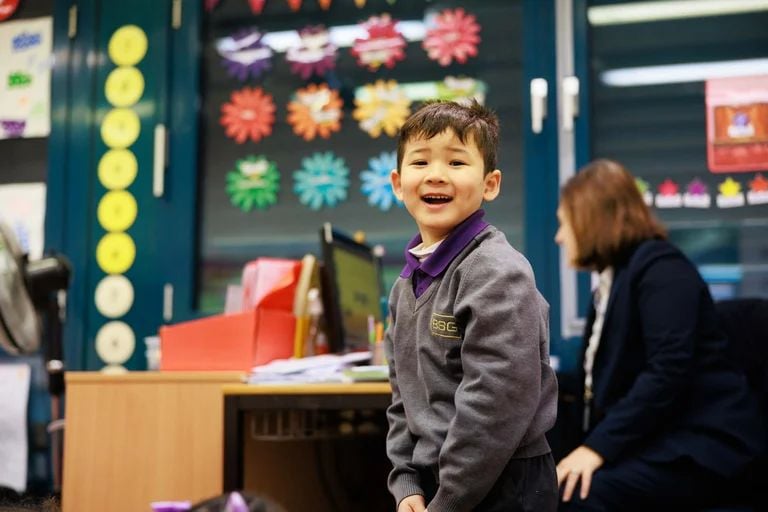
“Every young person has something exceptional within them, and my role as Principal is to create the environment, opportunities and relationships that allow them to discover what that is.”
Why is a strong sense of belonging so important to a student’s academic progress, confidence and personal development?
Because learning is fundamentally a human experience. We can talk about curriculum, teaching and assessment, but none of those things exist in isolation from the individual student.
When a young person feels secure and connected, they are more willing to participate, ask questions, make mistakes and try again. They develop the confidence to challenge themselves rather than being afraid of getting something wrong. That has a direct impact on academic progress, but it also affects resilience, relationships and their willingness to explore new opportunities.
My experience as a Sociology teacher and pastoral leader particularly shaped my thinking here. Academic achievement and personal development are not separate things. Understanding the individual and the interrelationships between a variety of complex factors behind the grades is incredibly important.
At BSG, we want students not simply to leave with excellent qualifications, but to leave knowing themselves, understanding their strengths and feeling confident about what they can contribute to the world and access their destination of choice. Our excellent GCSE and A Level results from this summer are a testament to our students’ hard work and our teachers’ dedication.
How does BSG help new students, particularly those arriving from another country, school system or language environment, become part of the community?
Moving to a new school can be a huge transition, and moving countries can make that transition even bigger. Students may be navigating a new curriculum, a new language, new friendships and a completely different cultural environment, all at the same time. I have experienced this transition personally, when my son started at a French school after we moved from England.
That is why relationships are so important from the moment a student joins BSG. We make a real effort to get to know each new student as an individual: their interests, their previous experiences, their strengths and the things that might make the transition easier or more challenging.
The small size of our school also helps enormously. Students are quickly known by their teachers and classmates, and there are many opportunities to get involved in school life, whether through sport, performing arts, clubs, leadership or other activities.
We are also a genuinely international community. Students come from different countries and backgrounds, and that diversity is something we celebrate. Rather than asking students to leave their identity at the school gate, we want them to bring their experiences and perspectives with them. That makes our community richer for everyone.
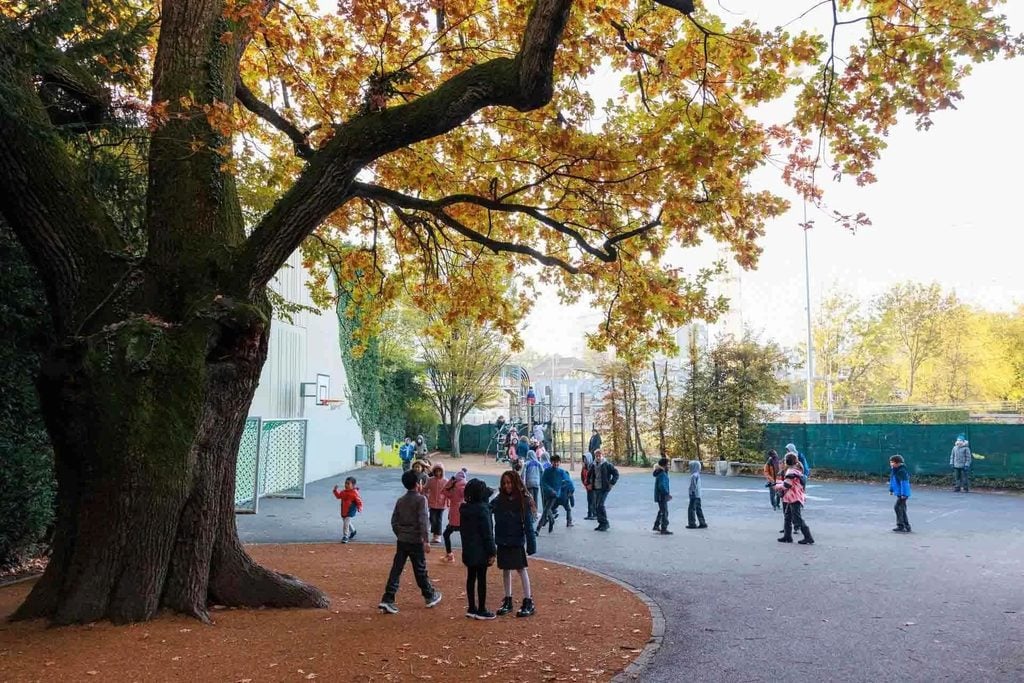
“Being known means that students have adults around them who notice their achievements, listen to their concerns, challenge them when necessary and believe in their potential.”
What can a smaller school offer students and families that may be more difficult to achieve in a larger setting?
I think one of the greatest advantages is that you can really know people.
In a smaller school, it is much harder for a student to become simply a name on a register or a number on a spreadsheet. Teachers know their students, colleagues communicate with one another, and families can develop genuine relationships with the school.
That means we can notice the small things: when a student is doing particularly well, when they need a little extra encouragement, when their interests are changing or when they are ready for a new challenge. There is no room for coasting and we celebrate getting the very best out of each and every one of our students.
It also creates a very strong sense of community. Students know one another across year groups, staff know families, and there is a feeling that everyone has a part to play.
For me, smaller does not mean less ambitious. Quite the opposite. It means we can combine high expectations and academic ambition with a highly personal approach.
What does it mean, in practical terms, for every student at BSG to be known as an individual?
It means knowing much more than a student’s academic results.
Of course, we need to understand how a student is progressing academically, but we also want to know what motivates them, what they enjoy, where their confidence lies, what challenges them, what’s going on in their personal lives, and what they aspire to achieve. When a student joins the school, we ask for this information and we share it with all their teachers. Every student has a dedicated form tutor or class teacher to guide them through the year.
During my time as Head of Sixth Form, this was particularly important to me. No two students had exactly the same ambitions or followed exactly the same pathway; every Sixth Form student has a termly one-to-one Future Pathways meeting. My role was to personalise that guidance, helping each student understand their options and find a direction that was right for them.
As Principal, I want that philosophy to exist throughout the school. Being known means that students have adults around them who notice their achievements, listen to their concerns, challenge them when necessary and believe in their potential.
Sometimes it can be something very small, such as a teacher remembering a student’s interest, noticing that they have had a difficult day or celebrating an achievement that might otherwise go unnoticed. Those moments matter.
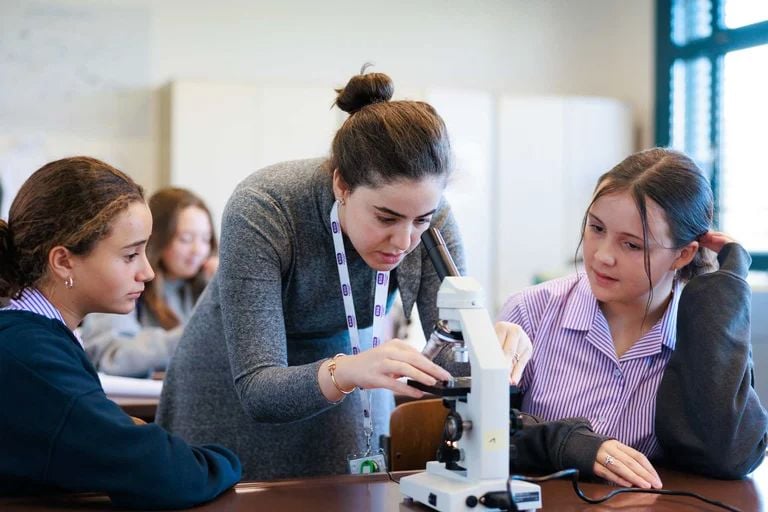
Some students thrive immediately, others need more time. How does BSG support different personalities and pathways to success?
One of the most important things we can do is recognise that there isn’t a single definition of success and there isn’t a single route towards it.
Some students are naturally confident and immediately want to get involved in everything. Others are more reflective and need time to find their place. Some discover their strengths academically; others find them through sport, music, drama, leadership, creativity or relationships with others.
Our responsibility is to provide a broad range of opportunities while making sure that students have the support and encouragement they need to take advantage of them. We take student leadership very seriously and offer our students a range of opportunities such as being on the Senior Prefect Team, becoming a student wellbeing ambassador or participating in academic or sports mentoring.
My background in both Sociology and pastoral leadership has reinforced for me that individuals develop in different ways and at different speeds. We shouldn’t compare every student against the same template. We should have high expectations for everyone, but understand that the pathway to reaching those expectations may look very different from one student to another.
Ultimately, we want every student to experience success and to understand that success can be a starting point for their next challenge, rather than an endpoint.
Finally, what would you say to a family wondering whether BSG could be the place where their child truly belongs and grows?
I would encourage them to come and experience the school for themselves; see, hear and feel the learning atmosphere first hand.
Choosing a school is about so much more than looking at a list of qualifications or facilities. You need to think about whether your child will be known, whether they will be challenged, whether they will be supported and whether they will feel comfortable being themselves.
At BSG, we are ambitious for every student. We want them to achieve academically, but we also want them to develop confidence, curiosity, independence and a sense of responsibility towards others.
Most importantly, we believe that every young person has something exceptional within them. Our job is to help them discover what that is and give them the confidence to pursue it.
Across every answer, the same thread reappears: a school’s real work happens in the space between a student and the adults who know them. For Sophia Hatfield-Giraux, that is not a soft addition to academic life at BSG but the condition that makes it possible — the reason a nervous new arrival finds their feet, a reflective student finds their moment, and a Sixth Former leaves knowing not just their grades, but themselves. It is a simple enough idea to fit in four words, and ambitious enough to shape an entire school around.
“When a child knows that they belong, they have the confidence to grow. And when they grow, the whole community benefits.”