More Than Mojitos
Everyone loves a mojito to drink in the summer, with or without alcohol, packed with mint and lime, it’s refreshing, cooling and delicious! At the Swiss Gardening School we grow ten different varieties of mint, and our students love trying them out in different drinks and recipes.

Written by Hester Macdonald, Swiss Gardening School
The most popular variety for making mojitos is the easy-going spearmint (Mentha spicata), which provides a sweet but minty taste without the heavy “toothpaste” element of more traditional mints. A surprisingly delicious combination is the addition of a few leaves of one of the citrus mints like grapefruit (Mentha x piperata var citrata) or orange flavour (Mentha piperata “Orange”).
There are also new varieties, like Cuban mint, also sold as “Mojito mint”, Mentha x villosa, which has softly hairy leaves, and has a sweet, slightly minty taste that is perfect for mojitos, teas and lemonades.
We grow all our mints in separate, large pots, as some can be invasive in raised beds, and the more vigorous varieties can quickly swamp the slower growers like the delicious strawberry mint. Most mints like to be kept well watered in the warmer months, and will thrive in most conditions from part-shade to full sun. They are perennials, so expect them to die back in autumn, dropping all their leaves. Don’t panic, those stems will burst back into life the following spring.
Mints have lots of uses, other than for mojitos. Head to your local garden centre and see what’s on offer, try one of these?
If you’re one of those people who get bitten by mosquitos, then Lemon mint or Mentha gentilis var citrata might help. It is often planted near seating areas as the leaves smell wonderful when crushed , and the fragrance helps to repel insects, much like citronella candles, but easier to grow! The leaves have a refreshing lemon scent and flavour,and as well as making a reviving tea, it’s also wonderful in home made lemonade.

If you’re looking for a mint for a very sunny spot, then Apple mint, Mentha suaveolens is perfect. The fuzzy leaves help to protect it from the sun, and it will forgive the occasional forgotten watering. The leaves have a fruity hint of apple and are often used in salads as well as cold drinks.
Pineapple mint (Mentha suaveolens “Variegata”) is a variegated form of apple mint with a sweet and distinctively fruity taste, which makes it a great pairing for summer fruit salads. It’s great as an ornamental plant, working well with other sun-lovers like lavenders, so you can tuck it into containers for balconies knowing that it looks as good as it tastes.
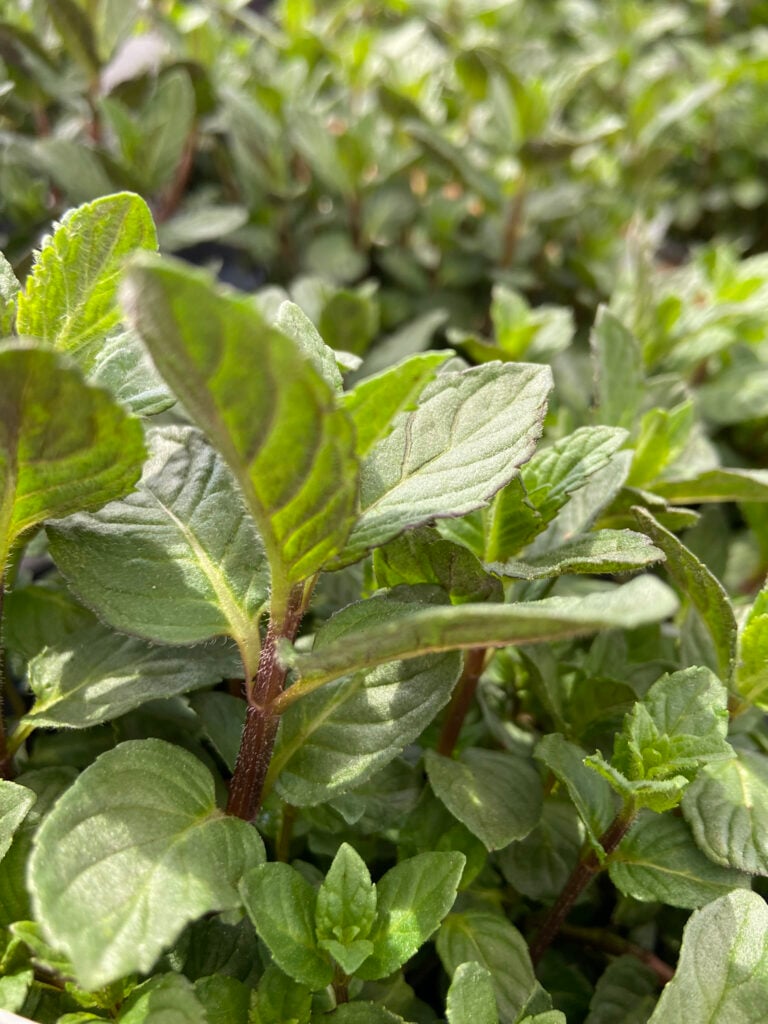
Chocolate mint (Mentha x piperita f citrata “Chocolate”) is another attractive mint plant, with dark stems and purple undersides to the leaves. The real surprise is the flavour, just like an After Eight mint! It makes a delicious tea, perfect for after dinner, and is also a great addition to chocolate desserts. It’s a real thug of a plant, so don’t plant it in the ground, it will be everywhere!
Moroccan mint (Mentha spicata var crispa) is probably the most unusual tasting of the mints, with hints of lemon, eucalyptus, pepper and of course, mint. It is used in Moroccan mint tea, along with green tea, and is delicious on its own as a tisane, dried or fresh.
At the end of the season, there are lots of ways to use up your precious mint leaves. If you have a sweet tooth, then mint sugar is easy and fun. You’ll need granulated sugar and a good handful of mint, I use double the volume of sugar to mint for a brightly-coloured, vibrant sugar. Wash and carefully dry the leaves, picking off any damaged leaves and removing the stems. Blitz the mint and sugar together in a food processor, or chop carefully by hand, so that the mixture is evenly green with no large leaf pieces. Leave it to dry overnight on a baking tray, and then pack the mix into jars for storage. You can use it to decorate glasses or add to drinks or baking.
Mint pesto is a great way to keep the punchy taste of mint, keeps fresh for a few days or freezes for a few months. It is often made with almonds, rather than the traditional pine nuts, and some recipes also add parsley. It is spectacular with potatoes, blobbed onto soup or just to cheer up a bowl of pasta.

Drying mint can be done any time over the growing season, just cut a few stems off your chosen plant, and they’ll grow back in a couple of weeks. The easiest method to dry any herbs is to hang the clean, dry stems upside down in a warm dry place. In case any pieces fall off in the drying process, it’s a good idea to put them in a paper bag.
Once they’re dry in a couple of weeks, you can gently strip the leaves off the stems and store them in jars ready for use over the winter.