Spring Plants for your Balcony
The days are finally getting longer, and the first signs of spring are appearing in gardens and parks. The best way to enjoy these lovely plants is bring them right to your front door or balcony!
Written by Hester Macdonald, Swiss Gardening School

First check that your pot is cold-proof, most plastic pots are fine, check if your pot is terracotta – there’s usually a sticker saying it’s frost proof. Next have a look at the drainage holes, some pots you have to make your own. Fill the bottom third with drainage material like expanded clay balls, plus a sheet of geotextile fabric to keep the
clay balls and the soil separate. Now you can choose your plants and pop them in, back filling the container to firm up the soil in between your plants. You might want to keep your pot off the ground, to help prevent it freezing, so buy some “pot feet”, little wedges that lift your pot up.
SPRING BULBS
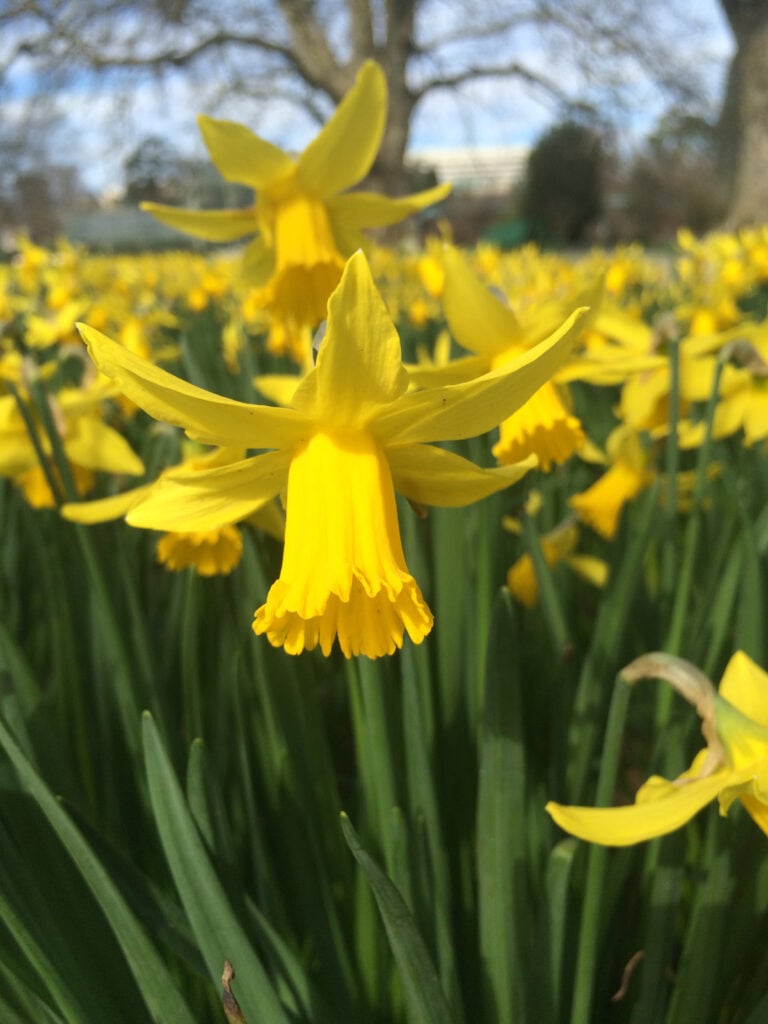
If you didn’t plant bulbs that flower in spring, like crocuses or daffodils, in autumn, don’t panic! Most garden centres, DIY stores, or even regular supermarkets, sell spring flowering bulbs in pots, ready to flower. Choose pots with as many bulbs that are still closed as possible, you want them to flower on your balcony or terrace, not in the store. All of these spring flowering bulbs will happily stay in a planter yearround, and flower again the following year. Just pick off the spent flower heads, let the foliage die back naturally after flowering and give them some fertiliser in spring.
BEST BULBS FOR BALCONIES
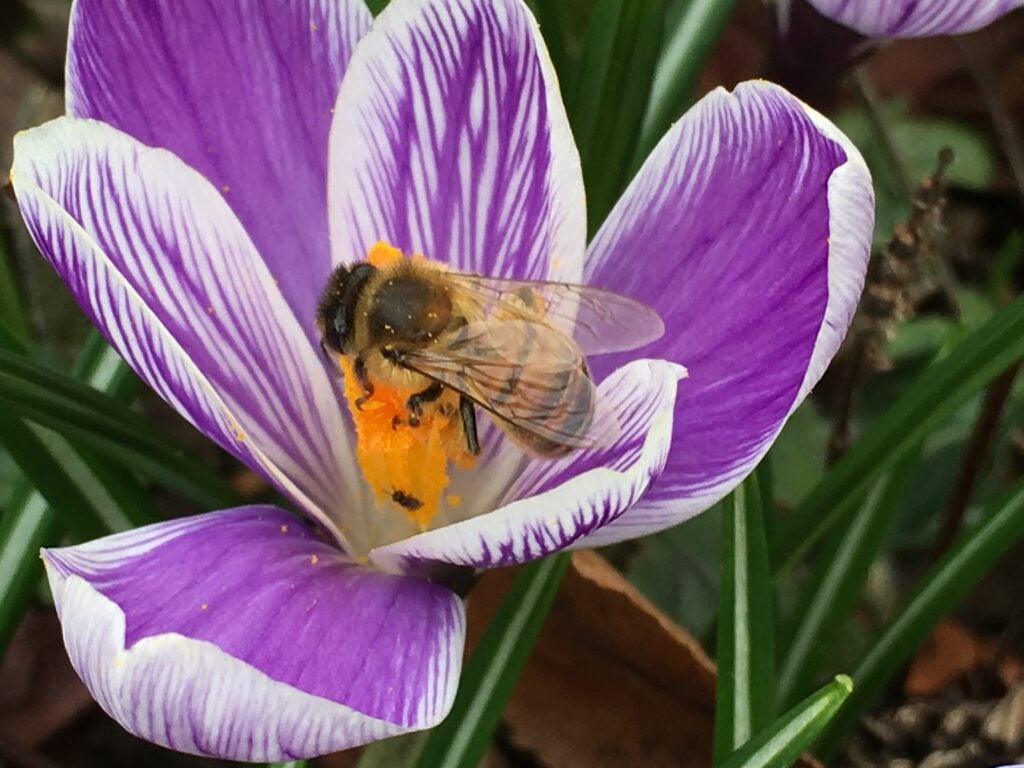
Crocuses are a great choice for a balcony planter, the small flowers are best seen close up so you can appreciate the details on the petals. Some crocuses are also fragrant, like
the beautiful Crocus chrysanthus “Blue Pearl” with lilac and white petals and a deep yellow centre.
Grape hyacinths, or Muscari armeniacum, to give them their proper Latin name, are fantastic in pots, producing their narrow grass-like leaves in autumn, and the lovely
blue, pink or white flowers in spring. They are very robust plants, flowering reliably in
sun or partial shade, and co-exist happily with other plants in a container.
Dwarf irises, like Iris reticulata, are best grown in pots, rather than in the ground, as slugs love them and will chew the new shoots. You can plant them in small pots for tables outdoors, in balcony planters or in a mix with other plants. They really are tiny, at only 5cm tall, but so worth growing for the colours of the petals. The variety
“Katharine Hodgkin” has sky blue petals with deep blue and yellow markings. It’s so
beautiful it is worth planting all by itself!
COMPANION PLANTS FOR BULBS
Bulbs are lovely, but they only flower for a few weeks, so to keep the springtime party
going, it’s best to mix them with other plants.
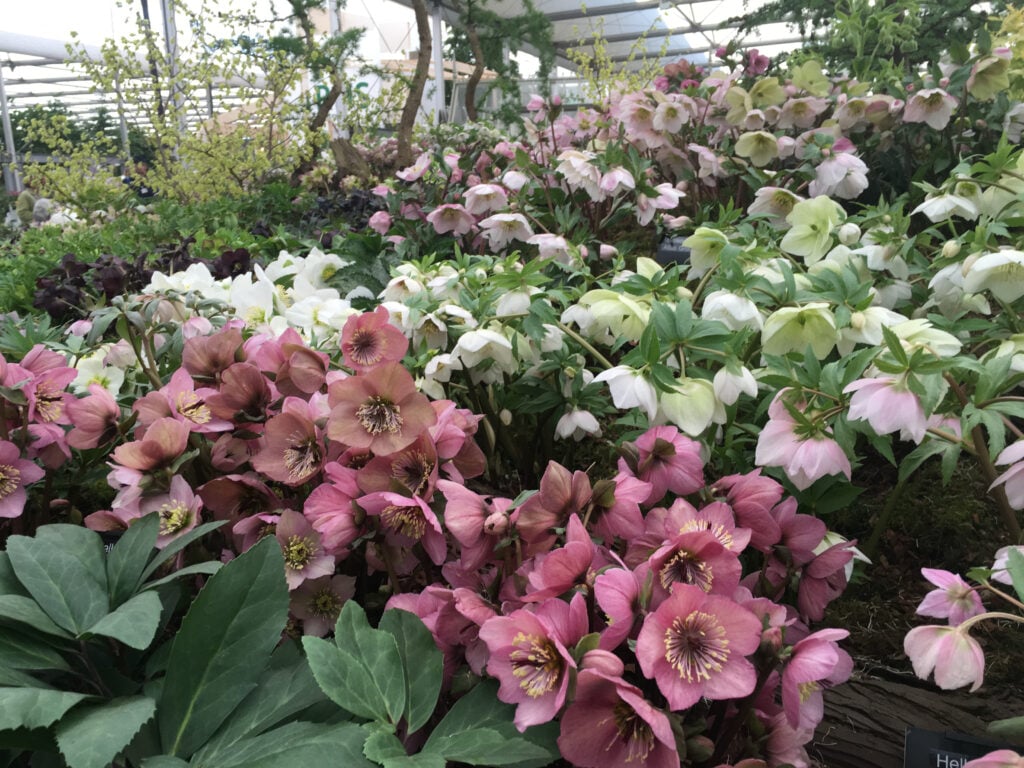
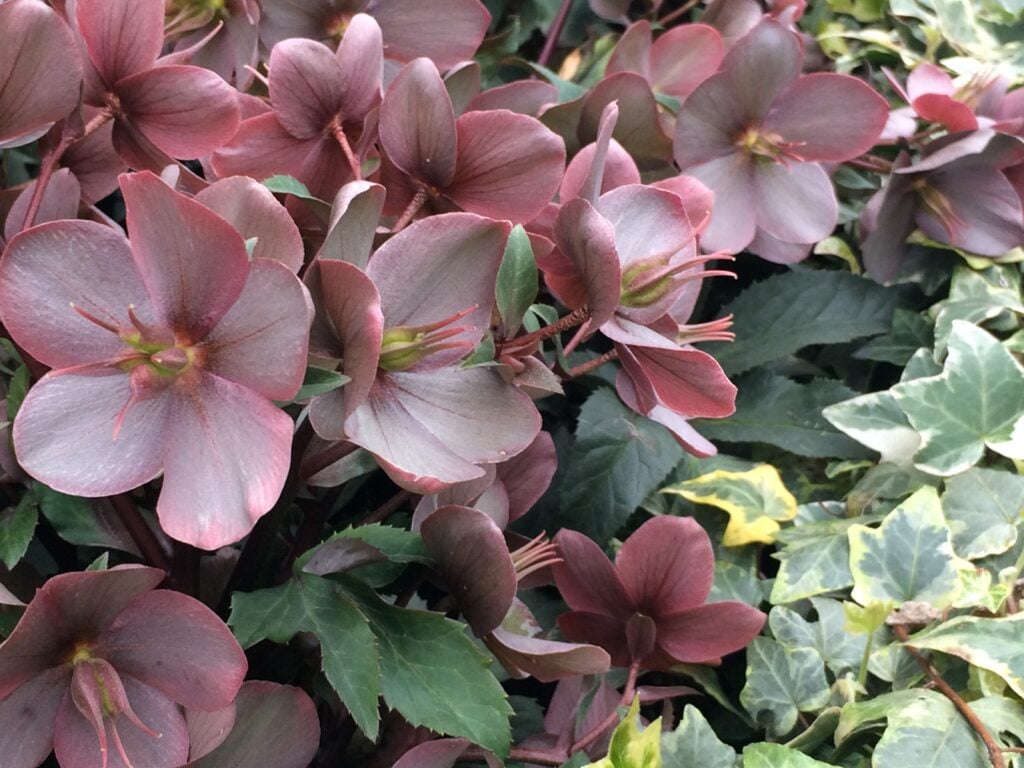
Hellebores, also known as Christmas or Lenten roses, flower for many months, and even after flowering, the seedheads are attractive too. They prefer a shadier spot, and can live in a pot for years. You can choose from plants with plain white petals, which are probably the best known, but there are also dozens of other petal colours and forms too! Choose from deep slaty greys, purples, reds, pinks and yellows as well as frilly doubles and even petals with splodges and speckles. You can even find varieties with red stems, or marbled leaves for a really impressive effect. Hellebores look fantastic in dark coloured pots, planted with ivy and grasses.
Grasses like Carex “Everest” stay looking bright and cheerful right through the darkest part of the year, and are great companion plants for spring arrangements. The varieties with white, cream or yellow stripes are great for bringing colour to a pot, and they have a lovely arching shape which gives another dimension to plantings. They look fantastic next to an upright evergreen plant like a miniature conifer or a skimmia.
Pansies and violas are probably my favourites of the “winter to spring” flowers, they are ideal for pots and containers as they need almost no care, and flower almost continuously from November to Easter, which is perfect for a winter pot or balcony planter. Pansies are a bit larger, with showier blooms, and sometimes stop flowering in the coldest weeks. Violas are daintier, better suited for tucking in between bigger plants, and available in a slightly more limited colour palette. They don’t mind hotter temperatures either, so it’s not unusual to find them still flowering well into June.
WHERE TO SEE AND ENJOY SPRING BLOOMS?
If you don’t have space on a balcony, and if you’re lucky enough to live in a city with
a big park or botanical garden, then head there for a family day out. Bern’s beautiful
“Rosengarten” has thousands of crocuses planted along the main avenue, as does
the Botanical Garden of Geneva – go and find them under the avenue of plane trees
by the temperate greenhouse. If you can’t manage to get to a botanical garden, head
to a garden centre and enjoy the lovely plants in flower there and then!