Sun, fun and safety: Keeping kids healthy this summer
Summer brings plenty of opportunities for outdoor fun and family adventures, but it is also important to keep children healthy and safe in the heat. From sun protection and hydration to travel and outdoor play, a few simple habits can help families enjoy the season with greater peace of mind.
Written by Dr Michelle Wright, Healthfirst
Personally, I think there are few places better than Switzerland in the summer.
It’s a time for adventure, outdoor play, and family days by the lake or in the mountains. Children spend longer outside, move more, and usually sleep better for it.
But as temperatures rise, so do the risks of dehydration, sunburn, and heat-related illness, particularly in children, who don’t always recognise when they need to take a break.
The reassuring thing is that most of these issues are entirely preventable. With a few
simple habits in place, children can enjoy everything summer has to offer, safely
HYDRATION, HYDRATION, HYDRATION
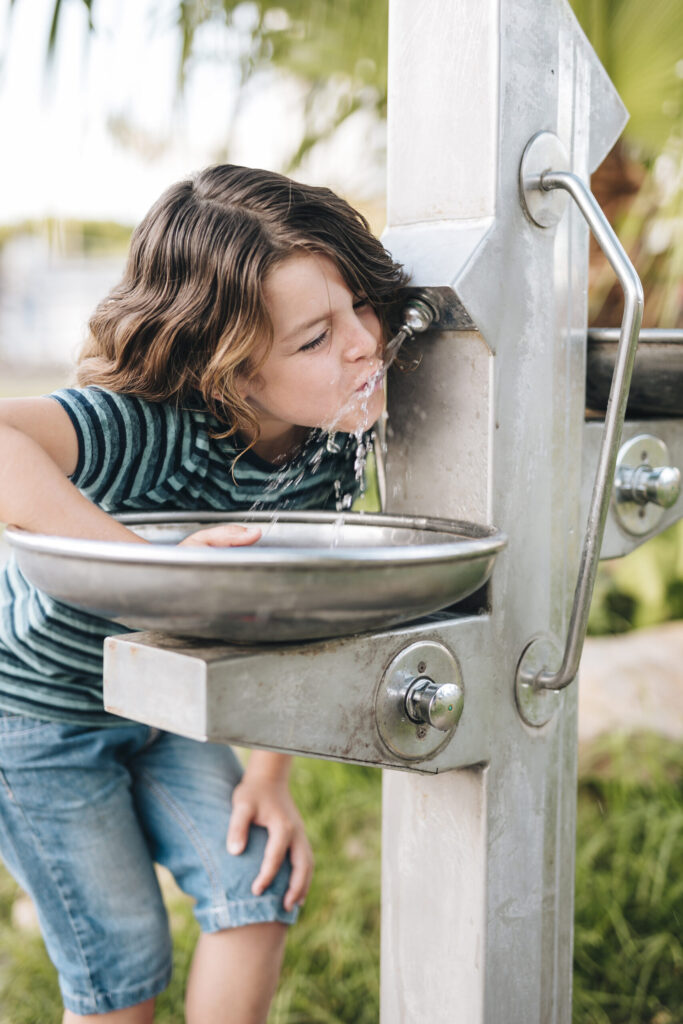
Children are more vulnerable to dehydration than adults.
They have a higher surface area relative to their size, so they lose fluid more quickly through their skin. Their metabolic rate is also higher, meaning they generate more
heat during activity and can lose more fluid through sweating. At the same time, their
fluid reserves are smaller, so even a modest loss of water has a bigger impact.
On top of that, they’re less likely to replace what they lose. Either because they don’t recognise thirst early, or simply ignore it when they’re busy playing.
Keeping some basics in mind is usually enough:
Encourage regular drinks – for older children, around 1.5 litres a day is a good starting point, with more needed if they are active or sweating
Make hydration fun – think fruitinfused water, homemade ice lollies, or even just a favourite water bottle.
Watch for warning signs – if your child has darker urine, dry lips or mouth, headache, dizziness or fatigue, they may be dehydrated. Encourage immediate hydration and rest.
Limit sugary drinks – juices and fizzy drinks can worsen dehydration because their high sugar content draws water into the gut and increases fluid loss. Plain water or diluted drinks are better options.
Remember food plays a role too – cold meals and water-rich foods like fruit, vegetables, and salads are often better tolerated in the heat.
Watch for warning signs – if your child has darker urine, dry lips or mouth, headache, dizziness or fatigue, they may be dehydrated. Encourage immediate hydration and rest.
SUN PROTECTION: MORE THAN JUST SUNSCREEN
What people often underestimate here in Switzerland is the strength of the sun. At altitude, UV levels rise significantly – the higher you go, the less atmosphere there is to filter the sun’s rays. Even by the lake, reflection from the water increases exposure, so children can burn more quickly than expected, even on cooler days.
Sunscreen plays an important role here, but it helps to understand what those numbers mean. An SPF 30 sunscreen blocks about 97% of UVB rays, while SPF 50 blocks about 98%. The difference is small, but higher SPF can provide extra protection for fair-skinned children or during long days outdoors.
It’s also important to choose a broadspectrum sunscreen, which protects against
both UVB (responsible for burning) and UVA (which penetrates deeper into the skin
and contributes to longer-term damage).
For children with sensitive skin, mineralbased options, containing zinc oxide or
titanium dioxide, are often better tolerated.
Some other sunscreen top tips:
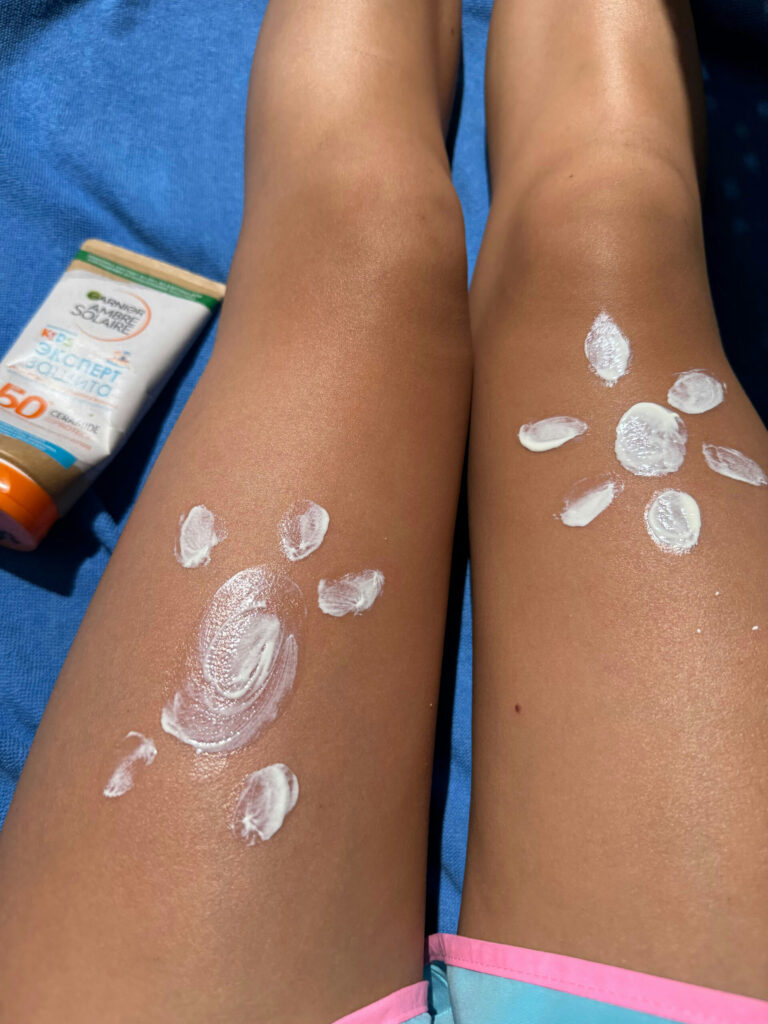
- Apply 20-30 minutes before heading outside because some formulations need time to absorb.
- Use generously and remember to apply to areas that are easily missed – ears, neck, tops of feet, and the scalp.
- Water-resistant formulas are useful for swimming and active play.
- Reapply every two hours and after swimming or towelling.
- Lotions may provide more reliable, even coverage compared to sprays.
Of course, sunscreen is important but it’s only one part of the picture. Dermatology
guidelines consistently emphasise that sun protection also includes:
- Avoiding exposure during peak sun hours.
- Seeking shade – encouraging play under trees, umbrellas, or sunshades.
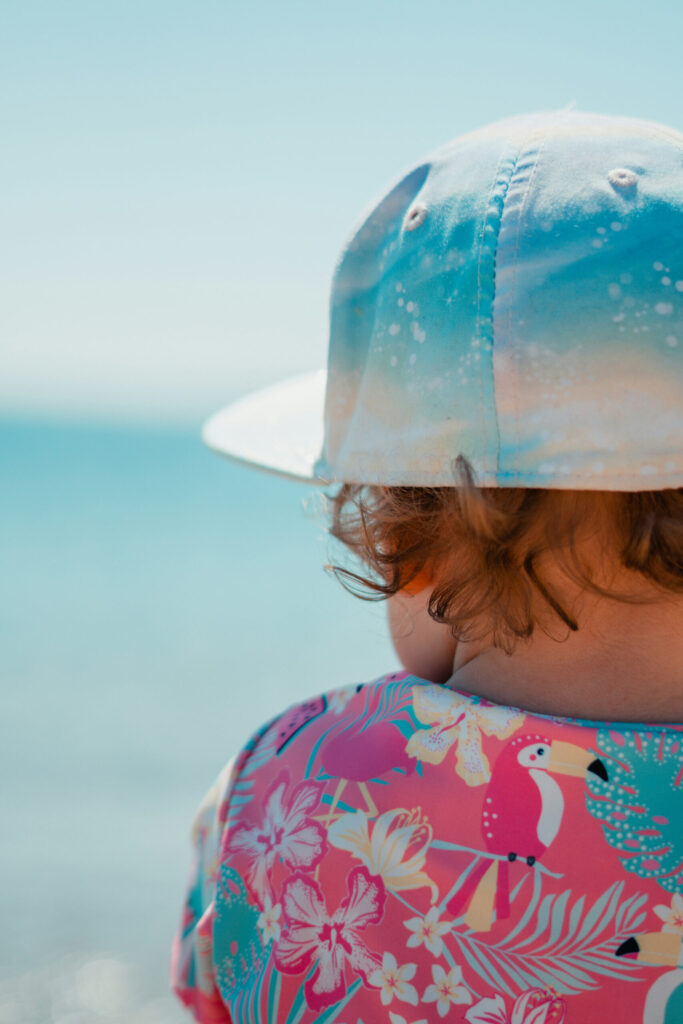
- Protecting with clothing such as long sleeves, UV-protective swim tops, wide-brim hats and sunglasses. Loose, lightweight fabrics, particularly natural fibres like cotton, also allow the body to stay cooler.
“Children are more vulnerable to dehydration than adults.”
HEAT-RELATED ILLNESS: KNOWING WHEN TO STEP IN
Children don’t always recognise their limits, especially when they’re having fun. They’ll often keep going long past the point where they need a drink or a break and may not say anything until they suddenly feel unwell. And heat exhaustion and heatstroke
can develop more quickly than expected, particularly in younger children.
The early signs are easy to miss: tiredness, headaches, muscle cramps, or simply not
seeming quite themselves. If things progress, they may complain of dizziness, nausea, vomiting or diarrhoea, and you may notice a rapid pulse, or unusual behaviour such as confusion or irritability. In more severe cases, a child may become very drowsy or even lose consciousness.
If caught early, simple steps are usually enough to manage heat-related illness:
- Move the child to a cool, shaded area, encourage fluids, and let them rest.
- Cool their skin with a damp cloth (or a shower if they’re well enough) to help bring their temperature down.
However, if symptoms are worsening, it’s important to seek medical advice. And
a child who is confused, very drowsy, or unconscious needs urgent attention. In
Switzerland, this means calling 144 for an ambulance.
FINAL THOUGHTS FOR A HAPPY AND HEALTHY SUMMER
Whether by the lake or in the mountains, summer in Switzerland is made for being
outdoors.
Getting the basics rights including regular drinks, sensible sun protection, and
knowing when to take a break from the heat means children can enjoy long, active days
safely and comfortably.
References:
- British Association of Dermatologists (n.d.) Sun protection advice for children and babies. Available at: https://www.skinhealthinfo.org.uk
- DermNet New Zealand (n.d.) Topical sunscreen agents. Available at: https://dermnetnz.org/topics/topical-sunscreen-agents
- European Academy of Dermatology and Venereology (EADV) (2022) Sun protection and skin cancer prevention guidance. Available at: https://eadv.org
- Passeron, T. et al. (2021) ‘Sunscreen use and photoprotection: European consensus
recommendations’, Journal of the European Academy of Dermatology and Venereology, 35(7), pp. 1357–1368. Available at: https://pmc.ncbi.nlm.nih.gov/articles/PMC8252523/