The Human Advantage: Why Hospitality Skills are Becoming the New Superpower in an AI-Driven World
In a world where artificial intelligence is transforming how we learn, work and interact, today’s young people are entering a professional landscape unlike anything previous generations have known. Automation is advancing at extraordinary speed, industries are reinventing themselves, and tasks once considered uniquely human are now performed effortlessly by machines. Yet at the same time, the value of profoundly human skills - empathy, communication, creativity and adaptability - has never been higher.
Written by ÉCOLE HÔTELIÈRE DE GENÈVE (EHG)

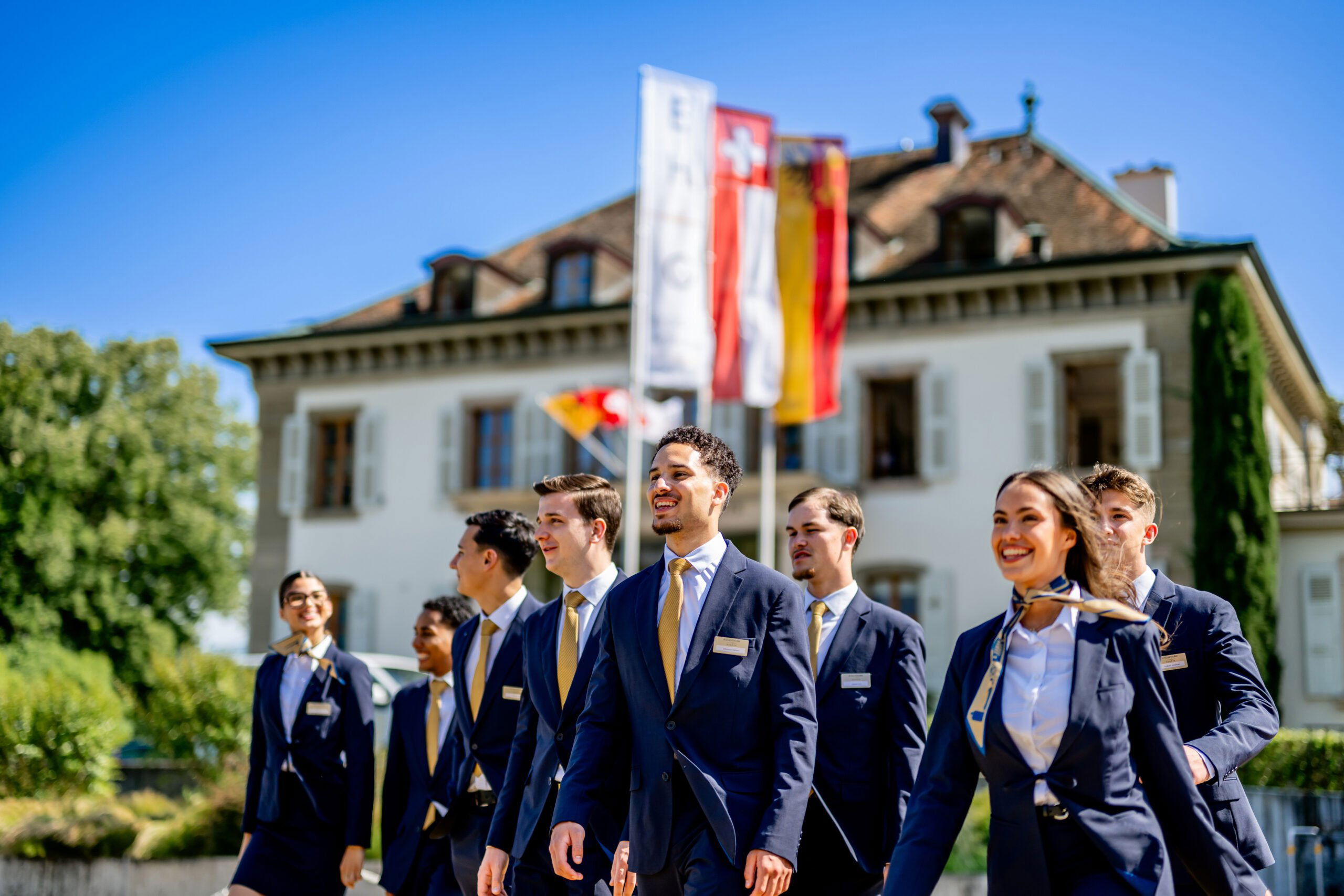
At the École Hôtelière de Genève (EHG), one of Switzerland’s pioneering hospitality
schools, this shift is strikingly clear. The abilities traditionally developed through
hospitality – interpersonal intelligence, service excellence, cultural awareness, teamwork and emotional regulation – are no longer associated only with hotels or
restaurants. They have become essential, future-proof skills for a world where technology is everywhere, but humanity is the differentiator.
SOFT SKILLS: THE HARD CURRENCY OF THE FUTURE
For decades, technical expertise was seen as the primary driver of employability.
Students were encouraged to master coding, data analysis and digital tools. These skills remain valuable, but the rise of AI has dramatically levelled the playing field. Knowledge is now instantly accessible, and algorithms can draft reports, summarise texts, analyse data and simulate expert reasoning.
Harvard Business School captures this shift succinctly. In its Working Knowledge publication, the authors note: “Mastering soft skills like communication and critical
thinking may be even more crucial than technical know-how.”
This reflects labour-market realities. While AI can assist with structured tasks, the nuanced dimensions of leadership, collaboration and judgement remain firmly human. These “durable skills” grow only through experience, reflection and interaction — the cornerstones of hospitality education.

A CHANGING SKILLS LANDSCAPE
The World Economic Forum’s Future of Jobs Report 2025 illustrates just how significant this shift will be. According to the report, 39% of workers’ core skills are expected to change by 2030, meaning nearly two out of every five competencies used today will evolve or become obsolete.
Equally important is what will rise in value. The WEF highlights resilience, flexibility, leadership, creativity, empathy, cultural intelligence and lifelong learning as priorities for employers across industries. From finance and technology to luxury and healthcare, organisations are increasingly service-driven, and the ability to design meaningful human experiences is emerging as a decisive competitive advantage.
THE NEW LUXURY: HUMAN CONNECTION
AI can write poetry, diagnose illness, plan journeys and teach languages. What it cannot do is sense unease, offer reassurance or transform an ordinary interaction into a meaningful moment. In today’s world, the new luxury is human connection.
This redefines hospitality. Consumers increasingly seek experiences that feel personal, authentic and intentional – whether in travel, retail, customer service or wellbeing. Hospitality education cultivates precisely this attentiveness: the ability to notice, care and respond in ways no machine can replicate. These qualities are timeless, and they are becoming rare.

PREPARING THE NEXT GENERATIONS
The next generations entering higher education face a professional world defined by frequent change. Generation Z is expected to shift roles every three to four years, often moving between industries rather than following linear paths. To thrive, they will need transferable skills that travel across jobs, cultures and contexts – communication, emotional intelligence, adaptability and self-management.
Generation Alpha, already immersed in AI, is likely to value authenticity and purpose even more deeply. Hospitality education is uniquely suited to prepare both generations, building confidence, cultural fluency and resilience while training students to navigate complexity and uncertainty. These skills are not tied to a single sector; they are the backbone of employability itself.
A LAUNCHPAD TO EVERY INDUSTRY
Contrary to outdated stereotypes, hospitality education is not narrow. Today’s graduates pursue careers across luxury, finance, human resources, real estate, entrepreneurship, technology and sustainability-driven industries. Employers
increasingly recognise that customer experience, trust and human connection are central to long-term success.
Hospitality graduates know how to collaborate with diverse personalities, remain calm under pressure and turn challenges into opportunities – abilities that are difficult to teach and impossible to automate. This is why career pathways for hospitality graduates continue to expand far beyond traditional roles.
TRADITION MEETS INNOVATION AT EHG
As a Swiss non-profit institution with more than 110 years of history, EHG has always balanced heritage with innovation. Its guiding principle is clear: AI should enhance human learning, not replace human thinking.
This year, EHG introduced the Digital Butler, an AI-powered system that assesses students’ levels in mathematics and languages, identifies areas for reinforcement and delivers personalised learning modules that evolve over time. Students receive tailored support under the guidance of educators who contextualise and enrich their learning. To ensure ethical use, EHG has also established a student AI charter defining AI as a tool, not a substitute, for critical thinking and creativity.
THE HUMAN TOUCH WILL SHAPE THE NEXT DECADE
As AI becomes ubiquitous, the workplace of the future will increasingly value people who can lead with clarity, navigate complex emotions, communicate across cultures
and build trust. These are the hallmarks of hospitality and the foundation of EHG’s
pedagogical approach.
The future will not belong to those who compete with machines, but to those who can balance analytical capability with emotional intelligence. Hospitality students learn this balance intuitively, understanding that while technology can improve service, only humans create experiences worth remembering.
CONCLUSION: SKILLS FOR LIFE
The future will be fast, fluid and shaped by overlapping disciplines. Young people will
change careers, cross borders and redefine success multiple times. In this context, the
most valuable skills will not be technical alone, but deeply human – empathy, creativity, communication and ethical judgement.
These are not only the skills of hospitality. They are the skills of life.
At EHG, we are proud to prepare the next generation to thrive in a world where technology is powerful, but humanity remains irreplaceable