The modern child’s room: one space, many roles
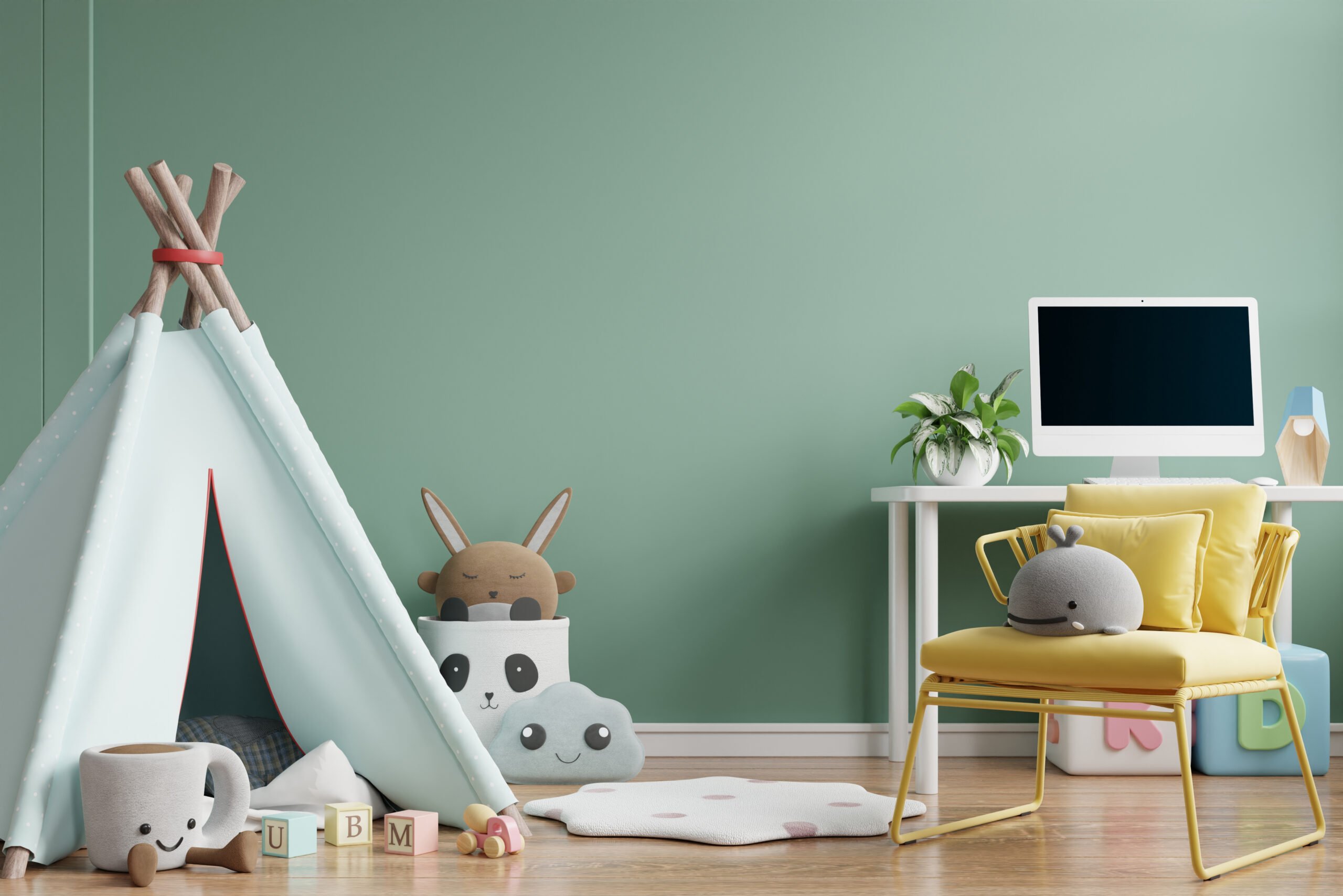
A child’s bedroom is unlike any other room in the home. While most spaces have one clear purpose, sleeping, relaxing, dining, a child’s room is expected to do everything at once. Children today live in rooms that are simultaneously their classroom, playground, art studio, and bedroom, often all within a few square metres.
WRITTEN BY IVANA NADY, ZEN INTERIORS
With so many functions competing for their attention, it’s no wonder parents ask the same question: how can I help my child focus, rest, and thrive in the same space?
The good news is that it doesn’t depend on how big a child’s room is. It depends on how clearly the space tells their mind what to do: when to focus, when to play, and when to rest.
ONE SPACE, THREE ZONES
Creating zones in the bedroom helps children understand different roles their room plays without making it feel structured or adult. When a space does everything, it can confuse the brain. But with gentle visual cues, you can separate the room into welldefined zones: study, play, and rest.
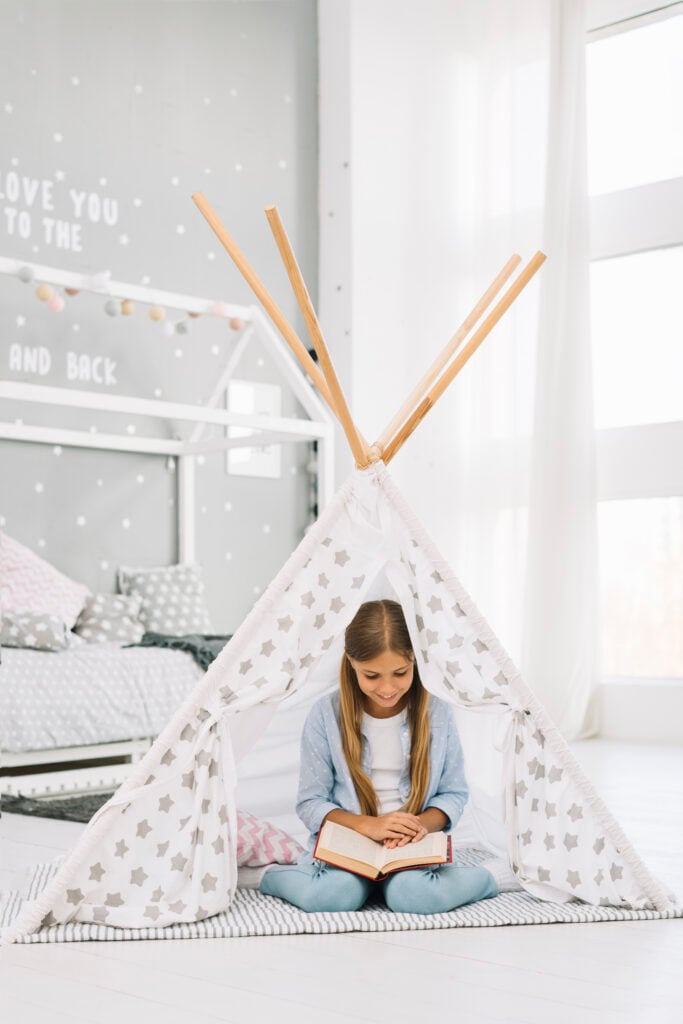
A calm spot for homework or quiet tasks
Think of this as a settling place rather than a study station.
- Place a small desk near natural light to keep energy bright and uplifting.
- Keep the area free from visual distractions, the wall in front of the desk should be calm, not filled with posters or toys.
- Use a basket or shelf for school supplies so children can find what they need independently.
- Avoid facing the bed directly, when the child can see the bed or play area while studying, the brain subconsciously associates the area with rest or play instead of focus.
The intention isn’t to demand productivity, it’s to help children gently transition into
schoolwork without resistance.
A space for imagination
Children need a place where creativity can spill freely. A rug, floor cushion, or low table
can define the play zone.
- Keep some toys visible but limit the number to avoid overstimulation. A rotational system (some toys out, others stored away) helps sustain attention and reduces overwhelm.
- Encourage a quick tidy before moving into homework time. This small ritual helps the brain shift from play to study.
A soft nest for rest
The sleep zone should feel like the exhale of the room.
- Use gentle lighting and calming textures.
- Avoid storing school items or screens near the bed ,bedtime should feel calming, not mentally busy.
- Keep the area around the bed as clear as possible, to give a cue that the day
activity has ended.
When the rest zone is peaceful, children settle faster and sleep more deeply, which
naturally supports their focus the next day.
THE ROLE OF LIGHT IN LEARNING
Light is one of the strongest environmental signals for the brain. It tells us when to be
alert and when to slow down.
Natural light should guide the day’s rhythm. Open curtains early to let in natural light. Daylight signals the body to wake up, which helps children ease into their school day with more calm and clarity.
During homework or creative tasks use warm white desk lighting (not harsh blue tones). Avoid bright overhead lights, children relax more under layered, softer illumination.
Dimmed lights for winding down in the evening, this allows you to gradually reduce
lighting to signal rest. Fairy lights, lamps, or a soft nightlight help create the right atmosphere, especially in winter months when school days are long.
Balanced lighting supports productivity, but also emotional stability. Children’s nervous systems respond quickly to changes in light, bright equals active, dim equals calm. Parents can use this to their advantage.
THE DESK SETUP, WHERE FOCUS BEGINS
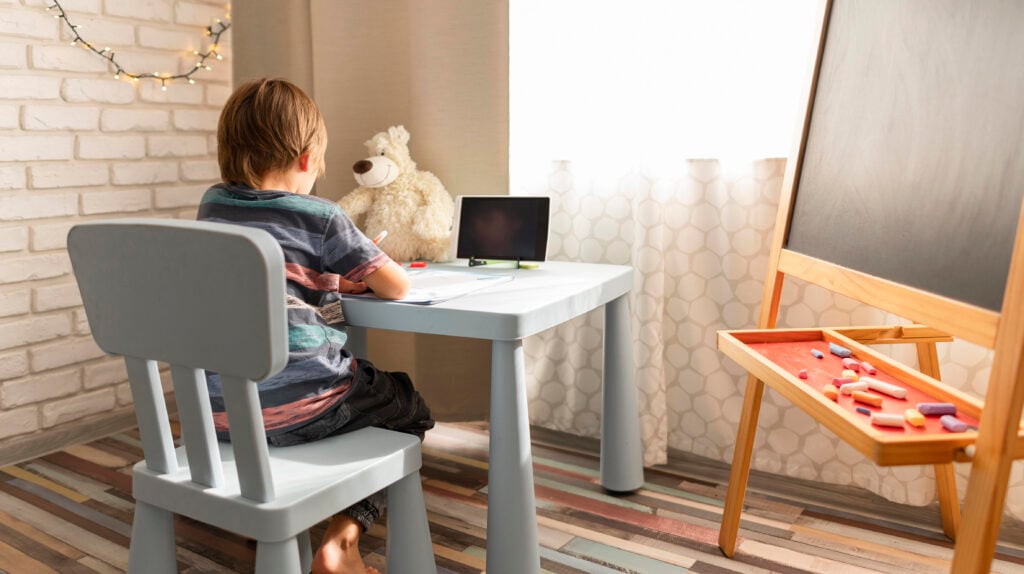
A well-arranged desk signals that this is where the work happens.
- The desk should be proportionate to the body and mind start to respond automatically.
You can strengthen that link through short rituals to signal the beginning of a study time:
- A five-minute tidy before homework.
- Lighting a small desk lamp to mark the start of study time.
- Closing the laptop and stretching when it ends.
These simple actions train the nervous system to recognise phases of concentration and rest. Over time, the environment itself becomes a teacher, quietly supporting good habits without constant parental supervision.
CHOOSING THE COLOR
Color plays subtle but a powerful role in creating an atmosphere in the space.
- Soft greens encourage balance and focus.
- Muted blues calm the mind and help with concentration.
- Warm neutrals create a sense of comfort and belonging
Bright colours can absolutely be included, just use them in accents or objects rather than covering every wall to prevent overstimulation. Play zone is a perfect area in the room to incorporate bold and playful colors. Invite your child into the decisionmaking process. When they help choose colours or décor, they feel ownership of the space, and pride leads naturally to responsibility.
KEEPING TECHNOLOGY IN CHECK
In many homes, the biggest distraction isn’t décor, it’s devices. Set clear physical and time boundaries for technology:
- Keep devices off the bed and out of the rest zone.
- Create a small charging station outside the bedroom for evening hours.
- During homework, store phones in a different room unless needed.
This will help children understand that screens are tools, not background noise.
The importance of air, sound, and movement
Air quality, sound, and movement all shape atmosphere in the room.
- Fresh air: open windows regularly, fresh air improves alertness.
- Sound: gentle background music or white noise can help some children concentrate, while others need silence, observe and adapt.
- Movement: provide a small soft mat or space for stretching between tasks. Physical
resets prevent mental fatigue.
If possible, ensure the child doesn’t face a wall directly for long periods. Glancing toward light or open space helps relieve eye and mental strain.
SLEEP AND SEPARATION
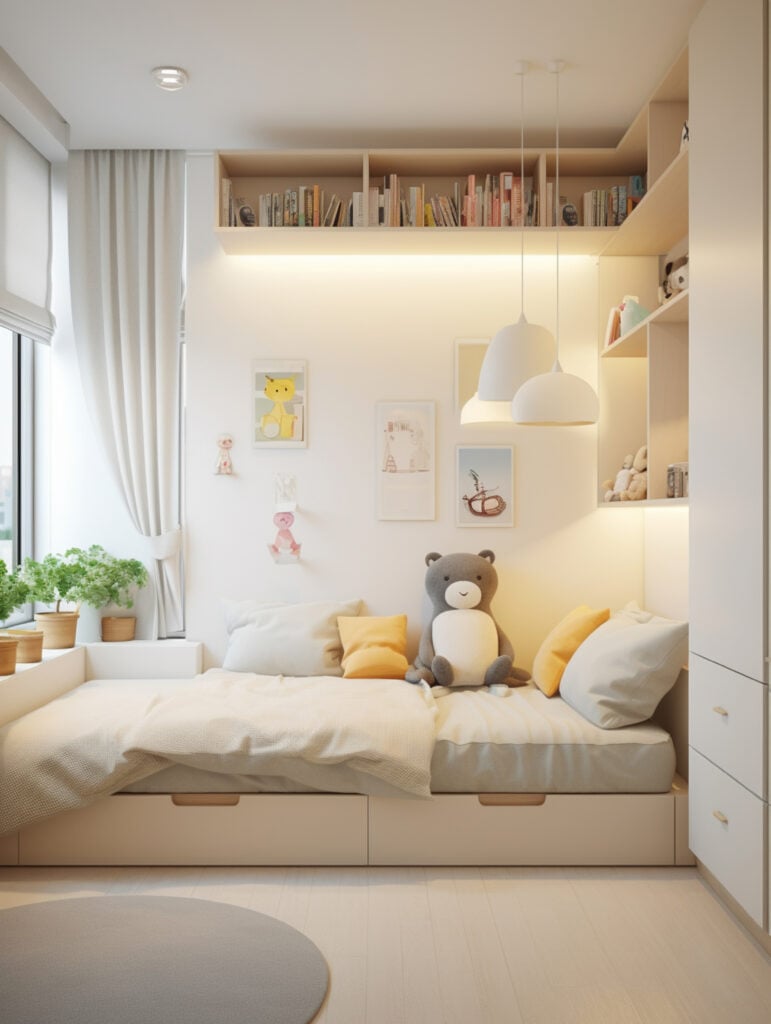
The rest area is the emotional anchor of the room. Soft linens, gentle light, and a clear space around the bed help children settle after a stimulating day. Keeping this zone free from school items and devices maintains its sense of serenity, a place that’s purely for comfort, cuddles, and winding down.
- Visual separation: a curtain, rug, or even change in wall colour can help define study side versus sleep side.
- Night routine: dim lights, close books, and pack the schoolbag before bedtime,
signalling mental closure. - No screens before sleep: at least 30 minutes device-free helps the body produce
melatonin naturally.
A peaceful sleep environment gives the brain the clarity it needs for focus the next
day, productivity begins long before the homework starts.
WHEN SPACE IS LIMITED
Not every home allows for separate study rooms or large desks, especially for families
living in apartments. Creativity makes all the difference.
Use a folding desk or wall-mounted table that can be closed after use, signalling school is done. Keep school supplies in a portable box or caddy, easy to clear away before dinner.
For siblings sharing a room, noisecancelling headphones or visual dividers help each child maintain their own zone of concentration.
Even small gestures, a tidy desk, a soft light, a closed laptop, tell the body that focus has a time and place.
Parents as guides, not monitors
Finally, the environment should support independence, not surveillance. Rather than hovering, involve your child in shaping their own workspace. Ask: what helps you focus? what distracts you?
When children help organise their study area, they feel trusted, and that trust fosters
accountability. Productivity becomes something they own, not something imposed.
You can still stay connected: check in at set intervals, share a tea break, or talk through tomorrow’s plan together. These moments turn study into collaboration rather than control.
A ROOM THAT GROWS WITH THE CHILD
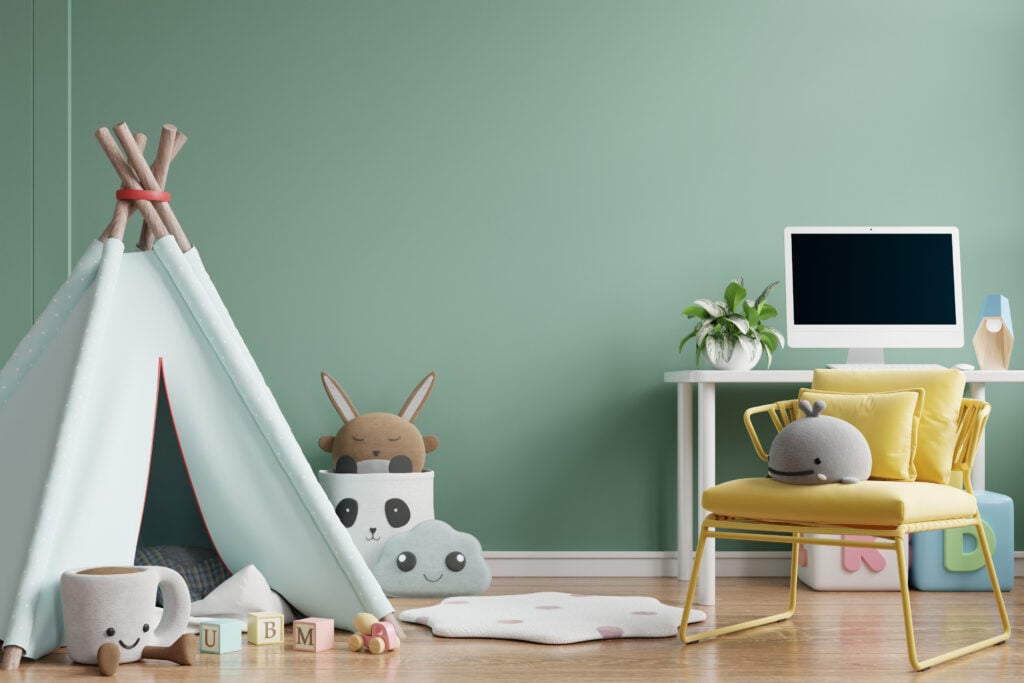
A child’s room doesn’t have to be perfect, just intentional. When space is arranged with clear zones, good light, and calm energy, it does half the parenting for you.
The environment teaches discipline through comfort and curiosity through design. It supports balance, between work and play, effort and rest, and reminds children that learning isn’t confined to school hours but integrated into the rhythms of everyday life.
Ultimately, a well-designed room helps them grow with confidence, clarity, and a sense of calm focus that stays with them far beyond their school years.