Visiting home this summer?
For many expat families, summer trips home carry a mixture of excitement, uncertainty, and the simple comfort of reconnecting with the people and places that matter most.

Written by: Helen Ellis
It is understandable that the world’s current uncertainty can make the decision to go or stay, when it comes to travelling “home” this summer, feel somewhat complex. Airfares are higher than usual, flight routes and frequencies have shifted, and navigating airports with children— amid evolving security checks and longer queues — can require extra patience and planning. Travel insurance may not cover every scenario, and even practical concerns like fuel availability can cross your mind.
Yet, if you have decided to visit home this summer, there is also an opportunity to gently set those uncertainties aside and focus on what truly matters: reconnecting, creating memories, and embracing the experience for what it is. In many ways, it is about returning to the basics—those steady, familiar elements of a visit that remain
meaningful regardless of circumstances.

SHARING YOUR PLANS WITH THE FOLKS BACK HOME
Most parents live in a bubble of anticipation, imagining that you will want to spend every waking moment with them. One part of them knows this is completely unrealistic, but another part quietly hopes it might be true. The reality, of course, is that everyone benefits from a balance of togetherness and rest. Being together 24/7—even with beloved children and grandchildren—can be intense, even if grandparents feel they should be endlessly
joyful about it.
Planting a seed early about your plans can make a big difference. If you know you will be out of town for a few days, sharing that upfront helps set expectations. If there are events or attractions you would like toexpl ore with your children, sketching out a gentle plan can be helpful. In fact, your parents may even find comfort in knowing that a scheduled “day off” here and there gives everyone space to recharge and enjoy the time together more fully.
When my own children visit, we share a Daily Plan on Google Drive. Is this a bit over the top? Perhaps for some—but it works well for us. My adult children add their ideas, I add mine. Does everything on the plan happen? No. But it creates a shared starting point, and over time, it becomes clear what is realistic. I even include an initial supermarket list so everyone can note their “must-have” items—it’s a simple way to make everyone feel at home more quickly.
BABYSITTING ASSUMPTIONS
The prospect of having parents or grandparents nearby to help with childcare can feel like a gift—though it can also bring a mix of expectations, hopes, and uncertainties. Everyone can have different emotions and concerns.
What might YOU be thinking?
“My siblings who live nearby get so much babysitting support. Maybe this is a chance for us too.”
“Will they do things differently from us—and can I be flexible about that?”
“We’ve had so little time to ourselves—I wonder if we might finally get a moment as a couple.”
“Will they feel comfortable managing young children again?”
“Last time there were too many sugary treats”
“I’d love their help, but I also want to feel confident about how things are handled.”
“I’m so pleased for Mum and Dad—they miss the children and this time together is special.”
“I’m truly grateful for any support they can offer.”
And what might YOUR PARENTS—the grandparents—be thinking?
“I can’t wait to spend time with my grandchildren—it’s such a joy.”
“I’d love to help, though I may need to ease into it again.”
“I hope the grandchildren feel comfortable with me.”
“It would be lovely to share both responsibilities and fun moments this time.”
“I may not be a full-time babysitting grandparent, but I still want to be involved.”
These are all very real and valid thoughts—you could probably add more.
A moving letter published in tulsakids, an online family magazine, captures this beautifully. The author, now a grandmother herself, wrote to her late mother:
“Dear Mom,
I wish you were alive so I could tell you how sorry I am. When I had young children, I was completely unrealistic in my expectations of you. I didn’t understand why you weren’t eager to step up and help me with my adorable babies. OK, they were precious, but now I know they were also a lot. Even at the time, I knew that two babies, just fifteen months apart were a handful. That’s precisely why I was so desperate for help. I didn’t understand that you didn’t have the energy to care for little ones. I know you loved all your grandchildren, but you also had your limits … Now, I am the 63-year old grandmother with two precious grandchildren I adore. I want to step up to the plate and be everything for them. My mind and heart are willing, but my body is not always in agreement. I have so much love for them, but as much as I hate to admit it to anyone (including myself), I have my limits … Please forgive me, mom, and thank you for being the mother and grandmother you were!” (Diane Morrow-Kondos)
It is important to remember that parents or grandparents are not automatically “on call”—even though their love and willingness to help can sometimes make it feel that way. What they offer often comes from a place of deep care, and finding a balance ensures that everyone feels valued rather than stretched.
Often, they may not voice their limits. It is instinctive for them to want “to be there” for you. But there is a positive middle ground—one where everyone feels both supported and respected.
The key to finding that balance is open, thoughtful communication. Speaking with your parents or grandparents before your visit about how they feel can set a reassuring tone. They may not know exactly what they can manage until they settle into the rhythm again—and that’s perfectly okay.
A simple, supportive approach might sound like this:
“Mom/Dad, we really want you to enjoy our visit and spend time with the kids. We also want to make sure everything feels comfortable for you. Please feel free to be honest with us—before and during the visit. It really matters to us.”
THE SHRINKING FRIENDS LIST VERSUS THE GROWING
PARENTAL RESPONSIBILITIES LIST
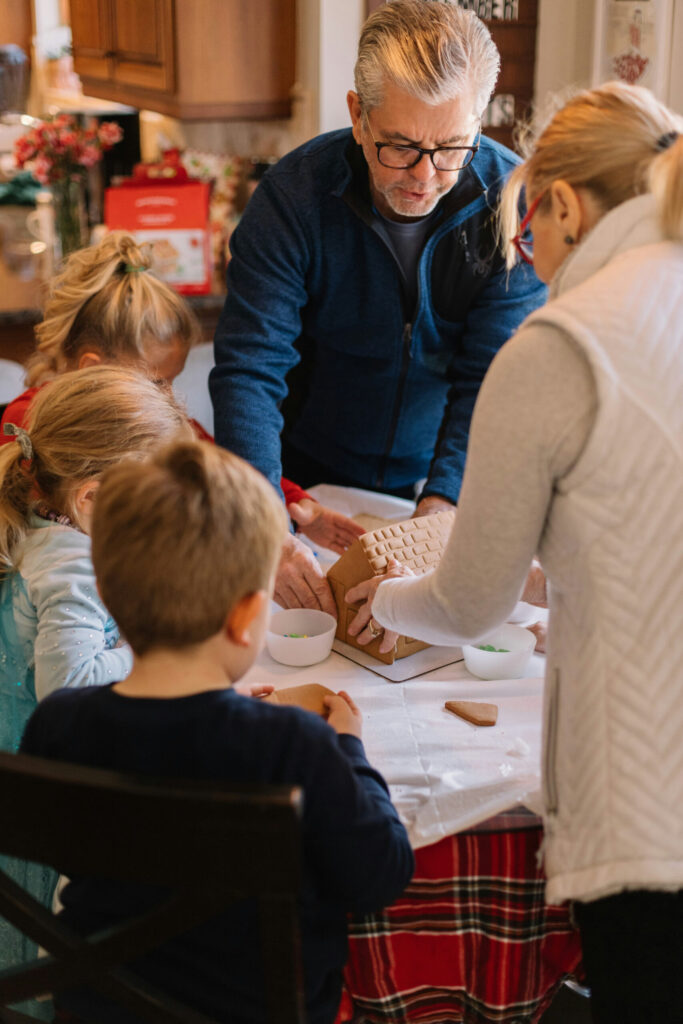
Over time, another shift often becomes apparent. With each visit, the list of friends you hope to see may quietly become more focused. This is not because those friendships no longer matter, but because your time and energy are being directed more intentionally. Some friendships remain wonderfully steady despite the distance—you simply pick up where you left off. Others may gently fade, and while that can feel bittersweet, it is also a natural part of life’s evolution. Even those who never leave home experience similar changes. In many ways, connection becomes less about quantity and more about depth.
At the same time, visits home can bring meaningful opportunities to support your parents in new ways. You may notice small tasks they would appreciate help with, or find moments to have thoughtful, caring conversations about their wellbeing. You might also gain a deeper appreciation for siblings who are more involved in daily support—and find ways to acknowledge or share that role.
Every visit is different. What worked last time may look different this time. That is simply part of family life as it grows and changes. Stay flexible, focus on what you can do, and value the moments you share. And remember— “doing your best” is not only enough, but also something to feel genuinely good about.