Bigger Isn’t Always Better: 7 Reasons to Consider Applying to a Small School
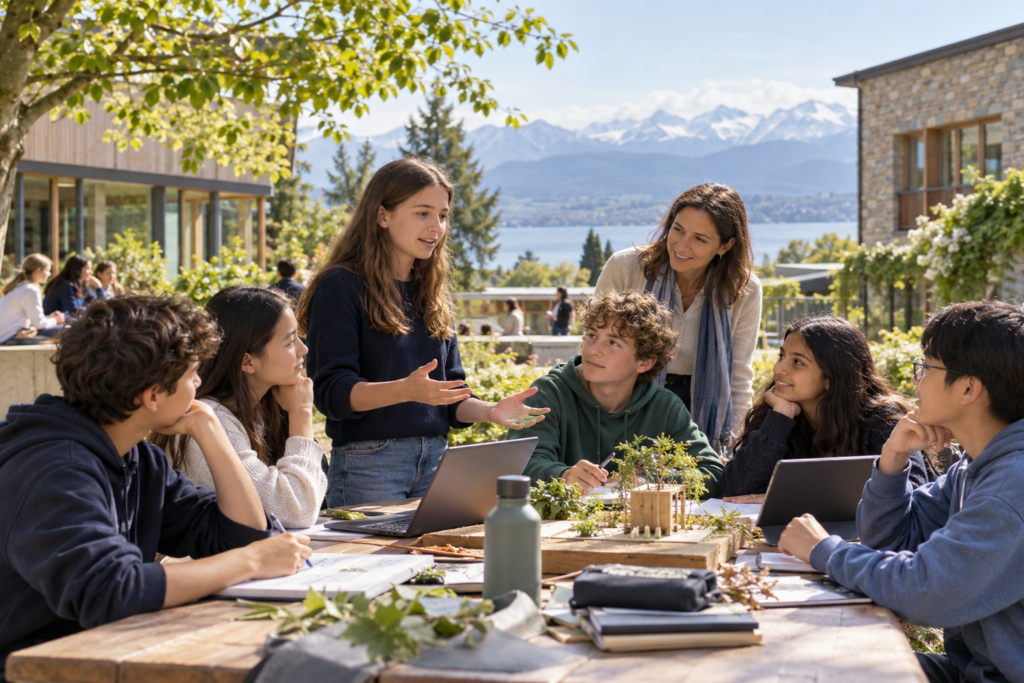
When looking for schools in the Geneva–Lausanne area, one of the considerations many families have is school size. For young families and new arrivals to the area in particular, a small international school can often offer a smoother transition and faster access to community and friends, in a way that rivals a larger campus with hundreds of pupils in every year group.
There are real benefits of small schools, from closer relationships with teachers to a stronger sense of belonging, but the full picture only becomes clear once you look at how these schools actually work day to day. If you’re weighing up smaller international schools near Geneva and Lausanne against bigger institutions, here’s what tends to set them apart.
1. More Personalised Learning and Individual Attention
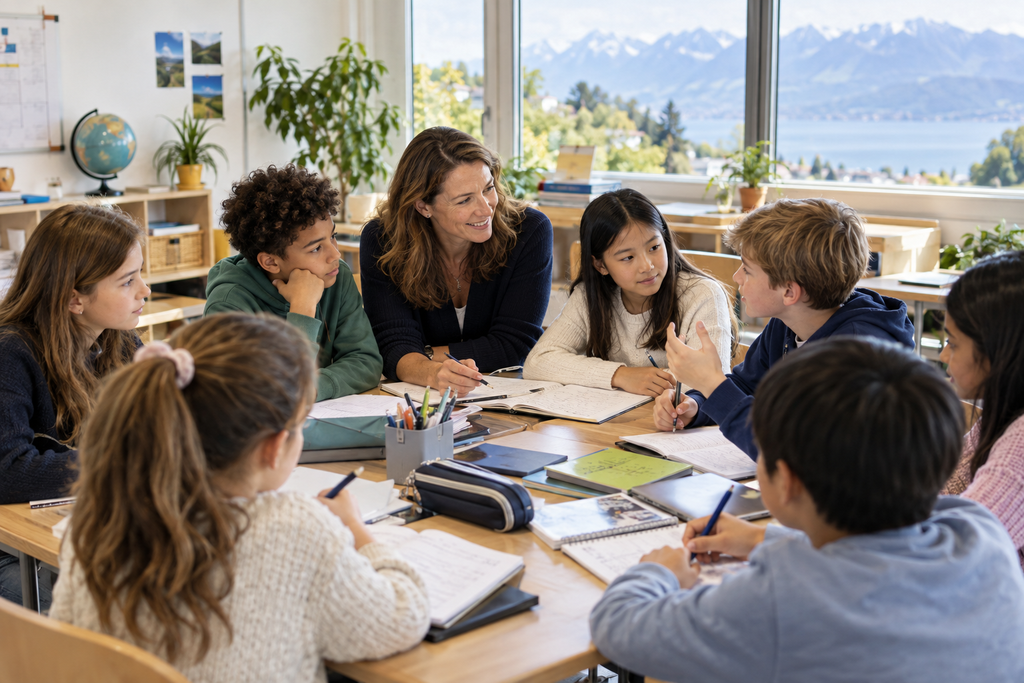
Smaller classes give teachers room to see how each child learns, not just how the group as a whole is performing.
With fewer pupils in the classroom, it is easier for a teacher to recognise when a student is struggling with a concept before it develops into a larger problem. Teachers may also see when a child is ready for greater academic challenge and adapt the work accordingly.
La Côte International School in Aubonne is a good example of this in practice. LCIS describes its classes as intentionally small, giving teachers more opportunities to understand individual students and provide an appropriate balance of challenge and support. The school’s personalised approach also allows teachers to monitor individual progress and provide feedback based on each student’s next steps.
2. Stronger Relationships Between Students and Teachers
In a well-run small school, teachers may have more opportunities to know their pupils individually. This can give them a better understanding of each pupil’s interests, concerns and strengths.
That familiarity changes how comfortable a child feels asking for help. A pupil who’s shy about raising their hand in a class of thirty might feel quite differently in a class of twelve, where the teacher already knows they tend to hang back and can gently draw them into the conversation.
Over a school year, these micro-moments really add up and students feel increasingly confident to:
- Ask questions when they’re confused, rather than staying quiet.
- Approach a teacher outside class hours for extra support.
- Raise concerns about workload or wellbeing.
These smaller, everyday interactions build trust, and trust tends to make pupils more willing to take risks in their learning.
3. A Stronger Sense of Community and Belonging
Moving to a new country and a new school system is a big adjustment for any child, and a smaller school environment can make that transition a bit gentler.
In a large school, an international pupil arriving mid-year might struggle to find their footing among hundreds of unfamiliar faces. In a smaller school, they are often introduced to classmates sooner, recognised by teachers and other students, and included in group activities more easily.
Staff in a close-knit international school often have more opportunities to recognise the challenges associated with relocating, such as adjusting to a new curriculum, learning another language or missing friends back home.
4. Greater Student Participation and Engagement
Smaller class sizes can create more opportunities for each student to speak, contribute and be heard.
In a class of ten or fifteen, teachers find it easier to involve each pupil in discussions, ask follow-up questions and provide immediate feedback rather than relying mainly on written work to gauge understanding.
This regular participation tends to build confidence over time. Pupils who are used to speaking up in class discussions often find it easier to:
- Present ideas in front of a group.
- Take part in debates or presentations.
- Contribute to group projects without feeling overlooked.
None of this happens overnight, but consistent practice in a smaller setting gives students more chances to develop these skills across a school year.
5. More Opportunities to Get Involved and Lead
A smaller school may offer fewer activities overall, but students can sometimes find it easier to participate in the options available.
In a large school, competition for places on a sports team, in a school production or on the student council can be fierce, simply because so many pupils are trying out for the same spots. In a smaller school, there’s usually more room for a wider range of students to take part, try something new or step into a leadership role. For example, a pupil who might hesitate to audition in a large drama department may feel more confident putting themselves forward in a smaller school.
6. More Personal Pastoral Support and Parent Communication
A smaller student community makes it easier for staff to identify changes in a pupil’s mood, effort or behaviour, including possible signs of exam stress. When pastoral systems are effective, staff can follow up promptly rather than waiting for a formal review by the wider pastoral care team, allowing concerns to be addressed sooner.
The same applies to communication with families. Parents at smaller schools may find it easier to:
- Receive a direct, personal response from a teacher.
- Arrange a conversation about their child’s progress.
- Build an ongoing relationship with staff over several years.
For families new to a country, this kind of open communication can provide reassurance during a period of significant change.
7. Greater Flexibility to Respond to Individual Students
Every child learns differently, and a smaller school environment gives teachers more room to adapt to that.
Some pupils need extra time to process new material. Others need more of a challenge to stay engaged. Some are learning in a second or third language and need additional support with vocabulary and comprehension. In a smaller class, a teacher may have more flexibility to support these different needs within the same lesson.
At La Côte International School, teachers monitor individual progress and provide feedback based on each student’s next steps. This can help pupils understand what they’re doing well and where they need to improve.
Small School or Large School: Which Environment Is Right for Your Child?
Neither option is automatically better, and the best choice really comes down to your child.
Large schools tend to offer a wider range of subjects, extracurricular activities and facilities, simply because they have more students and resources to draw on. They can be a good fit for children who are confident, independent and keen to have lots of options to choose from.
Small schools tend to offer closer relationships, more individual attention, easier access to activities and leadership opportunities, and a community that may feel easier to navigate. The trade-off is usually a narrower range of subject choices and extracurriculars, though this varies quite a bit between schools.
Think about how your child learns best, how they cope with change, and what kind of environment helps them feel comfortable enough to do their best work.
What Should Parents Look for When Visiting a Smaller International School?
A school visit can reveal details that may not be clear from the school’s website, so parents should arrive with a few specific things to check.
Before you visit, it helps to have a short list of questions in mind. Here are some worth asking or observing directly:
- What’s the actual class size, not just the average across the school?
- How do teachers differentiate lessons for different ability levels?
- What pastoral support is available, and how quickly do staff typically respond to concerns?
- How are students encouraged to participate in lessons and activities?
- How does the school communicate with parents, and how often?
- What extracurricular activities are on offer, and how accessible are they to all pupils?
Watching a lesson in progress, if possible, can help parents see how the school approaches personalised learning in practice.
Families considering smaller international schools in the Geneva and Lausanne region should also think about travel time, curriculum choices and the availability of places.
Could a Small International School Be Right for Your Child?
The benefits of small international schools often include closer relationships, more individual attention, easier access to activities and leadership opportunities, and a community that may feel easier to navigate.
However, a small school won’t be the right choice for every family. Some children thrive with a larger peer group and a wider selection of subjects and activities. Others feel more comfortable in a close-knit environment where teachers and classmates know them well. For families in the Geneva and Lausanne region, La Côte International School Aubonne is one of several options to consider.
The right decision will depend on your child’s personality, learning style, academic needs and preferred school environment.
Frequently Asked Questions
What are the main benefits of a small international school?
The main benefits include more personalised learning, closer teacher-student relationships, a stronger sense of community, more opportunities for participation and leadership, and closer communication between staff and parents.
Are small schools better than large schools?
Not automatically. Small schools suit some children better, particularly those who benefit from close relationships and individual attention, while others do well in larger schools with wider options.
Do students receive more individual attention in smaller schools?
They can. Smaller classes may give teachers more opportunities to work with individual pupils and adapt lessons to different needs.
Are smaller schools good for shy or introverted children?
Often, yes. Smaller classes and a familiar community can make it easier for reserved pupils to participate and build confidence gradually.
Are small international schools suitable for children moving from another country?
They can be. A smaller, close-knit community may help newly arrived children become familiar with classmates and staff more quickly, although the quality of the school’s transition and language support also matters.
Do small international schools offer the IB?
Some small international schools offer an IB programme, but provision varies. La Côte International School, for example, offers the IB Diploma Programme for students aged 16 to 18. Parents should check which specific IB programme each school is authorised to teach.
Do smaller schools offer enough extracurricular activities?
This depends on the school. Some smaller schools offer a good range of activities with easier access, though the overall variety may be narrower than at a large school.
Can small schools provide good university preparation?
They can. Strong university preparation depends on the curriculum, available subject choices, examination results and the quality of the school’s guidance programme. Parents should ask about subject choices, counselling provision, results and recent university destinations.
How can parents tell whether a school offers personalised learning?
Ask about class sizes, how lessons are adapted for different abilities, and how teachers track individual progress. Visiting a lesson in person, if possible, is one way to judge this.
What should parents ask about class sizes during a school visit?
Ask for the actual number of pupils per class, not just a school-wide average, and ask how this affects how lessons are taught and how much individual feedback students receive.