Best Places to Live Between Geneva and Lausanne for Families
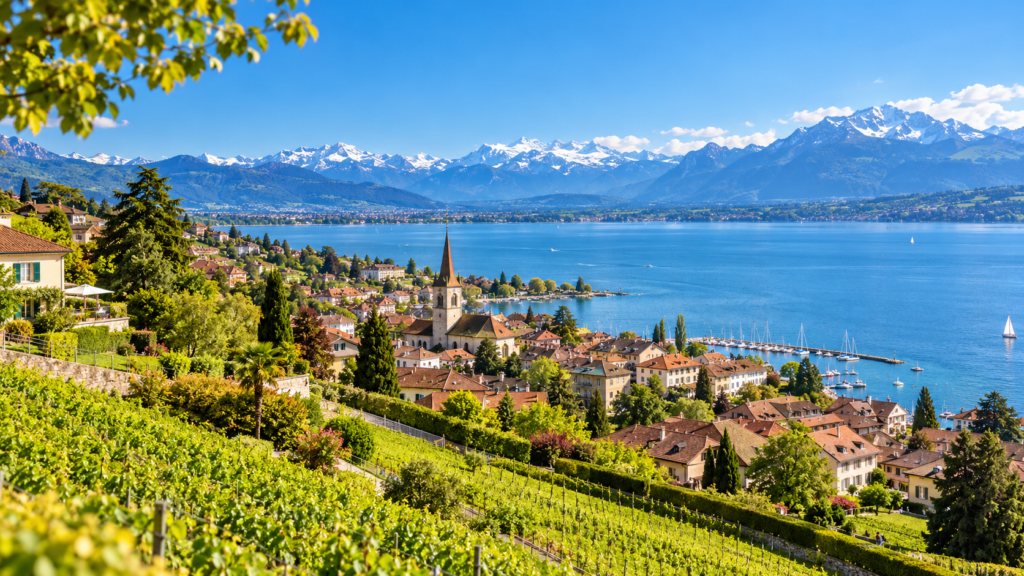
If you’re like many international families working in Geneva or Lausanne, you may be looking to settle in one of the calm and scenic towns in between, rather than in the cities themselves. Along Lake Geneva (Lac Léman), particularly in the La Côte region, these towns include some of the best places to live near Geneva if you want more space and a lower cost of living without giving up an easy commute.
Renting in the city centre can consume a significant part of the household budget, but the same budget can stretch much further in towns just twenty or thirty minutes away by train. If you’re weighing up where to live near Geneva as a family, this guide compares the main towns by commute time, schooling, family amenities, housing costs and everyday lifestyle. For a wider picture of family life in the region, this guide to raising children in Geneva is a useful companion read.
Why Live Between Geneva and Lausanne?
Families choose this corridor for a mix of practical and lifestyle reasons. None is decisive alone, but together they explain why Nyon, Gland, Rolle, Morges, Coppet and Versoix come up so often when people search for the best places to live in Switzerland for families.
- More affordable housing. Housing can be cheaper than in central Geneva, particularly in Gland, Rolle and locations further inland. However, the difference varies considerably by town, property type and proximity to the lake or railway station.
- Lake and mountain views. Lake Geneva, the Jura and the Alps are part of daily scenery, not just a weekend trip.
- Good schools, including bilingual options. A solid mix of public and international schools sits within easy reach.
- Reliable transport. Frequent trains and the A1 motorway connect the towns to both Geneva and Lausanne.
- More space and a calmer pace. Gardens, parks and quieter streets are easier to find outside the city centres.
Living between Geneva and Lausanne gives families a peaceful setting with convenient access to both cities, excellent schools and plenty of outdoor activities.
Key Factors for Choosing a Town
Every family weighs these differently, but the same questions tend to come up when comparing towns along this corridor.
- Commute time. Check both train and car journeys, and note that the A1 can become heavily congested at rush hour.
- Schools. Look at what’s available locally: international, bilingual or public.
- Housing costs. Average rents and available stock vary a fair bit between towns.
- Family amenities. Parks, lakeside access and weekend activities matter more once you have children.
- Community. Some towns have a large, established international community; others have a more local, predominantly French-speaking community.
A short commute means little if the school doesn’t suit your child, and a lovely lakeside apartment quickly becomes less convenient if you’re stuck in traffic every evening.
Best Towns Between Geneva and Lausanne – at a Glance
Here’s a quick overview of some of the best towns between Geneva and Lausanne for international families.
| Town | Location | Commute to Geneva | Commute to Lausanne | Schools | Indicative rent for a 2-bedroom flat | Best for |
| Nyon | La Côte, lakeside | ~15-20 min train | ~30-35 min train | Public, plus international and bilingual options | CHF 2,250 to 2,900 per month | An established international community with many cultural activities. |
| Gland | La Côte, lakeside | ~20-25 min train | ~25-30 min train | Public schools, LCIS nearby | CHF 2,050 to 2,650 per month | A midpoint between both cities, more affordable housing. |
| Rolle | La Côte, lakeside | ~25-30 min train | ~20-25 min train | Local public, LCIS a short drive away | CHF 2,150 to 2,800 per month | A quieter, more historic setting, also a midpoint between both cities. |
| Morges | Lakeside, near Lausanne | ~35-40 min train | ~10-15 min train | Local public schools and access to private and international options | CHF 2,750 to 3,500 per month | Good school choice and an easy Lausanne commute |
| Coppet | Lakeside, near Geneva | ~12 min train | ~40-45 min train | Local public schools | CHF 2,500 to 3,200 per month | A short Geneva commute, picturesque town. |
| Versoix | Lakeside, near Geneva | ~8-10 min train | ~45-50 min train | Local public schools and access to private schools around Geneva | CHF 2,350 to 3,000 per month | Easy Geneva access with an outdoorsy feel |
Times refer to typical direct rail journeys and may vary by service. Check the current SBB timetable before choosing a location. Depending on the town and destination, direct train journeys can take from under 10 minutes to around 50 minutes.
Rental estimates were calculated using RealAdvisor’s August 2026 annual rent per square metre and a typical floor area of 70 to 90 square metres. Actual asking rents vary by location, condition and included charges.
Nyon
Nyon sits right on the lakeshore, built around Nyon Castle with views across to the Alps on a clear day. The train to Geneva takes 15 to 20 minutes, and Lausanne is about 30 to 35 minutes away.
Nyon has both public schools and international options, including bilingual programmes, which is part of why so many expat families settle here rather than pass through. Housing costs less than in Geneva, though a flat near the lake will cost more than one further inland. Families have access to lakeside parks, sailing clubs and a lively summer calendar, including the Paléo Festival. Passenger boats connect Nyon with medieval Yvoire in France, providing a scenic cross-lake route for commuters and day trips.
Gland
Gland sits almost exactly halfway between the two cities, which makes it a practical option where one parent commutes to Geneva and the other to Lausanne. Geneva Airport is only around 20 minutes away by car, handy for families who travel often.
In terms of education, Gland has local public schools and La Côte International School in nearby Aubonne is within easy reach. The town also has a good range of sports facilities and parks, and housing here tends to be a little more affordable than Nyon.
Rolle
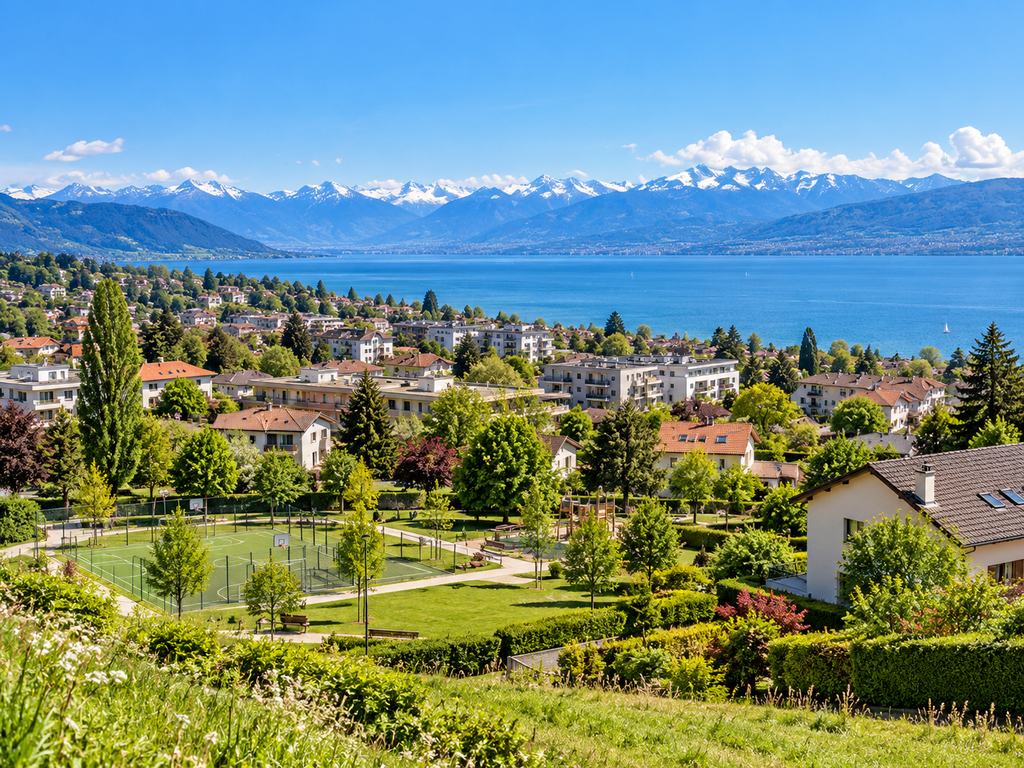
Rolle is a smaller, more historic lakeside town in the heart of La Côte, with a working harbour, a waterfront castle and vineyards on the hillside behind it. The pace is quieter than Nyon or Gland, and the international community, while smaller, is active.
Local public schools serve the town well, with La Côte International School a manageable drive away. Housing demand has grown as more people discover Rolle, so good properties can move quickly.
Morges
Morges is popular with families because of its walkable centre, lakeside setting, parks and short train journey to Lausanne. Geneva is a longer journey at 35 to 40 minutes.
Schools have a solid reputation, with strong public options and a few private alternatives nearby. Morges has plenty of green space, including a marina, and current rental estimates place the town towards the higher end of this comparison.
Coppet
Coppet is a small, picturesque village about 15 km from Geneva, known for its 13th-century castle and compact old town. The train to Geneva takes around 12 minutes, one of the fastest on this list, though Lausanne is a longer trip at 40 to 45 minutes.
Local public schools cover the village, and Geneva’s many international schools are easily accessible. The community is tight-knit given the smaller population. Coppet’s lakeside promenade makes it popular, so expect some competition for the better properties.
Versoix
Versoix sits about 8 km from Geneva, with a marina, sailing club, sandy beaches and the Versoix River nature reserve on its doorstep. The train to Geneva is quick, at 8 to 10 minutes, though Lausanne takes 45 to 50 minutes.
Public schools are well regarded locally, and the international community has grown steadily. Geneva’s many international schools are also easily accessible, with older children easily able to manage the commute on their own. Housing remains more affordable than central Geneva, and Plage de Versoix, the local beach, is a big summer draw alongside good local shops.
Each town has its own character, so your choice will depend on your lifestyle, school preferences and commute.
Schools and Education Options
International families in this corridor generally choose between three routes.
- International schools often teach mainly in English and include French as a subject, while some run dedicated bilingual programmes. Curricula, language models and fees vary by school. Tuition can take up a significant part of the household budget, and some schools have waiting lists.
- Bilingual schools blend French and English, easing the transition for children who aren’t yet fluent in French while building local language skills over time.
- Local public schools are free and teach in French, a strong option for families settling long-term, though the language switch can be a steep learning curve at first.
The La Côte region and the area around Lausanne both have a reasonable spread of international and bilingual schools. If you have children of different ages, check each school’s age range carefully, since not all cover primary through to secondary. La Côte International School in Aubonne serves several of the towns covered here, with a wide-servicing door-to-door bus service ranging from Nyon to Lausanne. It is a common reference point for families comparing international options.
Commuting Between Geneva and Lausanne
Most families commute by train, car, or a mix of both. With excellent bike paths along the lake, some active parents even like to cycle from as far as Nyon into Geneva. Direct trains connect all six towns with Geneva or Lausanne, with typical journeys ranging from under 10 minutes to around 50 minutes. Keep in mind that bus services are designed to connect the main railway station to parts of town further afield, making living outside the town centre possible without a car.
Driving is an option too, but the A1 motorway is prone to congestion during morning and evening rush hour, and a 25-minute journey can easily stretch to 45 minutes or more at peak times. For households with two working parents, proximity to a train station tends to matter more than town size. Check journey times in both directions, since a town that’s excellent for Geneva isn’t always convenient for Lausanne. Factor in school-run logistics too, as that adds time on top of the commute itself.
Cost of Living Comparison
Housing can be cheaper than in central Geneva, particularly in Gland, Rolle and locations further inland. However, savings vary considerably by town, property type and proximity to the lake or railway station.
Costs vary between towns, and even within a single town depending on distance from the lake and the station. Everyday costs such as groceries may be broadly similar across the Swiss side of the region. Childcare and leisure costs vary by municipality and provider (public or private).
Cross-Border Living as an Alternative
Some families choose to live just across the border in France, in towns such as Divonne-les-Bains, while working in Geneva or Lausanne.
The appeal is mainly cost. Housing in French border towns is often cheaper than on the Swiss side, and the commute into Geneva can still be manageable depending on where you’re based.
Eligible cross-border workers generally need a G permit. The requirements depend on nationality and employment status, so check the current rules with the canton where you’ll work.
Frequently Asked Questions
What are the best towns to live between Geneva and Lausanne for families?
Nyon, Gland, Rolle, Morges, Coppet and Versoix all feature regularly, each with a different balance of commute time, schooling and cost.
Which town is best for commuting to Geneva?
Versoix and Coppet offer the shortest train journeys into Geneva, both under 15 minutes. Nyon is a close second with a direct connection to Geneva.
Are there international schools in towns between Geneva and Lausanne?
Yes. La Côte International School in Aubonne, Ecolint and Collège du Léman are examples of schools that serve several towns in this corridor, and Nyon has a well-established international and bilingual school scene.
How much cheaper is living between Geneva and Lausanne compared to Geneva?
Housing can be cheaper than in central Geneva, but the difference varies considerably. Gland, Rolle and inland locations may provide greater savings than Nyon, Coppet or Versoix on the same size dwelling.
What is the commute time from Nyon to Geneva?
Around 15 to 20 minutes by train.
Which area has the best schools for international families?
Nyon has several private and bilingual options, while Gland, Rolle and Morges have access to international schools elsewhere in La Côte and around Lausanne.
Is Coppet a good place for families?
Yes, particularly if a fast Geneva commute is the priority. Older children can also easily manage the commute into town or to school. It’s smaller and more close-knit than Nyon, with easy lakeside access and walking and cycling paths.
What is the cost of living in Morges compared to Geneva?
Morges can be more affordable than central Geneva, although rent varies by property size, condition and location.
Can I live in France and work in Geneva or Lausanne?
It may be possible, but eligibility for a G permit depends on your nationality and employment status. Divonne-les-Bains is more practical for commuting to Geneva than Lausanne, and you’ll also need to check the tax, healthcare and schooling implications.