Beyond the Label: Why Luxury Management Careers Now Demand a Hospitality Mindset
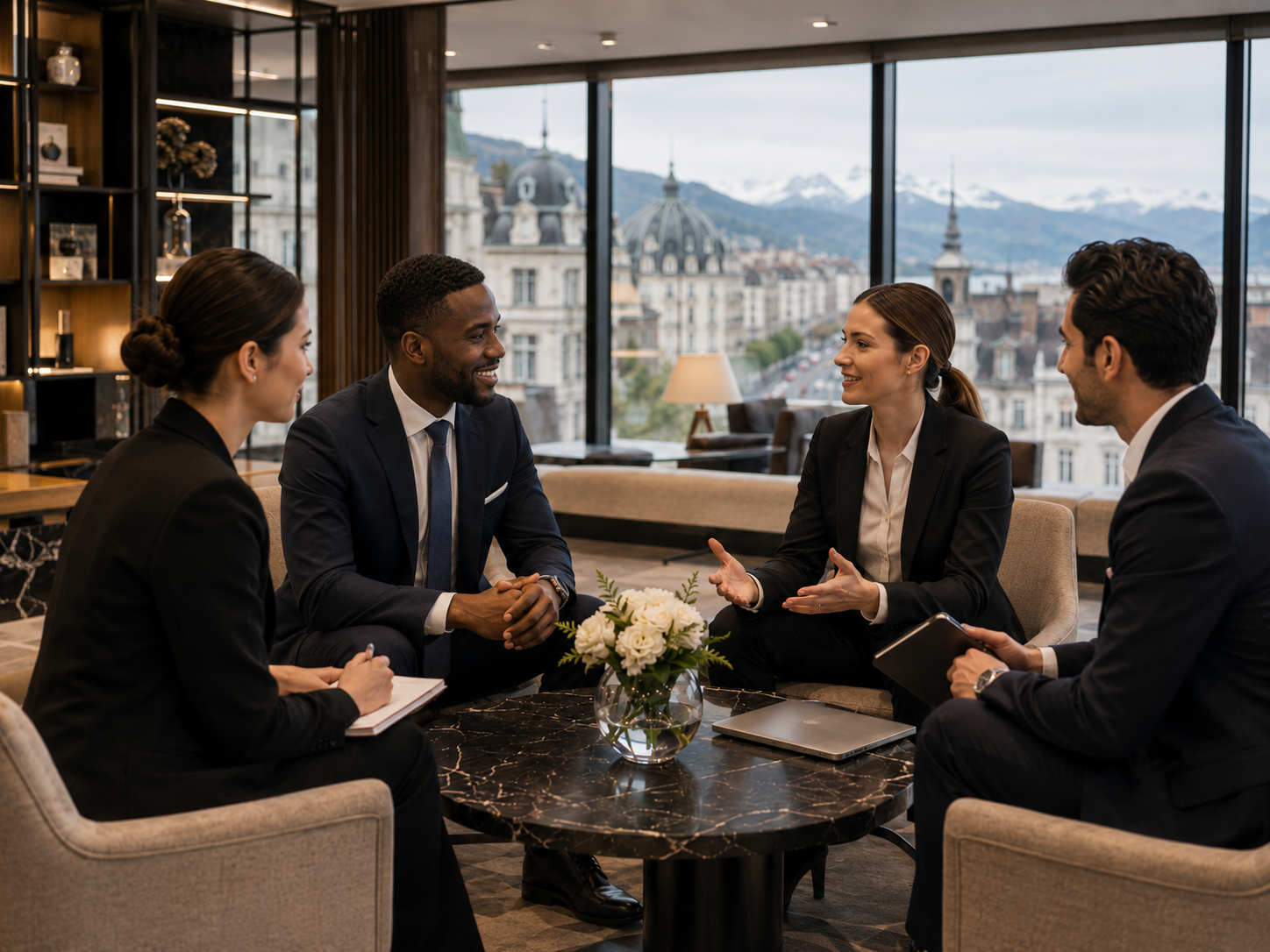

Every year, thousands of graduates enter the luxury sector armed with business degrees, brand fluency, and a polish that would satisfy any recruitment team. What they frequently lack, however, is the one thing that clients actually notice: the instinct and empathy to put another person at the centre of every decision.
This hospitality mindset is what defines success in modern luxury management careers. As premium brands in fashion, finance, aviation, wellness, and gastronomy compete for a smaller, more demanding pool of ultra-high-net-worth clients, the ability to anticipate desires, cultivate relationships, and design emotionally resonant moments has become the most coveted leadership skill in the global luxury economy.
Swiss Education Group (SEG) sits at the forefront of this evolution. Through four distinct institutions, César Ritz Colleges Switzerland, Culinary Arts Academy Switzerland, Swiss Hotel Management School, and HIM Business School, SEG has built a talent pipeline that prepares graduates not just for hospitality roles, but for the full breadth of global luxury careers where a hospitality mindset now functions as a baseline requirement.
Why Premium Brands Want a Hospitality Mindset
Moving from Transactional Sales to Experiential Luxury
Until not so long ago, brands still competed on the exclusivity of physical inventory. The rarity of a timepiece, the provenance of a leather good. Today’s high-net-worth clients are drawn to something less tangible but far more enduring: curated, memorable journeys.
Clients now spend considerable time researching a product, reading the reviews, and comparing the alternatives. What they have not yet decided is whether they trust the brand with their time, their story, and their long-term loyalty, a decision which is usually made within minutes of human contact.
The data reflects this plainly. Bain & Company’s Global Luxury Study has consistently shown that experiential categories, including private travel, high-end culinary experiences, and bespoke wellness, have outpaced hard goods across the top luxury spending segments for several consecutive years. Clients are spending more on feelings.
For brands, this means every client-facing professional must think less like a salesperson closing a transaction and more like a host orchestrating a memorable occasion. That’s where professionals having graduated from Swiss Education Group’s culinary arts, business and hotel management programmes have an edge.
Meeting Modern Luxury Consumer Expectations
The contemporary luxury consumer profile has shifted in three measurable ways. They are younger, with Gen Z and millennial buyers now accounting for a majority of luxury growth globally. They are more culturally informed, expecting brand representatives to understand nuance across languages, traditions, and regional sensitivities. And they are more demanding of authenticity, rejecting scripted service in favour of interactions that feel genuinely attentive.
Hyper-personalisation is no longer a differentiator. It is a baseline expectation. A UHNW client who visited a property or boutique six months ago expects to be remembered. They expect the representative to know their preferences without being reminded. They expect the conversation to start where it last ended.
Meeting that expectation at scale requires professionals who are trained not just in product knowledge, but in the architecture of long-term relationships.
The Anatomy of Modern Luxury Service Design
Leading luxury groups now invest significantly in what is called service design, the deliberate mapping of every emotional touchpoint across the client journey, from first digital contact through post-purchase follow-up. The discipline borrows directly from hospitality.
Hotels have always understood that a guest’s experience is the sum of hundreds of micro-moments: the weight of the key card, the temperature of the lobby, the recall of a dietary preference from a prior stay. Premium fashion houses, private banks, and prestige automotive brands have adopted this logic wholesale.
Training a professional to design and deliver that quality of attention is not a business school outcome by default. It is, however, precisely what hospitality management education is built to produce.
How Can I Have a Luxury Management Career grounded in Hospitality?
The fastest route into luxury management, across any sector, runs through a structured hospitality education that develops three specific professional capacities: emotional intelligence, relationship-based selling, and the soft skills required to manage client interactions with consistent grace. These elements are embedded into SEG’s luxury management programmes.
Developing Emotional Intelligence in Luxury Management
Emotional intelligence in a luxury context is a learnable, deployable professional skill. It means reading a client’s body language before they voice a concern. It means knowing when to lead a conversation and when to recede. It means understanding that a client who appears dissatisfied with a product is often dissatisfied with something else entirely.
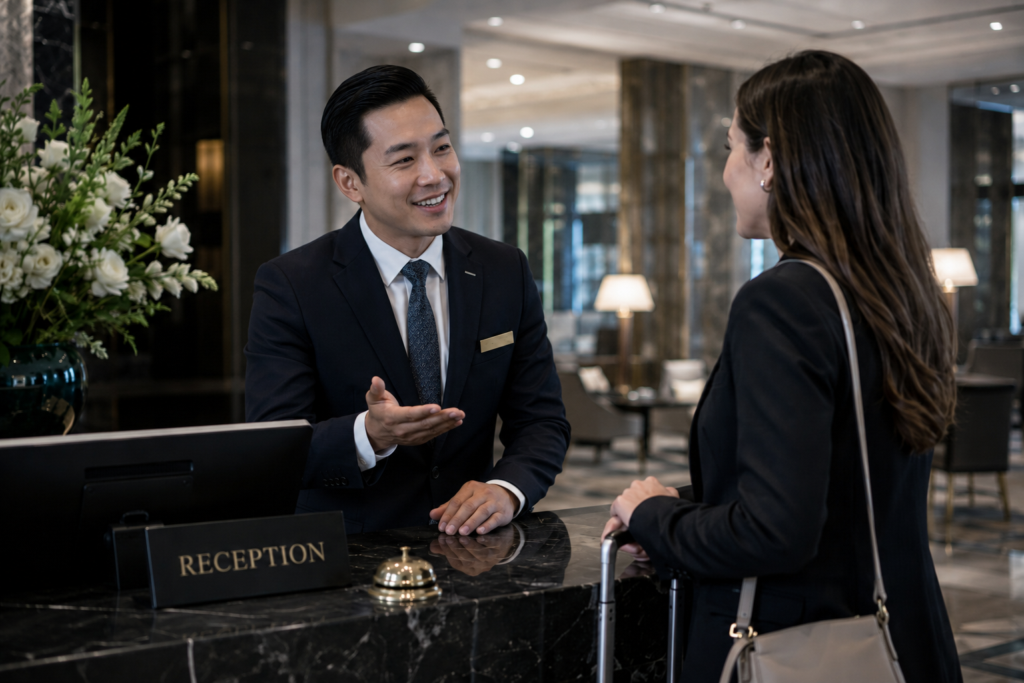
Hospitality programmes build this capacity through live operational exposure. At Swiss Hotel Management School, for instance, students manage real guest interactions inside operational Swiss hotel properties during their practical training modules. The feedback is immediate and unfiltered. A guest either felt seen and well-served, or they did not.
That kind of live calibration produces professionals who don’t just know the theory of empathy. They have practiced it under pressure.
Shifting from Sales Pitches to Relationship-Based Selling
Client cultivation is a process measured in months and years, not individual transactions. The professional learns the client’s family, their aesthetic preferences, their giving patterns, and the occasions that matter to them. When a genuinely relevant product or experience becomes available, the conversation is a natural extension of an existing relationship, not a cold approach.
This is the standard operating model for private banking, yacht brokerage, prestige real estate, and haute horlogerie. It is also the standard taught across SEG programmes, where client relationship management is embedded from the first year of study.
Mastering the Soft Skills for Luxury Managers
The term soft skills actually undersells what elite luxury roles truly require. The competencies that distinguish strong luxury managers from the rest include active listening at a depth that most professionals never develop, cultural fluency across multiple international contexts, discretion as an operating principle rather than an occasional practice, and the ability to manage complex client expectations without visible friction.
These are not skills developed in a lecture theatre. They emerge through immersive, cross-cultural environments, precisely the kind that a Swiss-based education provides, where students from more than 90 nationalities learn to collaborate, communicate, and serve alongside each other before entering the workforce.
The Swiss Blueprint: Choosing Your Specialised Luxury Pathway
SEG’s four institutions share a philosophical foundation but serve distinct segments of the global luxury market. The choice of school is, in practice, the first strategic career decision a luxury professional makes.
Entrepreneurial Innovation & Applied AI at César Ritz Colleges Switzerland
César Ritz Colleges Switzerland occupies a particular position within SEG: it combines classical Swiss hospitality rigour with a forward-facing focus on technology, sustainable business models, and entrepreneurial leadership. The Bachelor of Science in Applied AI for Hospitality Business Management is a clear signal of this direction.
For students who want to shape the future of luxury hospitality rather than simply enter it, César Ritz offers the analytical and creative tools to build, lead, or transform premium brands. Alumni move into roles across luxury hotel development, technology-driven guest experience design, and sustainable resort operations where innovation and service philosophy must coexist.
Sensory Brand Strategy & Gastronomy at Culinary Arts Academy Switzerland
The Culinary Arts Academy Switzerland trains professionals at the intersection of gastronomy, lifestyle branding, and sensory experience design. This is an increasingly important intersection. Private dining, estate management, gastronomic consulting, and culinary tourism are all growth categories within the broader luxury market.
CAAS graduates enter roles that were previously impossible to define by a single job title. Private chef to a UHNW family. Director of culinary experience for a luxury wellness retreat. Brand consultant for a prestige food and beverage label. The common thread is a deep understanding of how food, environment, and service combine to create lasting emotional impressions on discerning clients.
Operational Mastery & Digital Transformation at Swiss Hotel Management School
Swiss Hotel Management School, with campuses at two historic Swiss properties, offers something genuinely rare in management education: the chance to learn luxury operations by running them. Students take on real operational responsibilities across front of house, revenue management, and guest relations as part of their degree structure.
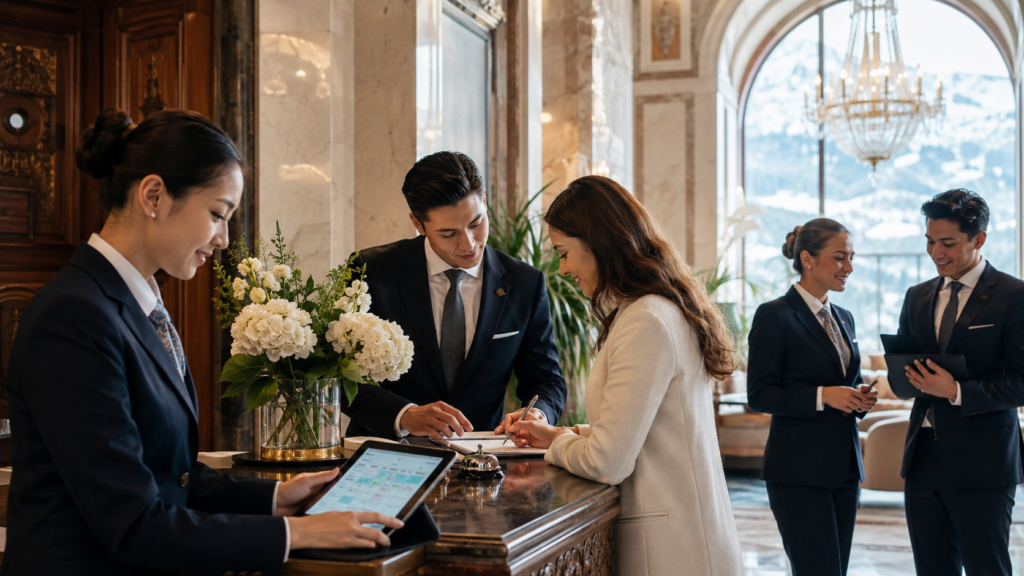
The MA in International Hospitality Business Management, with its Luxury Brand Management track, is designed precisely for students who want to transition out of traditional hotel roles into broader luxury sector leadership. The track addresses brand strategy, retail alignment, and the management of premium consumer expectations across sectors, giving graduates the fluency to move laterally into fashion, finance, or hospitality with equal credibility.
Customer-Centric Corporate Strategy at HIM Business School
HIM Business School in Montreux is SEG’s most explicitly corporate offering. Its programmes blend finance, marketing, and operational management with the interpersonal precision that hospitality training develops. The Master in Applied AI in Customer Experience is a strong indicator of where HIM positions its graduates: at the interface of data-driven decision-making and high-touch client management.
For students targeting roles in private wealth management, prestige retail leadership, luxury automotive, or corporate brand strategy, HIM provides the commercial foundation that traditional hospitality programmes can underweight. The hospitality DNA is present, but it is expressed through the lens of business performance and strategic customer retention.
Industry Blurring and Cross-Sector Recruitment
The Convergence of Retail and Premium Hospitality
The boundary between hospitality and luxury retail has not blurred so much as dissolved. LVMH operates private client suites inside flagship boutiques that function, by any reasonable definition, as small luxury hotels. Chanel’s private ateliers host client evenings that are choreographed with the precision of a five-star dinner service. Rolls-Royce builds bespoke client experiences around vehicle delivery that last multiple days and include curated travel, gastronomy, and personalised ceremonies.
These demonstrate structural shifts in how premium brands build loyalty. And they all require professionals who understand how to design and deliver exceptional human experiences, which is precisely what hospitality management education trains for.
Corporate Partnerships Driving Student Career Placement
SEG’s industry connections are not theoretical. Banque Privée Edmond de Rothschild has recognised Swiss hospitality graduates for their client relationship skills, which align directly with the bank’s philosophy of discreet, long-term wealth stewardship. Tourbillon Boutique and similar prestige retail operators actively recruit from Swiss hospitality programmes because their sales environment demands the same emotional attentiveness as a luxury hotel’s front desk.
These partnerships reflect a broader pattern. Across private aviation, prestige retail, and wealth management, the talent acquisition teams at elite firms have learned that the technical skills required for their roles can be taught internally. The client’s instincts cannot. They recruit for the instinct and train for the product.
Navigating the Future of Luxury Leadership
The luxury sector is not short of technically competent managers. Finance graduates who can read a P&L, marketing professionals who understand brand positioning, operations leaders who can run a complex service environment efficiently: these candidates are available in volume.
What remains scarce is the professional who combines that commercial capability with a deep, practiced instinct for human connection. The person who can sit across from a UHNW client, understand what they actually want, not necessarily what they asked for, and build the kind of trust that produces a relationship measured in decades rather than transactions.
That profile is what hospitality management education, at its best, is designed to produce. Swiss Education Group has built four institutions, each with a distinct specialisation, to develop exactly this kind of professional across the full breadth of the modern luxury sector.
The label on the diploma will say hospitality. The career it opens will extend far beyond it.
Frequently Asked Questions
Why do luxury brands look to hire hospitality management graduates?
Hospitality graduates are trained in emotional intelligence, active listening, and managing high expectations – competencies that transfer directly into prestige retail, private banking, and any luxury role where client relationships drive revenue.
What types of corporate luxury careers can you pursue with a Swiss hospitality degree?
Graduates move into high-end retail management, private wealth management, luxury automotive, boutique consulting, high-end event design, and brand strategy roles for international heritage labels.
Which Swiss Education Group school is best suited for luxury brand corporate management?
HIM Business School bridges corporate disciplines with hospitality soft skills, suiting brand strategy and wealth management roles. SHMS offers a dedicated Master’s track explicitly focused on Luxury Brand Management.
How has the luxury consumer profile changed in recent years?
Today’s luxury buyers are younger, more digitally fluent, and prioritise authentic experiences over status symbols. They expect interactions that feel personal and frictionless across every channel.