The Best International Schools in Tallinn (2026 Guide)
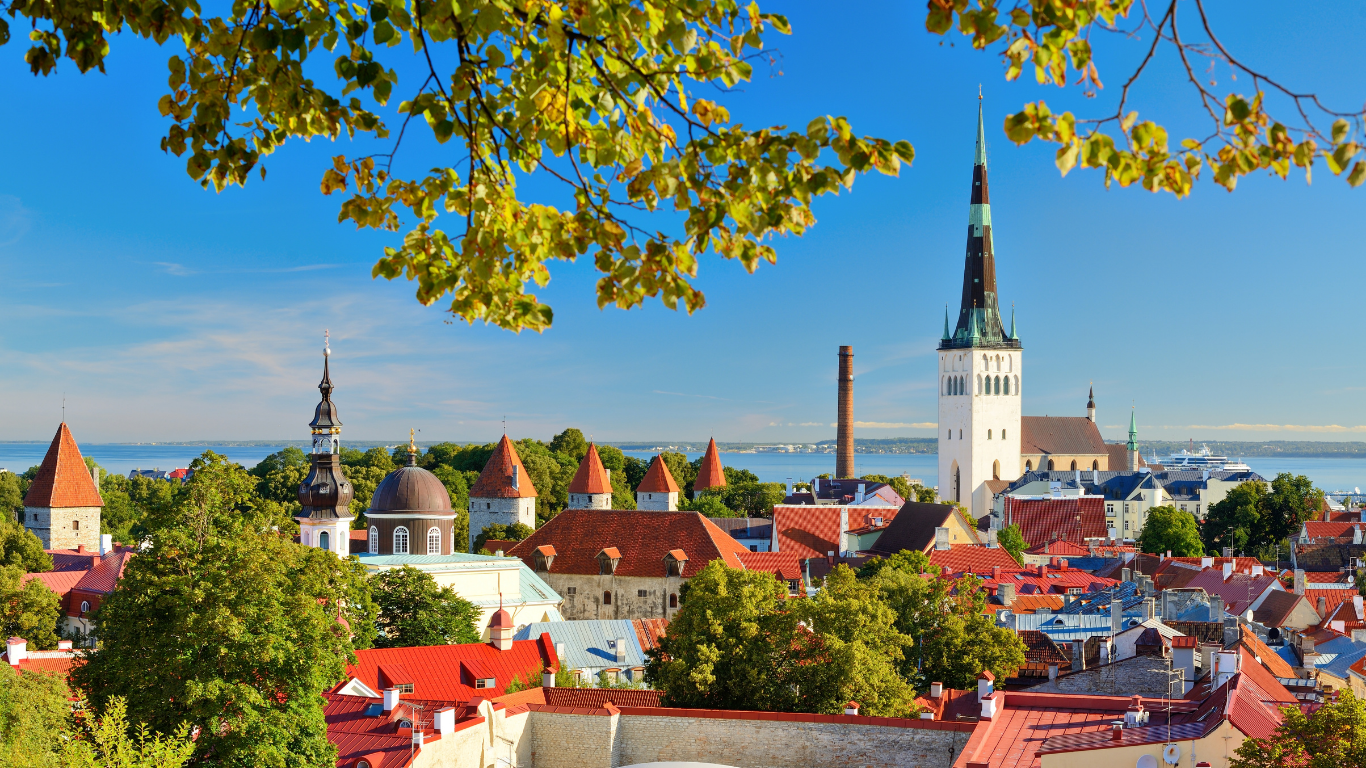
Tallinn tends to exceed expectations for international families. What appears to be a small Baltic capital quickly reveals itself as a city that blends medieval charm with one of the most advanced digital infrastructures in Europe. It is clean, safe, and easy to navigate, with walkable neighbourhoods and a quality of life that consistently ranks among the highest on the continent. For families relocating there, it becomes the kind of place that was not initially on the radar but ends up feeling like the perfect fit.

By Sandra Steiger, TutorsPlus Education Advisor
As the world’s first country to introduce an official digital nomad visa programme, demand for international schools has grown fast, offering primarily the International Baccalaureate or European Baccalaureate programmes. Places are limited and often fill early, so it’s wise to secure a spot before deciding where to live. However, the city’s compact size, with fewer than half a million residents, means shorter commutes, a more manageable pace, and a genuine sense of community. Estonia’s high quality education system adds to the appeal, though families should be prepared for long, dark winters that can take some adjustment.
Overview of Schools in Tallinn
Tallinn’s schooling landscape feels far more manageable than what many expat families are used to. Rather than an overwhelming list of options, the choices are clear: international schools built around the IB and taught in English, or Estonia’s national schools, which have earned a strong global reputation and teach in Estonian. Students move through primary and secondary levels in both systems, working toward either the IB Diploma or Estonia’s national qualification.
Where families tend to pause is in deciding which path fits their situation. For those who have relocated before, or may do so again, international schools offer valuable continuity. The English-speaking environment also makes those early months easier, especially when everything else still feels new.
For families with young children, or planning a longer stay, the local system is well worth considering. Academic standards are high, costs are significantly lower, and children have the opportunity to integrate more fully into everyday life. In the end, the decision usually comes down to three things: your child’s adaptability, your language priorities, and how long you expect to stay in Estonia.
With that, let us take a closer look at what is actually available in terms of international schools.
Best International Schools in Tallinn
For families who have relocated before or expect to move again, these schools are often the most practical starting point. They offer a familiar academic structure, established pastoral care, and an environment that understands what it means to settle into a new country.
What you can expect in international schools:
- English as the main language of instruction
- Globally recognised curriculum, primarily the IB
- Ideal for mobile or expatriate families
- Easier academic continuity between countries
- Strong support for non-native English speakers
- Diverse, international student communities
The schools below were selected based on curriculum quality, institutional reputation, student wellbeing, facilities, and the breadth of support offered to families arriving from overseas.
Below are some of the best known options.
| School | Curriculum | Language | Best For |
| International School of Estonia (ISE) | IB (PYP, MYP, DP) | English | Full IB pathway, expat families |
| Audentes International School | IB (PYP, MYP, DP) | English | Academics + sports balance |
| Tallinna Inglise Kolledž | IB / Estonian + IGCSE English | English | High-achieving students, long-term residents |
| International House Tallinn | Early Years / Language-focused | Multilingual | Younger learners, language foundation |
| Tallinn European School (TES) | European Bac | Multilingual | EU families; polyglots; value for money. |
*For the most up-to-date annual fee information, please contact the schools directly.
International School of Estonia (ISE)
Full IB continuum with an established international environment
Located in Rocca al Mare on the western edge of Tallinn, the International School of Estonia is widely regarded as the city’s leading international school. It offers the full International Baccalaureate pathway from the Primary Years Programme through to the Diploma Programme, all delivered in English.
The campus is modern and well equipped, with high quality science facilities, arts spaces, and a wide range of extracurricular activities. Families who attend ISE often live in Rocca al Mare, Nõmme, or Kristiine, commuting by car or school transport services. The school also operates its own bus routes, which makes access manageable for those living further afield.
ISE is particularly well suited to families looking for a consistent IB journey from early years through to university. For those already familiar with the IB, the transition here tends to feel straightforward and well supported.
Parent’s Perspective: “It really feels like a true international school. Our child settled in quickly, and the small class sizes meant teachers genuinely knew them from the start.”
Audentes International School
IB education for older students with a strong sports focus
Audentes International School is a well-established private school offering the International Baccalaureate in English on a dedicated campus in central Tallinn. It is particularly suited to older students, typically those entering the Middle Years and Diploma Programmes, and is known for its structured academic approach.
What sets Audentes apart is its location within a larger sports and education complex. The campus includes high-quality training facilities, making it an excellent option for students who want to combine academic study with regular physical activity. The school has built a solid reputation for balancing academic rigour with sport in a way that feels integrated rather than secondary.
Families attending Audentes often live in central or northern parts of Tallinn, with the school easily accessible by tram and bus. For many, the commute is straightforward and convenient.
Audentes is a great choice for students who are looking for a focused IB pathway in a more mature, academically driven environment, particularly those who benefit from an active school culture and strong sports provision.
Parent’s Perspective: “It feels more focused and structured, especially in the IB years. Our child appreciated being in an environment that was both academically serious and connected to local life, without feeling like they were in an expat bubble.”
Tallinn European School (TES)
Multilingual European curriculum with strong language focus
Tallinn European School offers a different pathway, following the European Schools curriculum rather than the IB. It leads to the European Baccalaureate and places a great emphasis on multilingual education, often resulting in high levels of language proficiency.
Located in the Telliskivi area, the school has a more urban and academic feel. It was originally designed for families connected to European institutions but is open to a wider international community. Due to its structure and subsidised model, places can be limited, and early application is important.
TES is particularly well suited to families prioritising multilingual education and a European academic pathway.
Parent & Student Perspective: “The language development has been exceptional. Our child is gaining confidence in multiple languages, which we see as a huge long-term advantage.”
Tallinna Inglise Kolledž
High-achieving state school with IB and international elements
Tallinna Inglise Kolledž sits slightly outside the typical international school category, and it is important to be clear about that from the outset. It is a state (municipal) school, not an international school, but it offers the IB pathway alongside elements such as IGCSE First Language English, making it one of the few places in Estonia where students can access internationally recognised programmes within the local system.
The school has a well regarded academic reputation and is widely regarded as one of Estonia’s “elite schools.” Admission is highly competitive, and expectations are demanding, with a student body made up largely of high-achieving local and international pupils. The school culture remains predominantly Estonian, which is an important consideration for families thinking about long-term fit and integration.
For families planning to stay in Tallinn for a longer period, particularly those with younger children, this can be a compelling option. It offers high academic standards at a significantly lower cost than private international schools, while still providing a pathway into the IB Diploma. A common insight from local communities is that it is often easier to adapt to the IB system in Tallinn than to try to follow a full British A-Level pathway, which is not widely available in the city.
Located in central Tallinn, the school is well connected by public transport, and students attend from across the city.
Parent’s Perspective: “The academic level is very high, and while it took time to adjust socially, our child gained both strong results and a deeper connection to the local culture.”
International House Tallinn
Supportive early years environment with a focus on language development
International House Tallinn provides a nurturing, language-rich environment for younger learners, particularly in the early years and primary stages. English is the main language of instruction, with a focus on multilingual development and communication skills.
The school offers a smaller, more personalised setting compared to larger institutions. Class sizes are kept low, and there is a clear emphasis on individual attention and smooth transitions for children who are new to international education.
For families with younger children, International House is a good option for building established language foundations within a supportive and close-knit environment before moving into larger IB schools later on.
Parent’s Perspective: “The smaller class sizes made a big difference for our child. The teachers are attentive, and the environment feels warm and reassuring, especially during the transition period.”
Curricula Offered by the International Schools in Tallinn
Choosing the right curriculum is often just as important as choosing the right school. In Tallinn, the options are more focused than in larger cities, but each pathway serves a clear purpose depending on your family’s plans.
Here is a quick overview to help guide your decision:
| Curriculum | Best For | University Pathway |
| IB (International Baccalaureate) | Internationally mobile families | Global universities |
| British (IGCSE / A-Level elements) | Families considering UK-style education | UK and international |
| American (teaching approach) | Families relocating to or from the US | US and international |
| European (European Baccalaureate) | Multilingual and EU-focused families | EU and international |
| Estonian National Curriculum | Long-term residents seeking integration | Estonia and EU |
If you are unsure which path to take, speaking directly with schools can be incredibly helpful. Admissions teams can offer practical guidance and help you identify the option that best fits your child’s needs and your family’s plans.
How to Choose the Right International School in Tallin
The right school in Tallinn depends on how well it aligns with your child’s needs and your family’s plans, rather than reputation alone. If you expect to move between countries, an international school offering the IB can provide continuity and a smoother transition. If you are planning a longer stay, local or hybrid options may offer stronger integration and long-term value.
Key factors to consider:
- Location and commute — Tallinn is compact, but traffic and winter conditions can affect travel times; check proximity to your home or access to school transport
- Class size — Smaller schools offer more individual attention, while larger campuses may provide wider facilities and extracurricular options
- Language environment — Consider whether full English instruction or a more bilingual setting suits your child’s needs
- Curriculum alignment — Think about where your child has studied before and where they may study next
- Support for new students — Look for schools with structured support for children adapting to a new country or language
The best choice will depend on your child’s learning style, your language preferences, and how long you plan to stay in Estonia.
Admission Process and School Fees in Tallinn
Admissions to international schools in Tallinn typically start with completing an online form and paying a non-refundable registration fee. Families are usually required to provide recent academic records along with other supporting documentation during this stage.
Based on the student’s age, schools may request an assessment or a meeting to better understand their academic level, especially for older year groups or IB programmes. Decisions are often issued a few months before the academic year begins, although some schools continue to review applications later if spaces remain. Once an offer is received, enrolment is confirmed by signing a contract and submitting a deposit.
Updated 2026–2027 Fee Ranges:
- Primary level fees at international schools in Tallinn typically range from €8,000 to €18,000 per year
- Secondary level fees generally range from €12,000 to €22,000 per year, depending on the school and programme
- One-time costs may include application fees, enrolment deposits, and school materials
- Additional ongoing costs can include transport, lunch programmes, and extracurricular activities
State schools in Tallinn, including Tallinna Inglise Kolledž, are publicly funded and do not charge tuition. However, families may still need to cover smaller costs such as materials or school activities.
Pros and Cons of Studying at Schools in Tallinn
Advantages
- High quality education across both international and local systems
- Safe and calm environment that is easy to navigate
- More affordable than many Western European capitals with free public transport for residents
- English is widely spoken which makes daily life and school transitions easier
Challenges
- Limited international school places so early applications are essential
- Long cold and dark winters which can take time to adjust to
- A more reserved social culture where building connections may take longer
- Smaller city feel with a quieter pace of life compared to major European capitals
Best Tutors in Tallinn
Starting at a new school in a new country is a lot to manage at once, and many children, regardless of how resilient they appear, benefit enormously from additional academic support during the transition period. Whether the challenge is closing a gap in a particular subject, building confidence in English, or preparing for demanding IB assessments, the right tutor can make a meaningful difference in how quickly and comfortably a child settles in.
TutorsPlus provides personalised tutoring specifically tailored to students attending international and private schools in Tallinn and across Europe. Tutors offer specialist support across IB subjects, IGCSE and A Level programmes, the American and French curricula, and university admissions preparation.
Online sessions are flexible and designed to fit around existing school commitments, so finding the right support does not mean adding more pressure to an already full schedule.
Conclusion
Tallinn rewards families who arrive with an open mind. While the number of schools is smaller than in larger European capitals, the quality is well regarded, the community is close, and the environment for raising children is genuinely excellent. Whether you choose an IB pathway, explore the local system, or find a combination that suits your family, the key is to start early, visit schools in person, and choose what truly fits your child rather than what simply looks best on paper.
Frequently Asked Questions (FAQ)
- What are the best international schools in Tallinn?
The most established options are the International School of Estonia, Audentes International School, Tallinna Inglise Kolledž, and International House Tallinn. The right choice depends on your child’s age, academic background, and how long your family plans to stay in Estonia. - Are public schools in Tallinn free for international students?
Yes. State funded schools in Tallinn are generally free for all children, including those from expat families. Small contributions may apply for materials, school outings, and certain activities. - How much do private schools in Tallinn cost?
Primary level fees at international schools typically range from €8,000 to €18,000 per year. Secondary fees generally fall between €12,000 and €22,000, depending on the school and year group. - Is it difficult to get a place in a school in Tallinn?
It can be. International school places are limited, and the most popular year groups, particularly at primary level, tend to fill well in advance. Applying six to twelve months before your intended start date is highly recommended. - What language are schools taught in Tallinn?
International schools teach primarily in English. State schools, including Tallinna Inglise Kolledž, deliver instruction in Estonian, though some incorporate English language elements as part of their academic programme. - Which curriculum is best for expat families in Tallinn?
The IB is the most practical and widely available option for internationally mobile families in Tallinn, offering global recognition and continuity across countries. For families planning a long term stay, the local Estonian curriculum is academically strong and worth serious consideration. - When should parents apply to schools in Tallinn?
For international schools, families should aim to apply at least six to twelve months before the start of the academic year. State school registration timelines vary, so checking directly with your preferred institution early is always advisable.