The Quieter Edges: LGBTQ+ Student Life Beyond the Obvious
Beyond visible celebrations and awareness campaigns, LGBTQ+ student life is often shaped by quieter moments of connection, acceptance, and belonging. This article explores the everyday experiences that help students feel seen, supported, and valued within their school communities.

Written by Cath Brew
When people talk about LGBTQ+ student experiences, the focus tends to land on what is visible, urgent, and outwardly difficult – bullying, discrimination, lack of representation. These realities matter, and they are very much still present, but there’s
another layer that often goes unspoken. It’s often invisible to others. It’s quieter, harder
to articulate, and sometimes uncomfortable even within inclusive LGBTQ+ spaces. These are the internal negotiations and subtle frictions. The moments that don’t look like struggle from the outside, but shape how safe, seen, or alone someone feels.
#1 CHOOSING NOT TO DISCLOSE, EVEN IN ‘INCLUSIVE SPACES’
There’s commonly an assumption that once an environment is labelled ‘inclusive’ the
work is done, and safety naturally follows. But that doesn’t always translate into
emotional ease.
Many LGBTQ+ students still choose not to disclose parts of themselves because
disclosure comes with weight. It invites questions, attention, and sometimes a quiet
shift in how others relate to you. Remaining private can feel like maintaining control –
keeping your identity from becoming the most interesting or defining thing about
you. In these moments, silence isn’t always about fear; sometimes it’s about selfpreservation.
KEY TIP: Safe spaces are about how a person feels not how the space is labelled.

#2 THE SUBTLE RISK OF BEING KNOWN
Coming out is often framed as a release, a step toward authenticity. Yet what’s less discussed is how it can destabilise existing relationships. Friendships built under one
understanding can falter under another. It’s not always a dramatic change, but often,
small changes – tripping over language, a hesitancy that wasn’t there before. Or the
opposite: an overcorrection, where a friend tries too hard to prove acceptance, making
the dynamic feel unnatural. The irony being that the LGBTQ+ person likely only outed themselves because they felt safe to with that friend. And now the friend has made it awkward.
Sometimes nothing explicitly goes wrong, but there’s enough of a shift to make the
LGBTQ+ student question whether beingknown fully has cost them something.
KEY TIP: ‘Coming out’ can complicate even the most inclusive friendships.
#3 LGBTQ+ FINANCIAL REALITIES
For some students, being openly LGBTQ+ brings financial risk.
This is a very practical layer that often gets overlooked by allies, keen to support an
LGBTQ+ student ‘to be their authentic selves’. However, in doing so, family support can become uncertain, housing may feel less stable, and the student might need to prioritise survival over self-expression.
In these cases, identity is logistical. Decisions about disclosure are shaped by the quiet calculation of what can be lost. It complicates the narrative. Not everyone has the luxury of openness, even in environments that celebrate it.
KEY TIP: ‘Coming out’ is always a multilayered decision shaped by context, relationships, safety, and self-understanding.
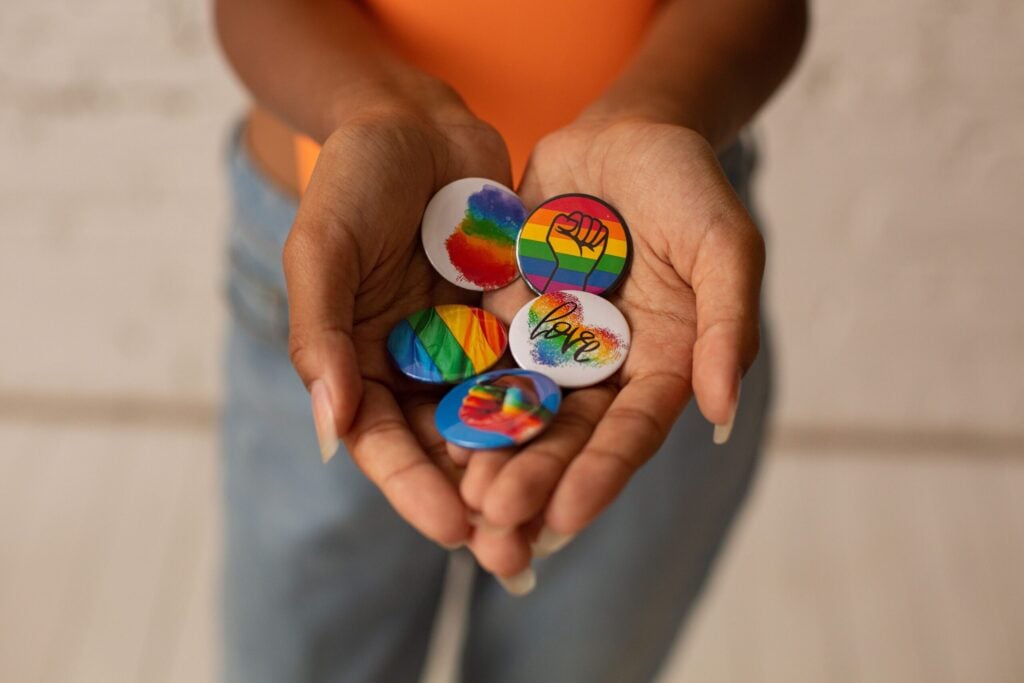
“Many LGBTQ+ students still choose not to disclose parts of themselves because disclosure comes with weight.”
#4 THE PRESSURE TO BE ‘FULLY FORMED’
LGBTQ+ students often have a complicated path to walk. On the one hand, they’re commonly told they are ‘too young’ to know who they are (whilst their heterosexual cis gender counterparts are accepted for their gender and sexuality). And then conversely, once an LGBTQ+ student comes out, they are expected to know exactly who they are. Labels are thrown about with assumptions that this label means ‘this’ or ‘that’.
Labels become both tools and constraints. A label asks to define yourself in ways that feel stable and legible to others. But identity doesn’t always work like that. It can be fluid, uncertain, or contradictory, and mean different things to different people.
The pressure to know who you are can turn a personal process into a performance. And for those still figuring things out, it can create a further sense of being not quite legitimate.
KEY TIP: Allow LGBTQ+ students the same space and respect to explore who they are.
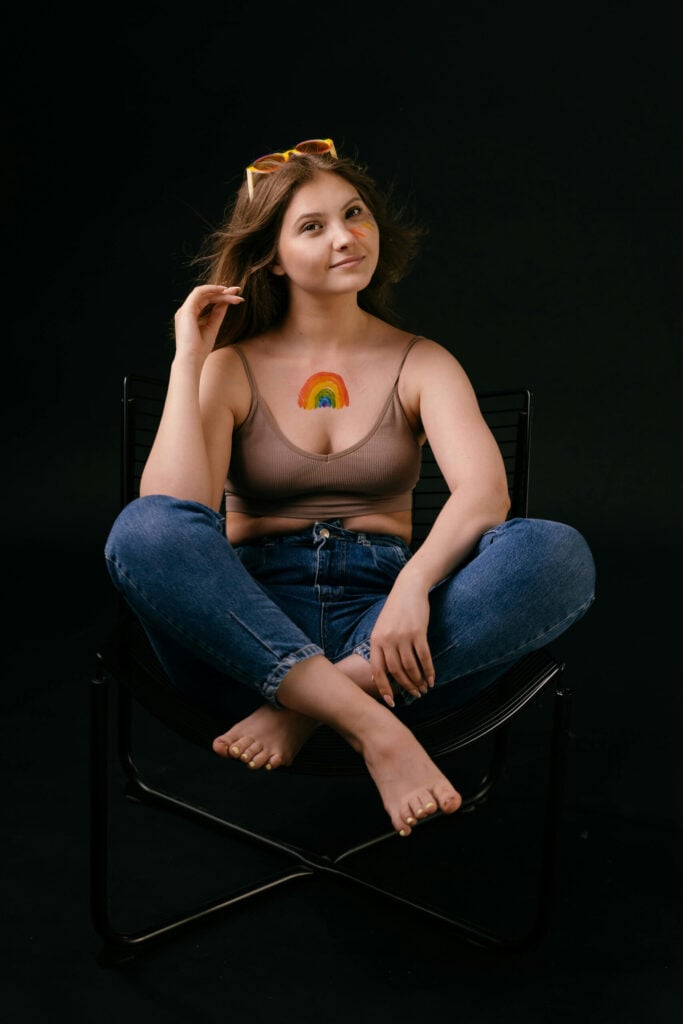
#5 WHEN INCLUSION FEELS PERFORMATIVE
Not all inclusion feels the same. There’s a difference between being welcomed and being showcased.
Some environments lean heavily into visibility – rainbow flags, themed events,
public allyship. Yes, these signals matter. However, they can also create a subtle
expectation that LGBTQ+ students will step forward, participate, represent and be
overtly proud.
For some, this is empowering. For others, it’s exhausting. Other times, it stretches into
toxic allyship.
Not everyone wants to be the visible example. Not everyone wants to join the society or speak on the panel. When inclusion comes with an implicit role, it feels less like belonging and more like being positioned. And for whose need? Yours or theirs?
KEY TIP: Not all LGBTQ+ people want to be a spokesperson or a ‘leader of the cause’.
#6 EDUCATION EXHAUSTION
Even in supportive spaces, there’s often an expectation – spoken or not – that LGBTQ+ students will educate others. This includes answering questions, clarifying language, sharing personal experiences and moderating unintentionally offensive questions.
Individually, these moments may seem small, but over time, they accumulate. They turn identity into something that must be explained, justified, or translated. Ultimately, they impact a student’s sense of belonging. Who else in the school community has to explain their existence? Ironically, it often creates a sense of isolation that runs counter to the
questioner’s intention, which usually stems from a genuine desire to be inclusive. Lived experience education is a form of emotional labour that often goes unrecognised. And it can be tiring to carry.
KEY TIP: Always seek consent before asking an LGBTQ+ person about their identity. Respect ‘no’ as an answer.
#7 GRIEF AT THE LIFE YOU THOUGHT YOU’D HAVE
A quieter kind of grief that doesn’t get much attention. For some, coming into their identity means letting go of a version of life they once expected – relationships, family dynamics, cultural alignment, or the sense of ease that exists within those structures.
This isn’t about regret. It’s about adjustment. Even when someone feels confident in who they are, there can still be moments of loss. A recognition that certain paths may be more complicated, or unavailable. It’s a grief that exists alongside growth, not in opposition to it.
KEY TIP: LGBTQ+ growth and grief can exist simultaneously.
What sits underneath all the points raised, is a quieter truth: meaningful LGBTQ+ inclusion requires flexibility. It asks us to make space for students to engage on their own LGBTQ+ terms, and to recognise that belonging is not a single, visible outcome, but something that takes many different forms. Perhaps the question isn’t how visible inclusion is, but how much it allows people to remain whole within it?