What Defines a Luxury Hospitality Leader Today?
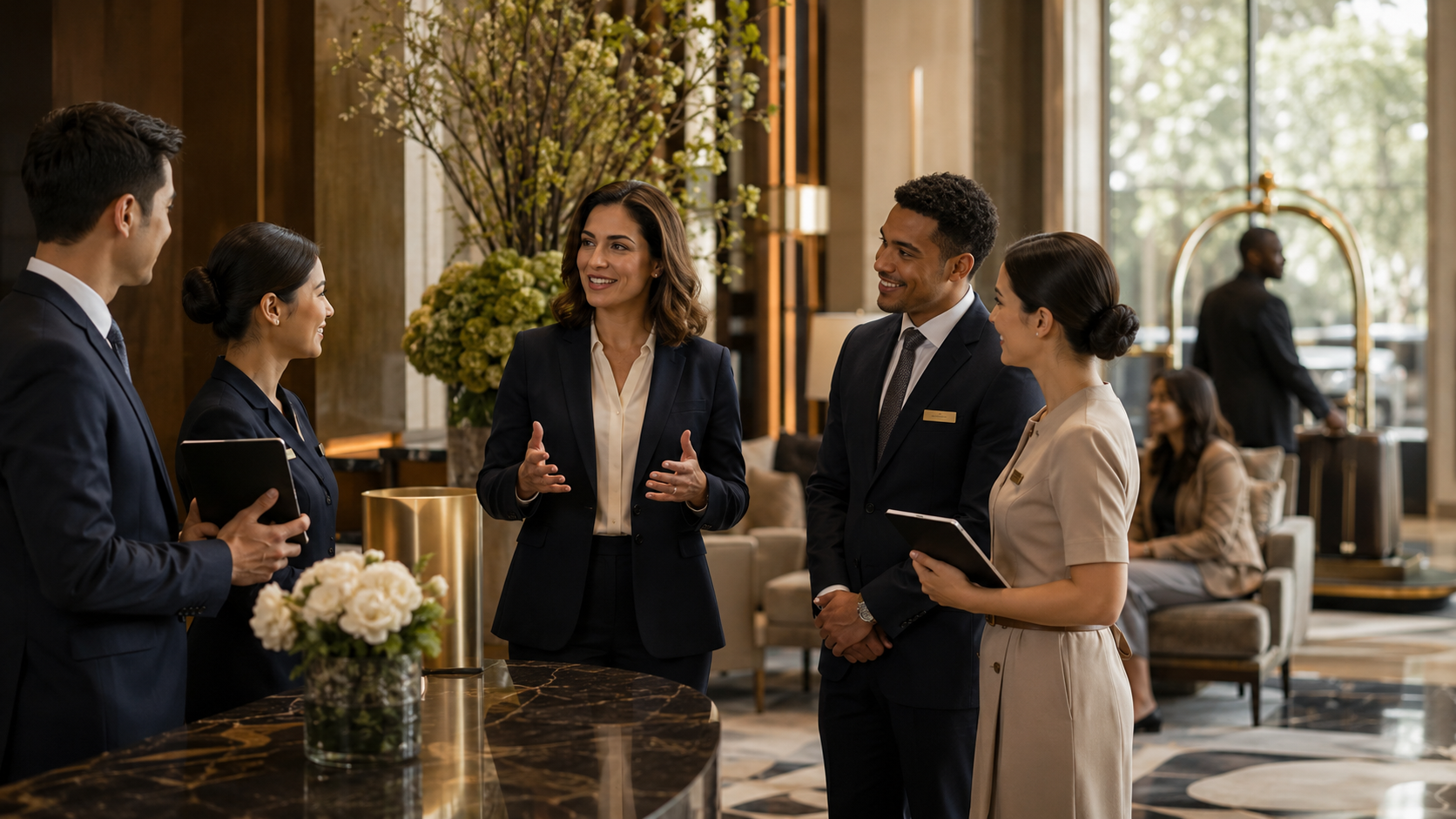

At dawn in a grand hotel lobby, long before most guests descend for breakfast, the atmosphere of luxury is already being carefully orchestrated. A returning guest arrives at midday and is greeted by name without hesitation. By evening, a couple celebrating their anniversary will discover that their favourite wine has quietly appeared in their suite.
Behind these moments stands not only operational precision, but a luxury hospitality leader capable of transforming thoughtful details into experiences that feel deeply personal and unforgettable.
In an industry shaped by shifting guest expectations, digital transformation, and global mobility, leadership in hospitality has evolved into something far more sophisticated. Today’s hospitality leaders balance emotional intelligence, strategic business thinking, innovation, sustainability awareness, and cultural sensitivity while moving effortlessly between guest relations and boardroom strategy. It is precisely this kind of leader that institutions like César Ritz Colleges Switzerland have long set out to shape.
Luxury Hospitality Leadership Today: More Than Excellent Service
There was a time when the measure of a great hospitality leader was straightforward: impeccable standards, efficient operations, and a team that moved like a well-rehearsed ensemble. Those qualities have not changed, but what they are expected to cover has become much broader.
Luxury hospitality leadership now sits at the convergence of business strategy, psychology, technology, brand philosophy, and human experience, demanding a calibre of professional who is as comfortable analysing revenue performance as they are anticipating the unspoken needs of a guest.
From Service Management to Strategic Leadership
Moving beyond a focus on operational precision, modern leadership in luxury hospitality is far more expansive.
Today, a modern luxury hospitality leader is expected to:
- Understand financial performance, revenue strategy, and commercial viability
- Lead digital transformation and innovation initiatives
- Build organisational cultures that attract and retain exceptional talent
- Develop sustainability frameworks aligned with ESG principles
- Design emotionally resonant guest experiences across touchpoints
- Navigate international markets and manage multicultural workforces
- Respond decisively when crises, whether operational, reputational, or global, demand it
Across hospitality, retail, travel, and wellness, an outstanding reputation is won through a guest’s experience of a service that imbues emotional resonance and human connection. The luxury hospitality leader has therefore become both strategist and experience curator, a combination that defines the modern era of the profession.
How Guest Expectations Have Changed
Modern luxury guests are remarkably informed, globally mobile, and emotionally driven. They seek authenticity over grandeur, wellness integration over indulgence, and personalisation over the performance of service. For some, luxury means absolute discretion and privacy. For others, it means culinary storytelling, sustainable travel, or seamless digital convenience that eliminates friction without sacrificing warmth.

This transformation has reshaped what hospitality leadership skills must encompass. As an institution known for redefining what it is to lead, Cesar Ritz Colleges prepares future leaders in the luxury hospitality industry with:
- Strong emotional intelligence and empathy
- Cultural fluency across nationalities and contexts
- Adaptability and composure under pressure
- Innovation and entrepreneurial thinking
- Strategic communication across multiple stakeholder groups
- Deep understanding of guest psychology and behaviour
- Genuine sustainability consciousness
The hospitality leader of today is therefore responsible not for managing operations alone, but for shaping emotional experiences that guests carry with them long after the final checkout.
Core Traits of a Modern Luxury Hospitality Leader
The most respected figures in luxury hospitality lead through trust, emotional acuity, decisiveness, and a vision that others choose to follow. In this respect, hospitality leadership may be one of the most human-centred forms of business leadership in existence. It is a style of leadership that César Ritz Colleges Switzerland have been curating for over four decades.
Emotional Intelligence and Empathy
Emotional intelligence in hospitality has become one of the defining characteristics of successful leadership.
After all, luxury hospitality operates in highly emotional environments. Guests may arrive exhausted after international travel, stressed from business obligations, or emotionally invested in milestone experiences such as weddings, anniversaries, and family celebrations.
Hospitality professionals themselves operate under constant pressure, balancing long hours, cultural diversity, and emotionally demanding interactions. So, an effective hospitality leader understands how emotions influence performance, communication, and guest satisfaction. This requires empathy.
Specifically, this means recognising when a guest seeks discretion instead of conversation. It means identifying when an employee needs guidance rather than criticism. It means understanding that exceptional service is often rooted in emotional sensitivity rather than performance alone.
Guests may forget parts of their stay, but they rarely forget how a hotel made them feel. At its best, hospitality creates meaningful emotional experiences shaped by genuine human connection.
Clear Communication and Active Listening
Communication is not simply a foundational skill in luxury hospitality. It is the connective tissue of the entire operation.
Modern hospitality leaders must communicate fluently across multiple registers: with guests through warmth and attentiveness, with teams through clarity and recognition, with executive leadership through commercial acumen, and with international partners through cultural intelligence. Yet communication in hospitality is equally, and perhaps primarily, the art of listening.
The finest leaders cultivate environments where teams feel genuinely heard. Communication, practised at this level, builds trust, and in luxury hospitality, trust is the foundation upon which both guest loyalty and organisational culture are built.
Adaptability and Decision-Making Under Pressure
Few industries are as operationally dynamic as luxury hospitality. Unexpected challenges can emerge without warning and demand an immediate, informed response. The luxury hospitality leader must develop an uncommon capacity for adaptability, as well as the composure to make sound decisions precisely when the pressure to act is greatest.
Ability to Inspire and Motivate Teams
Behind every memorable luxury guest experience stands a highly motivated team. Inspired employees are not merely an operational asset. They are the living expression of a brand’s values. Strong leaders in hospitality build cultures of recognition, mentorship, and growth, leading not through command but through example. This balance between excellence and humanity defines effective hospitality leadership at its finest.
Cultural Awareness and Global Mindset
Luxury hospitality is inherently global. Guests, employees, investors, and partners frequently arrive from entirely different cultural backgrounds, each bringing distinct expectations and definitions of luxury. A modern hospitality leader must possess deep cultural fluency, encompassing an understanding of cultural etiquette, global consumer behaviour, international business norms, and regional luxury preferences.
Swiss hospitality education has long been regarded as a uniquely effective environment for developing this international mindset. Institutions within the Swiss Education Group ecosystem bring together students from over 110 nationalities, creating a learning environment that mirrors, in structure and complexity, the global operations these students will one day lead.
Innovation, Sustainability and Entrepreneurship in Luxury Hospitality
The future of luxury hospitality leadership belongs to those capable of combining innovation with responsibility and ambition with conscience. Guests increasingly expect luxury brands to demonstrate genuine environmental awareness, not as a marketing gesture, but as an embedded organisational commitment. Modern luxury leaders now oversee initiatives spanning sustainable operations, ethical sourcing, ESG frameworks, wellness integration, local community engagement, and energy efficiency.
This intersection between hospitality and business strategy is precisely what distinguishes the institutions genuinely preparing tomorrow’s leaders. At César Ritz Colleges Switzerland, the emphasis on hospitality business management, innovation, sustainability, and entrepreneurship closely mirrors the qualities demanded of the modern luxury hospitality leader.
The institution’s philosophy of “Rethink. Refine. Realize.” captures something essential about this era: effective leadership requires the courage to question inherited assumptions, the discipline to refine what endures, and the vision to execute with purpose.
As Tanja Florenthal, Dean of César Ritz Colleges, has noted, the school’s mission is to blend innovation with academic rigour, producing graduates who think critically, lead confidently, and operate with a global perspective from their very first professional role.
How Hospitality Education Shapes Future Leaders
Luxury hospitality leadership is rarely shaped by theory alone. It is forged through experience, mentorship, and the kind of learning that only occurs when standards are high and the stakes are real.
César Ritz Colleges and the Development of Hospitality Leaders
Switzerland occupies a singular position within global hospitality education, one built on centuries of tradition and a national culture of precision, discretion, and excellence.
César Ritz Colleges Switzerland, positioned within the Swiss Education Group, an alliance ranked among the top ten hospitality schools globally by QS World University Rankings 2026, represents a new generation of hospitality business school, one that integrates the enduring values of Swiss hospitality education with a forward-facing emphasis on leadership, entrepreneurship, and strategic innovation.
The institution’s Bachelor of Science in Hospitality Business Management fuses hospitality fundamentals with substantive business education, including specialisations in Business Analytics, Digital Strategy, Entrepreneurship, and Executive Leadership. Students are not simply prepared for the hotel industry. They are prepared for leadership across the full breadth of the luxury experience economy.
From Classroom to Industry
One of the defining strengths of world-class hospitality education is its ability to collapse the distance between theory and practice. Through international internships, operational placements, leadership projects, and multicultural collaboration, students develop leadership confidence, cross-cultural communication, commercial acumen, and emotional intelligence in service environments. The classroom introduces the framework. The industry refines it into something lasting.
Ulrika Björklund, Executive Director of Industry Affairs and Career Services at Swiss Education Group, has often emphasised that successful hospitality careers are built through deliberate industry exposure, mentorship, and practical immersion rather than theory alone. Having led hotels and resorts across Europe, the Caribbean, and the United States, she understands that leadership develops progressively through lived operational experience.
What Career Paths Can Luxury Hospitality Leaders Pursue?
The career landscape for hospitality leadership graduates has expanded dramatically. Where once the trajectory led almost exclusively toward hotel management, the skills developed through rigorous hospitality business management education now transfer across a broad spectrum of industries and roles.

Graduates pursue careers including:
- Hotel General Manager and Luxury Resort Director
- Guest Experience Manager and Revenue Strategy Director
- Luxury Brand Consultant and Hospitality Entrepreneur
- Event Management Executive and Tourism Strategist
- Sustainability and ESG Manager
- Wellness Hospitality Director and International Operations Director
What makes these career paths particularly compelling is their diversity. Luxury hospitality leadership no longer exists within the boundaries of hotels alone. The same leadership qualities that shape exceptional guest experiences increasingly influence luxury retail, wellness, aviation, private travel, branded residences, and global lifestyle businesses.
The transferability of hospitality leadership skills remains one of the sector’s greatest strengths. Professionals trained in hospitality often combine emotional intelligence, operational discipline, communication ability, and strategic thinking in ways increasingly valued across industries.
How to Know If Luxury Hospitality Leadership Is Right for You
Hospitality leadership demands a particular disposition: a genuine orientation toward others combined with the intellectual rigour to operate within complex, high-stakes business environments.
You Enjoy Working With People
Luxury hospitality is a profoundly human endeavour. Those who thrive in hospitality leadership share a genuine desire to create memorable experiences, an instinct for reading people and responding with care, and satisfaction in solving complex problems on behalf of others. Hospitality leadership requires both emotional generosity and interpersonal curiosity, a combination that proves remarkably durable over a long career.
You Stay Calm in Complex Situations
Unexpected challenges in luxury hospitality are not the exception. They are the rhythm. The leaders who distinguish themselves are those capable of remaining composed when composure is most difficult, guiding their teams with the quiet authority that inspires confidence rather than anxiety. Calmness, in hospitality, is not a passive quality. It is a form of leadership.
You Think Like Both a Host and a Business Leader
The defining characteristic of the modern luxury hospitality leader is the capacity to inhabit two perspectives simultaneously. As a host, they focus on the guest’s emotional state, unspoken expectations, and the details that transform a stay into a memory. As a business leader, they think about financial performance, brand positioning, talent strategy, innovation, and long-term growth. The leaders who master this duality are the ones who will define the future of the luxury hospitality industry.
Conclusion
The definition of a luxury hospitality leader has evolved profoundly. Exceptional service remains essential, but modern hospitality leadership now extends far beyond operational excellence alone. Today’s leaders must combine emotional intelligence, strategic business thinking, innovation, cultural awareness, adaptability, and sustainability consciousness in order to deliver truly meaningful luxury guest experiences. They must understand people as deeply as they understand business.
This is precisely why hospitality education continues evolving. Institutions such as César Ritz Colleges Switzerland increasingly reflect this new leadership reality through programmes that integrate hospitality business management, entrepreneurship, innovation, sustainability, and experiential learning. In a world shaped by automation and digital transformation, the hospitality leaders who will stand apart are those capable of leading with both intelligence and humanity while understanding that true luxury remains deeply personal.
Frequently Asked Questions (FAQ)
What makes a good leader in luxury hospitality?
A strong luxury hospitality leader combines emotional intelligence, communication ability, operational discipline, cultural awareness, adaptability, and strategic business insight. The finest leaders also inspire trust within teams, understand guest psychology intuitively, and remain composed when navigating high-pressure environments.
Why is emotional intelligence important in hospitality leadership?
Emotional intelligence allows hospitality leaders to recognise unspoken guest expectations, lead multicultural teams with empathy, and manage emotionally demanding situations with composure. In luxury hospitality, where experience and emotional connection define value, empathy becomes a commercial and cultural advantage rather than simply a personal quality.
What skills do luxury hospitality leaders need today?
Modern hospitality leadership requires a sophisticated blend of communication, adaptability, financial literacy, innovation, sustainability awareness, cultural fluency, and decision-making under pressure. Digital transformation and entrepreneurial thinking have also become increasingly central to leadership success within global luxury hospitality.
How does hospitality education build leadership qualities?
The strongest hospitality education programmes develop leadership through experiential learning, operational exposure, international internships, and multicultural collaboration. Students learn not only how to manage guest experiences, but also how to lead teams, navigate business complexity, and make strategic decisions within fast-moving luxury environments.
What careers can luxury hospitality leaders pursue?
Luxury hospitality leaders increasingly pursue careers that extend well beyond traditional hotel management. Opportunities now include luxury resort leadership, guest experience strategy, hospitality entrepreneurship, wellness hospitality, sustainability consulting, event leadership, tourism strategy, and luxury brand management across the wider global experience economy.
Is César Ritz Colleges a good choice for future hospitality leaders?
César Ritz Colleges Switzerland is recognised as one of the leading hospitality business schools in the world, ranked in the top five globally for Hospitality and Leisure Management by QS World University Rankings 2026. Its programmes combine the enduring strengths of Swiss hospitality education with a forward-facing focus on leadership, entrepreneurship, sustainability, and business innovation, making it an excellent choice for those who aspire to lead within the global luxury hospitality industry.