Why Study Culinary Arts in Switzerland? 6 Reasons to Choose Switzerland

Switzerland has truly established itself in recent decades as a leading destination for culinary education, combining hands-on training with one of the world’s most established hospitality industries. Students gain access to a global network of culinary experts while building skills that extend well beyond the kitchen. A strong culinary education in Switzerland can also include business, management and entrepreneurship alongside hands-on training, helping graduates prepare for careers in restaurants, events, hotels, food businesses and other areas of hospitality.
For students looking to study culinary arts in Switzerland, the appeal lies in this balance of industry-focused practical experience, choice of pathways, prestigious faculty and global perspective. This article explores the key advantages of studying culinary arts in Switzerland and what makes the country a compelling choice for future culinary professionals. It also highlights what students should consider before deciding whether Switzerland is the right fit for their goals.
1. Switzerland’s Global Reputation for Hospitality and Culinary Education
Switzerland has an unusually high concentration of internationally recognised hospitality institutions, giving culinary students access to a broader educational and professional ecosystem.
Being part of this wider network can mean:
- Established partnerships with hotels, restaurants and hospitality companies
- International alumni across culinary arts, hospitality and business
- Regular contact with recruiters and industry professionals
- Guest lectures from chefs, entrepreneurs and hospitality leaders
- Everyday contact with students pursuing related careers
Culinary Arts Academy Switzerland (CAAS), part of Swiss Education Group, is a useful example of this ecosystem in practice. CAAS is ranked #9 in the QS World University Rankings by Subject 2026, and it’s the only specialised culinary school to appear in that ranking, sitting alongside broader hospitality and business schools rather than other standalone cooking academies.
Beyond rankings, students should also consider the wider learning experience. Faculty expertise, industry-focused programmes, an international student community and employer connections can all shape the value of a culinary education. Rankings can provide a useful reference point, but they do not guarantee a particular career outcome, so curriculum, facilities and practical training should also be assessed directly.
If you’re comparing options, a dedicated guide to culinary schools in Switzerland can help you weigh programmes against each other based on facilities, business content, practical training and career support.
Switzerland’s wider hospitality network also means culinary students often study alongside future hotel and restaurant managers, hospitality entrepreneurs, luxury brand professionals, and marketing, events, business and finance specialists. Those relationships can become truly useful professional connections after graduation, and they give you a broader view of the industry than kitchen training alone.
2. Hands-On Culinary Training and Business Skills
Cooking well and running a successful food business clearly require different skills. One of the advantages of modern culinary training in Switzerland is that many programmes combine practical kitchen experience with the commercial knowledge needed to build a career in the wider food and hospitality industry.
On the practical side, Swiss culinary programmes can cover:
- Knife skills and food preparation
- Classical and modern cooking techniques
- Pastry and baking
- Plating and presentation
- Kitchen organisation and service timing
Alongside technical training, students may study areas such as financial planning, cost control, menu pricing, concept development, leadership, customer experience, brand strategy and responsible sourcing. These skills become particularly valuable for graduates interested in restaurant ownership, catering, food product development, culinary consulting, event planning or hospitality management.
A chef may know how to create an outstanding dish, but turning that skill into a successful business requires a thorough understanding of food costs, staffing, budgets and profitability. By incorporating business modules and practical projects into the curriculum, culinary programmes provide students experience applying both creative and commercial thinking before they enter the workplace.
Concept development is one area where these skills come together. Students may need to identify a target customer, develop a menu, calculate food costs and pricing, consider sourcing and create a clear brand identity. Project-based learning offers them an opportunity to turn a culinary idea into a commercially realistic concept all within a supported learning environment.
Combining practical technique with business knowledge can therefore prepare students for a wider range of careers, whether they plan to work in professional kitchens, manage hospitality operations or eventually develop a food business of their own.
3. Culinary Internships and Practical Experience in Switzerland
Internships are one of the more concrete reasons students choose culinary training in Switzerland. Working inside a real professional kitchen exposes you to service pressure, teamwork under time constraints and workplace standards that are difficult to recreate in a classroom.
Structures vary between schools, so let us look closer at some specific examples. At CAAS, the current Swiss Diploma programmes include one internship, while the three-year Bachelor of Arts programmes include two internships built into the curriculum. Placements may be in Switzerland or internationally, depending on the programme and the opportunities available at the time, which means locations can differ between students and intakes.
Before enrolling, check how culinary internships in Switzerland are structured within the programme. Key questions to ask include:
- How many internships are included
- How long each one lasts
- Whether placements are guaranteed or depend on availability
- Whether international placements are possible
- How internships are assessed, and whether they carry academic credit
- What support the school offers when finding a placement
Programme structures can change between intakes, so always confirm the latest internship requirements with the school you’re considering rather than relying on older information.
Internships matter far beyond strengthening a CV. Professional kitchens demand strict timing, clear communication and the ability to perform under pressure. These conditions can be difficult to recreate fully in a training kitchen. Placements can also help you work out which part of the industry suits you, whether that’s fine dining, pastry and baking, hotel and restaurant operations, catering and events, food production or another specialist area.
Some programmes have established relationships with employers who regularly host interns, and strong performance during a placement can, in some cases, lead directly to a job offer.
4. International Study Environment for Culinary Students
Switzerland sits at the crossroads of French, German and Italian-speaking Europe, and its hospitality schools often reflect this international character. Many schools welcome students from a wide range of nationalities, creating a diverse learning environment for those studying culinary arts in Switzerland.
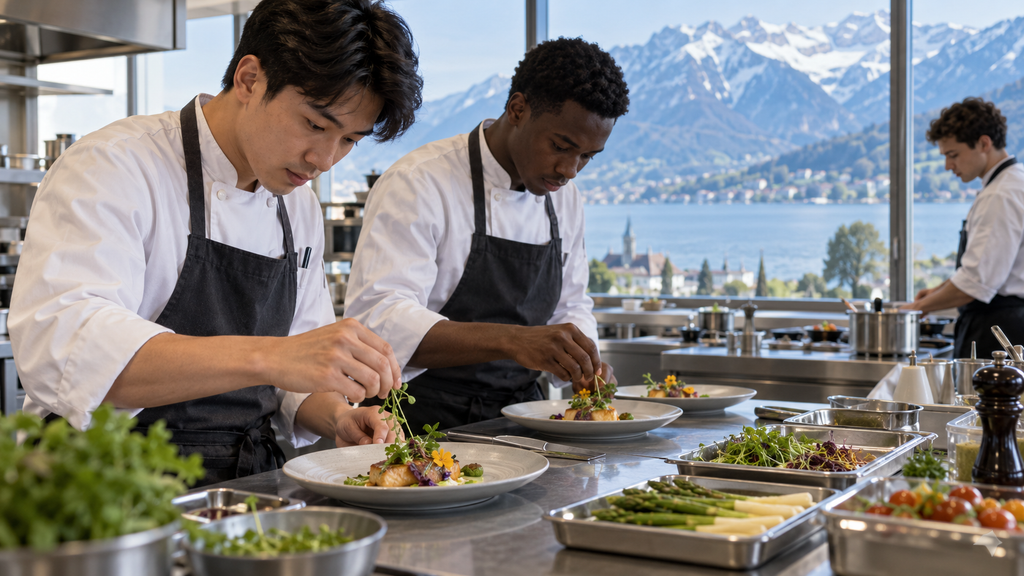
Culinary skills are closely connected to culture. Flavour preferences, dining habits and expectations around hospitality can vary considerably between countries and regions. Studying alongside classmates from different backgrounds, often with instructors who have international industry experience, will without question expose students to:
- Different culinary traditions and approaches to ingredients
- Customer expectations across luxury and casual dining
- Cultural differences in service and communication
- Different approaches to pacing and the overall guest experience
These experiences can help students become more adaptable in multicultural kitchens and hospitality environments. This can be particularly valuable for graduates who want to work with international hotel groups, restaurants or hospitality brands operating across different markets.
Campus location can also shape the overall student experience. Some Swiss culinary schools are based outside major cities, including in smaller towns and mountain or lakeside locations. When comparing programmes, students should therefore consider practical factors such as accommodation, transport, social life and access to hospitality employers alongside the curriculum itself.
The right study environment should support both professional development and day-to-day student life, making location an important part of comparing culinary programmes in Switzerland.
5. Industry Connections and Employer Access
Swiss culinary education gives students direct exposure to employers and industry professionals before they graduate. Rather than focusing on Switzerland’s broader hospitality reputation, this advantage is about the practical opportunities students gain to build experience, make professional connections and prepare for employment.
Depending on the school and programme, employer access may include:
- Guest lectures and masterclasses with chefs and hospitality executives
- Career fairs and recruitment events
- Internships with hotels, restaurants and food businesses
- Industry projects based on real business challenges
- Mentoring from experienced professionals
- Alumni networks across hospitality, fine dining and entrepreneurship
- Career services covering CVs, interviews and job applications
These opportunities help connect classroom and kitchen training with the realities of professional work. A guest chef may introduce students to a different kitchen philosophy or career path, while an industry project can provide experience working with commercial expectations, deadlines and client requirements.
Internships are particularly valuable because they allow students to apply their skills in a professional environment. They can also help students understand which areas of the industry suit their interests, whether that is restaurant kitchens, luxury hospitality, food entrepreneurship or another culinary career path.
Career fairs, alumni networks and recruitment events provide another route into the industry. Students can meet potential employers, learn what different organisations look for in graduates and begin developing professional relationships while they are still studying.
For a broader look at how these opportunities are built into Swiss hospitality and culinary education, you can explore Swiss Education Group’s schools, traditions and industry partnerships.
When comparing culinary schools in Switzerland, look beyond the number of partner logos on a website. Consider how those relationships translate into internships, projects, mentoring, recruitment opportunities and career support that students can actually access.
6. Culinary Study Paths From Diplomas to Master’s Degrees
Students have different goals when it comes to qualifications, study length and career direction. One advantage of culinary courses in Switzerland is the variety of study pathways available, making it possible to find an option that fits your timeline, budget and professional goals.
Depending on the school and programme, common pathways include:
- Professional diplomas: Often completed in around one year and may include an internship. These can suit students looking for a relatively fast route into professional kitchens.
- Bachelor’s degrees: Typically take around three years and may include multiple internships. Programmes often combine practical culinary training with business and hospitality subjects, providing a broader foundation for students pursuing a culinary arts degree in Switzerland.
- Master’s degrees: Often completed in around one year and generally designed for graduates with relevant previous education. These programmes may focus more heavily on culinary business, entrepreneurship, management and leadership.
Programme length, internship requirements and entry criteria vary between institutions, so it is important to compare the structure of individual courses carefully. This flexibility gives students the option to pursue anything from focused professional training to a more comprehensive academic qualification.
Is Switzerland the Right Place to Study Culinary Arts?
Switzerland can be an excellent choice for students who want an internationally oriented, professionally structured culinary education, but it isn’t automatically the right fit for everyone, so do weigh the decision carefully rather than assuming reputation alone settles it.
A few practical factors to consider before committing:
- Language and format. Confirm whether programmes are taught in English or require local language skills, and whether the format (full-time, diploma versus degree) matches your timeline.
- Qualification type. A one-year diploma, a three-year bachelor’s degree and a one-year master’s lead to different outcomes. It’s worth checking whether your target qualification is recognised in the country where you eventually want to work.
- Cost. Tuition and living costs in Switzerland are generally higher than in many other culinary study destinations, so students should consider these carefully in relation to their budget and expected career outcomes.
- Internship expectations. Understand how many internships are included, whether placement is guaranteed or dependent on availability, and where placements typically occur.
- Career goals. A student aiming for independent restaurant ownership may value business modules more heavily than one aiming purely for classical kitchen technique.
Rather than comparing schools on reputation alone, it’s worth asking a few direct questions of any programme you’re considering: Does the curriculum match your intended career path? How much of the training is hands-on versus classroom-based? Do quoted fees include accommodation and meals, or are those separate costs to budget for? Answering these upfront tends to give a clearer picture of value than a ranking alone.
None of this makes Switzerland a poor choice. It simply means the decision should be based on your specific goals, budget and circumstances, not on prestige alone.
FAQ – Studying Culinary Arts in Switzerland
1. Is Switzerland a good place to study culinary arts?
Yes, for many students. Switzerland combines hands-on kitchen training with business education and an internationally diverse student body, though cost and programme format should factor into the decision.
2. Why is Switzerland famous for hospitality and culinary education?
Switzerland has a long-standing hospitality tradition and hosts a concentration of internationally recognised hospitality and culinary schools, creating a broader professional ecosystem around the industry.
3. What culinary qualifications can I study in Switzerland?
Options typically range from one-year professional diplomas in culinary or pastry arts to three-year bachelor’s degrees and one-year master’s programmes in culinary business management.
4. Do culinary schools in Switzerland include internships?
Many do. As one example, CAAS diploma programmes include one internship, while its bachelor’s programmes include two, though internship structure varies by school and programme.
5. Can international students study culinary arts in Switzerland?
Yes. Many Swiss culinary schools recruit internationally, and English-taught programmes are widely available. Students should check individual language requirements before applying.
6. Do I need professional kitchen experience before studying culinary arts?
Often not. Many entry-level diploma and bachelor’s programmes accept students without professional kitchen experience, while advanced programmes may have additional academic or professional entry requirements.
7. What careers can a culinary arts degree lead to?
Graduates commonly move into professional kitchens, pastry arts, hotel and restaurant management, food entrepreneurship, culinary consulting, and food media, among other paths.