Where to Study a Business Bachelor’s in an International Finance and Diplomacy Hub
When students and families are comparing business schools in Europe, the city where they choose to study may not be the first element that springs to mind. However, it can truly shape the full value of your degree. It determines which employers are nearby, what an internship might involve, and the people you meet who become friends, associates and enablers of your future career.

Young people looking to study business in Europe often focus on the modules in the programme description or the institution’s rankings, while the potential for broad networking is often underestimated.
Yet a unique group of cities exists that offer a powerful mix of both international finance and diplomacy within the same professional environment. That combination can give a business bachelor’s in Europe a distinctive edge for students interested in banking, trade, policy, innovation or international organisations. This guide looks at the campuses connected to those ecosystems and the practical details to check.
Business Schools in Europe’s Finance and Diplomacy Hubs
Each of the following institutions have been chosen for the mix of industries and career access they offer business bachelor graduates, all from within their unique locations. We feature three separate campuses of EU Business School in Geneva, Barcelona and Munich as well as ESCE Business School and the International University of Monaco.
EU Business School Geneva
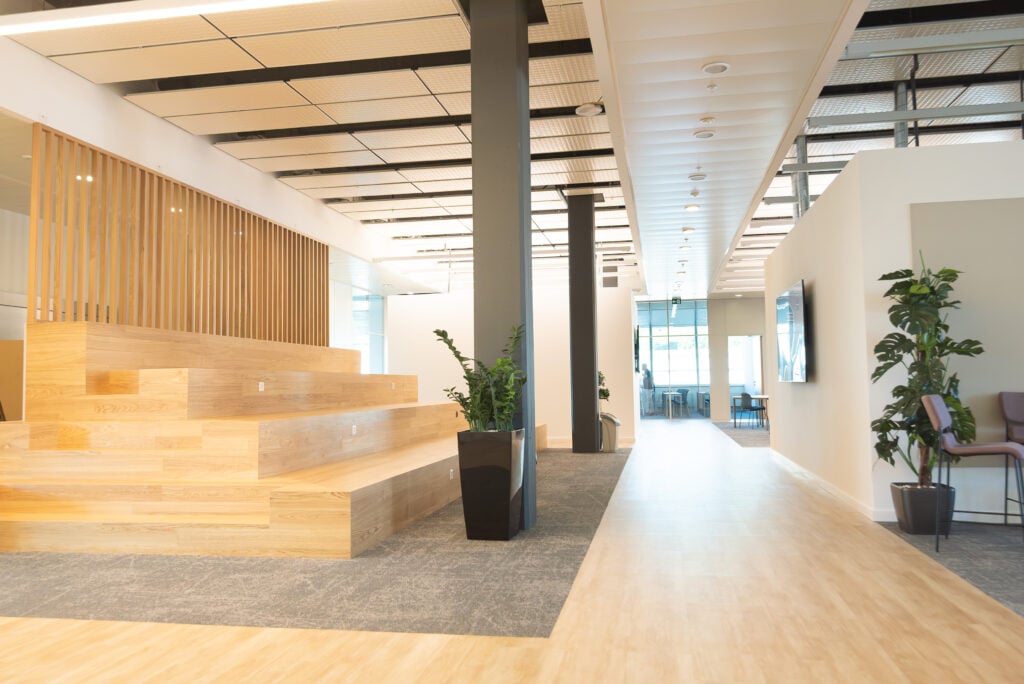
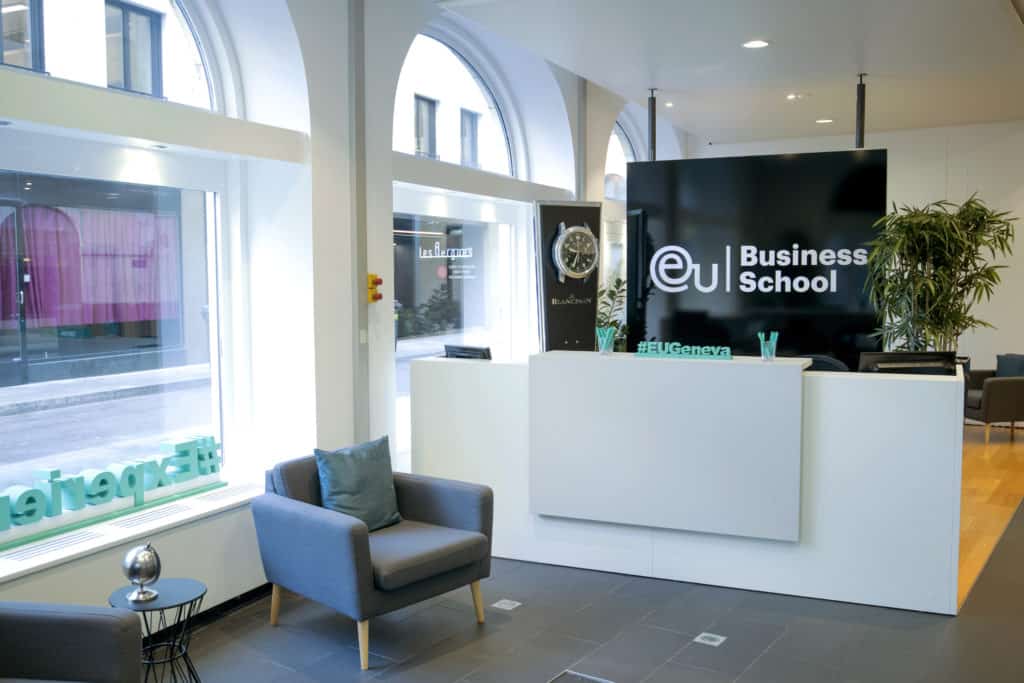
EU Business School Geneva has two modern campus buildings in Pont Rouge and Acacias, close to businesses, financial institutions and international organisations. Its location places students near private banks, commodity traders, watchmakers and luxury brands, as well as the United Nations and its associated organisations. This makes it the closest match for students seeking a business school in Geneva that connects finance with diplomacy in a compact, diverse setting.
Its programmes are taught in English and include a Bachelor of Business Administration, BSc in Business Finance and BA in International Relations. Other routes cover Digital Business, Design and Innovation, Artificial Intelligence for Business, Sports Management, and Leisure and Tourism Management. Foundation and bridging programmes support students who need additional preparation.
With around 350 students, the Geneva campus offers a small, personal learning environment that can feel reassuring during a first year away from home. Swiss passport holders and residents qualify for a reduced domestic tuition rate.
EU Business School Geneva could benefit students interested in finance, international organisations or careers linked to diplomacy who want a practical business education rather than a politics course. Read our EU Business School Geneva guide for more information.
EU Business School Barcelona
Barcelona offers a different commercial setting. The city has established strengths in entrepreneurship, startups, tourism and international trade, along with a large international student community. This makes a business school in Barcelona appealing to students who want a lively setting with strong links to newer industries.
EU Business School follows a similar programme structure across all its campuses, with courses taught in English, and Barcelona also offers a Bachelor of Business Administration, BA in International Relations and BA Artificial Intelligence for Business. Other programmes in Leisure & Tourism Management and Digital Business, Design & Innovation link well to Barcelona’s reputation for tourism and startups.
As EU Business School’s largest campus, Barcelona offers a vibrant student community and a wide range of activities and programmes. There are plenty of opportunities to meet new people, get involved in campus life and build an international network. In Barcelona, and across all EU campuses, class sizes are small to encourage interaction and collaboration, while students receive ongoing support throughout their academic journey, from academic counsellors to the dedicated Career Services Department.
Barcelona may work well for a student interested in entrepreneurship, marketing, tourism or digital business. Living costs can be lower than in Switzerland, although accommodation remains a major expense. Learn more in the EU Business School Barcelona guide.
EU Business School Munich
Munich is the corporate and industrial centre of southern Germany. Automotive, engineering, insurance and technology companies form a substantial employer base. The EU Business School campus is located directly opposite another of Munich’s famous features: the Theresienwiese fairground, where the annual Oktoberfest is held.
Bachelor’s programmes at the Munich campus are taught entirely in English, so German isn’t required for admission. However, learning the language can certainly open up internship and career opportunities. Students should check the level of German expected by employers in their preferred field and make plans to make a start on or polish their German skills to take full advantage of the opportunity.
With around 800 students, the Munich campus combines a close community with a varied student experience and strong links to local companies. It is well-matched to those interested in corporate management, industry or technology.
While it has fewer direct links to diplomacy, its location offers access to major employers in one of Germany’s strongest regional economies. Read our EU Business School Munich guide for more details.
Studying Across More Than One Campus
EU Business School students may be able to complete part of their bachelor’s programme at another location. The Digital Campus also supports remote study. This flexibility allows for combining studying a finance module in Geneva with entrepreneurship in Barcelona.
Before relying on a transfer plan, clarify the practical details:
- Do credits move automatically, or does each transfer require approval?
- Does tuition change, and which campus rate applies after the move?
- Will the student need a new visa or residence permit?
- How long does immigration processing usually take?
- Who finds and arranges accommodation in the second city?
Written answers direct from the institution can help calculate the full cost, and timetable details.
ESCE Business School, Paris
Paris connects international business students with corporate headquarters, banks, trade organisations and public policy networks. ESCE Business School belongs to OMNES Education and focuses strongly on international commerce at its Paris La Défense campus.
Its International Bachelor lasts three years and covers international business and trade, with pathways that develop commercial and management skills. Students considering an international business bachelor’s can choose a French or English track and may spend up to two semesters abroad. International immersion and professional experience are central to the programme. Before applying, review the relevant language track, mobility period and internship format.
The wider campus brings together several disciplines and schools, creating a busier environment than Geneva and a broad peer network. Paris is expensive, but it places students close to many business and policy organisations.
ESCE is ideal for students seeking an internationally focused business degree in Paris who are comfortable studying in a large metropolitan setting.
International University of Monaco
Monaco is a specialised commercial hub shaped by private finance, luxury, tourism, yachting and international trade. The International University of Monaco offers a three-year Bachelor of Business Administration taught in English. The curriculum covers management, marketing, finance and entrepreneurship through practical projects, internships and professional networking. Students must also spend one semester abroad, so check the current study plan before choosing a specialisation.
The small, highly international community can help students build connections across cultures. The institution is recognised by the Government of Monaco and holds AACSB accreditation. Its location also places students close to businesses in finance, luxury and tourism. However, accommodation and daily living costs should be included in any comparison.
In summary, when considering any of these business-focused Bachelor options, a strong indication of a good fit for you will align the city’s professional opportunities with your academic interests and future career goals.
What to Check Before You Apply to a Business School
City appeal matters, but academic quality, career support and practical arrangements deserve equal attention. Use these checks to assess each course consistently and understand what the full study experience may involve.
- Language of instruction: An English website doesn’t guarantee that every module is taught in English. Verify local language requirements and accepted evidence such as IELTS, TOEFL, Cambridge English or a school qualification taught in English.
- Class size and teaching: Review average class sizes, contact hours and how many lecturers work in industry. Look for assessments involving real business cases, company visits or consulting projects.
- Careers and internships: Find out who sources placements and what employer events take place on campus. For employment statistics, review the survey period, response rate and whether further study counts. Use the institution’s current page for ratings such as QS Stars.
- Total cost: Add tuition, enrolment charges, housing, food, health insurance, materials and travel home. For example, Geneva is among Europe’s costliest cities, so living expenses may outweigh a tuition difference. Ask about scholarships, early payment reductions and domestic rates.
- Admissions and visas: Applications typically include an IB, A Levels or national diploma, transcripts, proof of English, a motivation letter and an interview. GMAT and GRE scores usually aren’t needed. Visa, residence and work rights after graduation differ by country.
This information helps students and families assess the complete study route, from entry requirements to the final qualification. Our guide to applying to university abroad also explains how universities may assess international school qualifications.
Frequently Asked Questions
Which business schools are located in international finance and diplomacy hubs?
EU Business School Geneva has the clearest combination of finance and international organisations. ESCE in Paris and IUM in Monaco connect students with other specialised corporate, policy and financial networks, while EU Business School Barcelona and Munich offer strong entrepreneurial and industrial environments.
Can I move between campuses during my bachelor’s degree?
EU Business School allows campus mobility on eligible routes, but students should check credit approval, tuition, visa requirements and accommodation before planning a move. ESCE and IUM are separate schools.
Which bachelor’s degree suits a career in international organisations?
A BA in International Relations can be the most direct option, while a BBA or finance degree may lead towards operations, partnerships, trade or financial roles. Students should compare modules, language study and internship access against the jobs they hope to pursue.
Do I need a GMAT or GRE to apply for a bachelor’s?
Usually, no. Business bachelor’s applications generally focus on school qualifications, transcripts, English proficiency, a motivation letter and sometimes an interview. Requirements can differ by programme and applicant background.
Is EU Business School the same institution in Geneva, Barcelona and Munich?
Yes. Geneva, Barcelona and Munich are campuses within EU Business School, along with its Digital Campus.
Which EU Business campus is best for corporate and technology careers?
Munich has the strongest local employer base in technology, engineering and automotive industries. Barcelona can be attractive for startups, digital business and entrepreneurship.
Do I need to speak French, Spanish or German to study at EU Business School?
The programmes covered here are taught in English, so the local language isn’t required for classroom study. Learning French, Spanish, Catalan or German can still improve daily life and widen internship options.
Articles
Explore more articles about business education and studying in Europe. From comparing international business schools and choosing the right degree to understanding admissions and career opportunities, find practical advice and expert insights to help students and families plan their educational journey.