Hospitality Degree in Switzerland: Study Hospitality Management at SHMS
Selecting the right degree after attending an international school is an important milestone. If you’ve grown up in a multicultural environment, you’ll likely be looking for a programme that combines an international outlook with practical expertise and strong long term career prospects.
For decades, Switzerland has set the benchmark for hospitality education, and Swiss Hotel Management School (SHMS) is widely recognised as one of the country’s leading institutions. With the introduction of its federally recognised Swiss Professional Degree in Hospitality Management, SHMS now offers a qualification supported by the Swiss government. This guide explores the programme, explains the significance of this recognition, and highlights the career opportunities available to graduates.
Why Study for a Hospitality Degree in Switzerland?
Switzerland has established itself as the global centre of hospitality education through more than a century of excellence. Since the late nineteenth century, Swiss institutions have advocated an educational philosophy that combines academic study with practical experience. This is an approach that continues to shape hospitality education around the world today.
Families continue to choose hospitality schools in Switzerland for several compelling reasons:
- A long track record. Many institutions have trained hospitality professionals for over a century.
- Strong industry ties. Schools work closely with hotel groups, event companies and luxury brands.
- An international student body. Classrooms typically include students from dozens of nationalities.
- English-taught programmes. Most degrees are delivered in English, with the option to pick up French or German alongside.
While Switzerland enjoys an outstanding reputation for hospitality education, each institution offers a distinctive learning environment, teaching philosophy, and fee structure. Understanding what a hospitality management degree includes is definitely an important first step before comparing individual schools.
What Does a Hospitality Management Degree Include?
At its core, a hospitality management programme is a business degree with a specific lens. You’ll study the same subjects you’d find in most business schools, finance, marketing, human resources, strategy, but everything is applied directly to hotels, events, tourism and service industries.
What sets these degrees apart from a standard business qualification is the balance between classroom learning and hands-on practice. A typical hospitality management degree structure includes:
- Business fundamentals: accounting, marketing, operations and leadership.
- Hospitality-specific modules: revenue management, food and beverage operations, guest experience design.
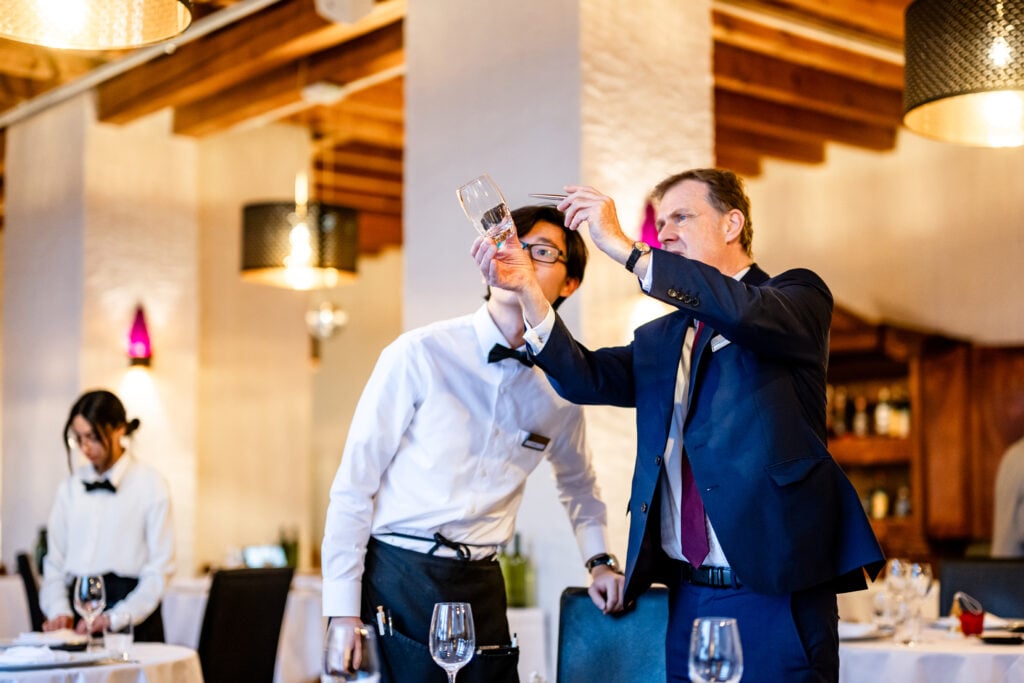
- Practical training: built into the timetable through on-campus outlets or real operational shifts.
- Industry placements: paid work experience with real employers before graduation.
- Language study: multilingual staff are in high demand across the sector.
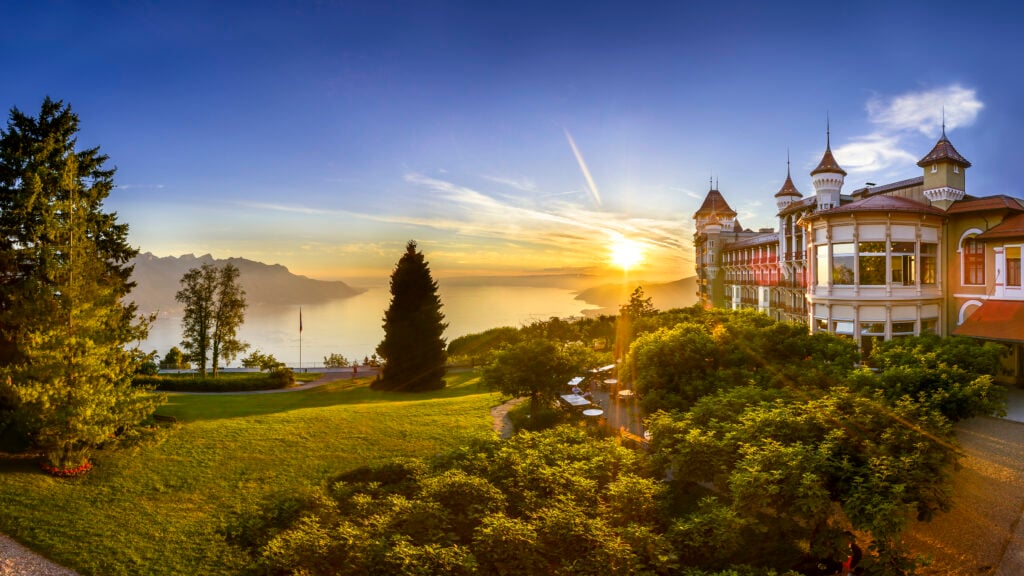
The balance between these elements varies from one institution to another. At SHMS, for example, students study within beautifully restored former palace hotels, creating an immersive learning environment that reflects the standards and atmosphere of the hospitality industry itself.
Hospitality Management Programmes at SHMS
Swiss Hotel Management School (SHMS) is one of Switzerland’s most established hospitality institutions and is consistently recognised among the world’s leading schools for hospitality and leisure management. Alongside its Bachelor’s programmes, SHMS now offers a Swiss Professional Degree that leads to the Advanced Federal Diploma of Higher Education.
Designed with international school graduates in mind, the programme is delivered entirely in English, allowing students to begin their studies without prior fluency in French or German. Those wishing to broaden their language skills can continue studying either language alongside their core modules. With students representing more than 60 nationalities, the campus provides a genuinely international learning environment that many international school graduates will find both familiar and welcoming.
The programme also offers two study pathways, allowing students to choose an approach that best suits their preferred learning style. One pathway places greater emphasis on academic study before internships begin, while the other introduces practical industry experience at an earlier stage.
SHMS Accreditation and Degree Recognition
SHMS has received official recognition from the Swiss government as an École Supérieure. This means the Swiss State Secretariat for Education, Research and Innovation (SERI) has evaluated the school’s curriculum, teaching quality, and industry relevance, confirming that the programme meets Switzerland’s national standards for higher professional education.
With this, SHMS is authorised to award the Advanced Federal Diploma of Higher Education. The qualification is positioned at EQF Level 6, making it broadly comparable to Bachelor’s level and recognised throughout Europe through its alignment with the European Qualifications Framework.
- A diploma that employers across Switzerland and the EU will recognise without needing extra explanation.
- Smoother access to further study or employment in EU countries.
- Eligibility for financial support that’s only available to federally recognised programmes, which we’ll cover in the costs section below.
It is important to distinguish this qualification from the SHMS Bachelor of Arts. Federal recognition confirms the quality and national standing of the Advanced Federal Diploma, while the Bachelor’s degree remains a separate qualification that is co awarded with the University of Derby in the United Kingdom. Students may choose to complete both qualifications through the progression pathway described below.
Programme Structure, Specialisations and Internships
The programme is carefully structured to alternate academic study with professional experience, allowing students to apply what they learn in real workplace settings. Over the course of their studies, students complete two paid internships, providing close to a year of industry experience before graduation. This combination of classroom learning and practical training gives graduates valuable professional exposure from the outset of their careers.
Students can choose from three specialisations, each designed to support different career ambitions within the hospitality industry:
- Hospitality Management, for students aiming at hotel and resort operations or general management roles.
- Event Management, for those drawn to planning and running conferences, weddings, festivals or corporate events.
- Design Management, for students interested in the design side of hospitality, from interiors to guest experience concepts.
Across all three pathways, leadership, innovation, and sustainability remain central themes, reflecting the evolving priorities of the global hospitality sector. Students also have the opportunity to continue studying French or German, strengthening both their experience of living in Switzerland and their future career prospects across Europe.
The internship component forms a cornerstone of the programme rather than an additional requirement. Supported by SHMS Career Services, students gain professional experience with established hospitality employers while developing practical skills, expanding their professional networks, and refining their chosen area of expertise. By graduation, they leave with a combination of academic knowledge, industry experience, and a clearly defined professional focus.
What Qualifications Can SHMS Students Earn?
Understanding how the qualifications are awarded helps clarify the progression available through the programme. Rather than receiving all qualifications simultaneously, students earn each award as they advance through their studies.
Upon completing the Swiss Professional Degree, students receive the Advanced Federal Diploma of Higher Education, the federally recognised qualification outlined above. Those wishing to continue their academic journey can then progress to the final semester of the SHMS Bachelor’s programme. Successful completion of this top up pathway leads to two additional qualifications:
- A Bachelor of Arts from SHMS.
- A Bachelor’s degree from the University of Derby in the UK, since the SHMS Bachelor’s programme is co-awarded with Derby.
Students who complete both stages therefore graduate with three qualifications, each earned through a clearly defined progression pathway. The reduced tuition rates available to eligible Swiss nationals and residents also extend to the top up semester, further enhancing the value of the programme.
Costs, Scholarships and Local Advantages
Studying hospitality in Switzerland comes with a significant investment, with tuition fees varying between institutions according to their facilities, learning environment, class sizes, and industry partnerships.
One area in which SHMS distinguishes itself is the financial support available to eligible Swiss nationals and residents following its federal recognition. These benefits help make a globally respected hospitality education more accessible for families already based in Switzerland.
- Swiss nationals receive a 30% tuition discount, plus the possibility of additional funding through the AES Grant.
- C-permit holders, meaning permanent residents, receive a 20% discount.
- B-permit holders may receive a 15% discount, subject to approval from local authorities.
As eligibility requirements differ, particularly for B permit holders, prospective students should confirm the latest criteria directly with SHMS. For many Swiss based families, however, these reductions provide a valuable opportunity to access a federally recognised qualification at a considerably lower overall cost.
Career Opportunities After a Hospitality Degree
A hospitality management degree opens doors to far more than traditional hotel management roles. While many graduates choose careers within hotels and resorts, the leadership, commercial awareness, communication, and customer experience skills developed throughout the programme are highly valued across a wide range of industries.
Graduates from programmes like the one at SHMS typically move into roles across a wide spread of industries:
- Hotel and resort management, from boutique properties to global chains.
- Event and conference management, including corporate and cultural events.
- Luxury retail and brand management, where service standards matter just as much.
- Airlines, cruise lines and broader travel and tourism operations.
- Guest experience and customer relations roles well outside hospitality itself.
A hospitality qualification also supports careers beyond hotel management, including luxury, events, travel and customer experience roles that draw on the same core training.
Automation and AI are changing plenty of industries, but the parts of hospitality built on genuine human connection, reading a room, resolving a complaint with empathy, are hard to automate away. That’s part of why these skills hold their value over time. Students typically come away with sharper skills hospitality graduates develop, including communication, leadership and commercial awareness, valued well beyond hospitality itself.
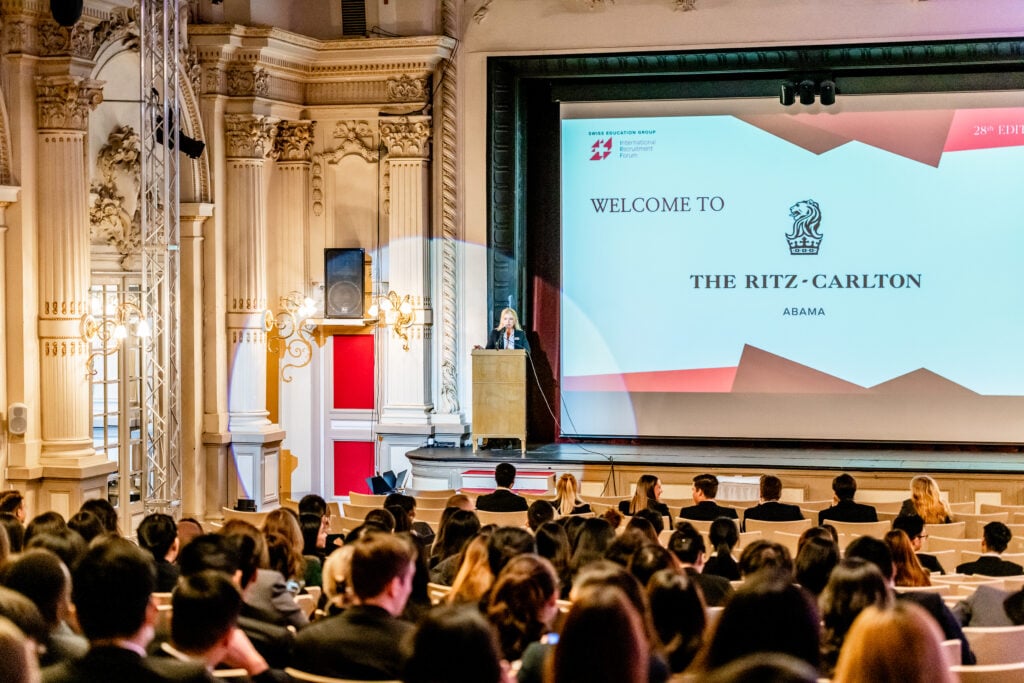
At SHMS, students also benefit from integrated career coaching, dedicated recruitment events, and an extensive international alumni network spanning five continents. Together, these resources provide valuable support as graduates take their first steps into the global hospitality industry.
Is SHMS the Right Hospitality School for You?
Choosing the right hospitality school is ultimately about finding the institution that best reflects your ambitions, preferred learning environment, and long term career goals. While SHMS offers several distinctive advantages, taking the time to compare your options will help you make a well informed decision.
When evaluating SHMS alongside other hospitality schools, consider the following factors:
- Learning environment. SHMS runs its campuses inside former palace hotels, including the Caux Palace, the Mont-Blanc Palace and the Belvedere, an immersive setting rather than a conventional lecture hall.
- International mix. With students from over 60 nationalities, the campus culture leans strongly international.
- Career support. Personalised coaching and dedicated recruitment events are built into the student experience.
- Financial fit. Tuition discounts for Swiss residents make a real difference to overall cost.
Families weighing up SHMS may also want to look at the wider reasons to choose SEG, the group SHMS belongs to, including its international outlook and industry-led approach to education.
How to Apply and What to Check Before Enrolling
Once you’ve decided that studying hospitality in Switzerland aligns with your academic and career aspirations, preparing your application carefully can help make the admissions process much smoother. While requirements differ slightly between programmes, there are several key areas worth reviewing before you apply.
Before submitting your application, take time to check the following:
- Confirm entry requirements. These vary by programme and can include academic transcripts, English proficiency and sometimes an interview.
- Check application deadlines. Intakes typically run more than once a year, so timing matters if you’re coordinating with school leaving dates elsewhere.
- Ask about visa requirements. Non-Swiss or non-EU/EFTA nationals will likely need a student visa, and processing times can be lengthy.
- Clarify your discount eligibility. Confirm exactly what documentation you’ll need to access reduced tuition rates.
- Review accommodation options. Campus-based schools like SHMS usually offer housing, but availability is worth checking early.
As admissions requirements, tuition fees, and deadlines may change from year to year, it’s always advisable to confirm the latest information directly with the SHMS admissions team before making your final decision.
Frequently Asked Questions
What is a hospitality degree in Switzerland?
A business-focused qualification, usually taught in English, combining classroom study with practical training in hotel, event, luxury or tourism settings.
What does SHMS stand for?
Swiss Hotel Management School, one of Switzerland’s established hospitality schools, based across campuses including the historic Caux Palace.
Is SHMS federally recognised in Switzerland?
Yes. SHMS is recognised as an École Supérieure by SERI, allowing it to award the Advanced Federal Diploma of Higher Education.
Is the Swiss Advanced Federal Diploma the same as a bachelor’s degree?
It’s equivalent to EQF Level 6, broadly comparable to Bachelor’s level, though distinct from the SHMS Bachelor of Arts, co-awarded with the University of Derby.
Does SHMS offer internships?
Yes. Students complete two paid internships built into the programme, close to a year of real experience by graduation.
What specialisations are available at SHMS?
Hospitality Management, Event Management, or Design Management.
How much does it cost to study hospitality in Switzerland?
Costs vary by school. At SHMS, Swiss nationals receive a 30% discount plus possible AES Grant funding, C-permit holders 20%, and B-permit holders up to 15%, subject to local approval.
What careers can you pursue after a hospitality management degree?
Hotel and resort management, event planning, luxury retail, travel and tourism, and customer experience roles across many industries.
Can international students study hospitality at SHMS?
Yes. Programmes are taught in English, with over 60 nationalities on campus.
What should students compare before choosing a Swiss hospitality school?
Campus environment, class sizes, industry connections, internship structure, career support, and total cost after any discounts.
Conclusion
The right hospitality degree should reflect your ambitions, learning preferences, and long term career goals. SHMS’s federal recognition further enhances the value of its qualifications while offering financial advantages for eligible Swiss based families.
With future hospitality industry trends shaped by digital innovation, sustainability, and changing guest expectations, programmes such as SHMS combine academic knowledge with practical experience to prepare graduates for successful international careers.