The Best International Schools in Lausanne for 2027
Lausanne is home to some of the finest international schools in Switzerland, attracting families from around the world who are looking for a high-quality education, multilingual learning, and globally recognised qualifications. From IB schools and bilingual programmes to boarding schools and private school options, the region has an impressive range of choices for both local and international families.
Whether you are moving to Vaud for the first time, comparing schools for your children, or simply trying to understand what is available for international students, this guide walks you through the different curricula, teaching approaches, and practical factors that tend to matter most when making this decision.
Top International Schools in and Near Lausanne
-
 Le Mont-sur-Lausanne, Switzerland
International School of Lausanne
- Ages Taught
- 3 – 18
- Teaching languages
- English, French
- Boarding
- Day School
- Number of children
- 900
-
 Lausanne, Switzerland
Ecole Nouvelle de la Suisse Romande
- Ages Taught
- 3 – 18
- Teaching languages
- English, French
- Boarding
- Day School, Full Boarding, Weekly Boarding
- Number of children
- 550
-
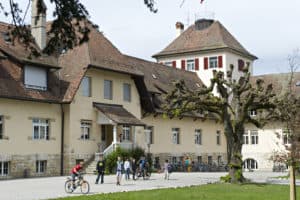
- Ages Taught
- 3 – 18
- Teaching languages
- English, French
- Boarding
- Day School
- Number of children
- 1,490
-
 Switzerland
La Côte International School Aubonne
- Ages Taught
- 3 – 18
- Teaching languages
- English, French
- Boarding
- Day School
- Number of children
- 400
Below are international schools in Lausanne and nearby parts of Vaud, including options in Le Mont-sur-Lausanne, Aubonne and Founex.
International School of Lausanne (ISL)
International School of Lausanne provides a continuous International Baccalaureate (IB) education, from the Primary Years Programme through to the Diploma Programme. It’s a not-for-profit school, which shapes how it reinvests fee income in facilities and staff. The school also offers a structured bilingual programme in the primary years, giving children strong foundations in English and French.
The campus was expanded in 2015 and now includes a large auditorium, sports halls and outdoor space, supporting an active after-school programme with well over a hundred clubs and activities on offer. ISL is particularly well suited to families who want a single, continuous international pathway from early years to university entry, without changing schools as their child gets older.
Ecole Nouvelle de la Suisse Romande (ENSR)
Founded in 1906, ENSR offers a choice of academic pathways, including bilingual education and internationally recognised qualifications. Older students choose between the Swiss Maturité and the IB Diploma, which gives families some flexibility when considering different university pathways.
ENSR also runs a boarding programme, providing an alternative to day schooling and supporting students who prefer a residential learning environment. Families considering Swiss or international university options, or seeking a school that combines academic flexibility with boarding, may find ENSR a suitable choice.
Ecole Internationale de Genève – La Châtaigneraie
This is the Vaud campus of the International School of Geneva, located in Founex, roughly twenty minutes from central Geneva and within reach of Lausanne for families who commute along the lake. It’s a bilingual school through to Year 9, after which students choose between an English-medium IGCSE and IB route or the French-medium Swiss Maturité.
With around 1,500 students enrolled each year, it’s the largest school on this list, and that scale brings a wide range of subject options, sports facilities and a well-established transport network covering parts of Geneva, Vaud and neighbouring France. Families who value a long institutional history and a broad choice of academic pathways, and who don’t mind a slightly longer commute from Lausanne, tend to find this a strong option.
La Côte International School Aubonne (LCIS)
LCIS offers a combination of British and international curricula, including the Early Years Foundation Stage, International Primary Curriculum, IGCSE and IB Diploma Programme. This provides students with a structured academic progression towards internationally recognised qualifications.
As part of the Nord Anglia group, the school also offers international partnerships in the performing arts, athletics and STEAM, which broaden the learning opportunities available to students. LCIS is particularly well suited to families seeking a British-influenced education with international academic pathways and opportunities for learning beyond the classroom.
Brillantmont International School
Brillantmont International School is an independent, family-run day and boarding school founded in 1882. It offers the full British secondary academic pathway, from IGCSEs through to A Levels, alongside a US High School Diploma programme also. Brillantmont provides small classes, personalised academic support and a close-knit international community.
Students benefit from STEAM education, creative arts, sports, Model United Nations and cultural activities. The school also encourages personal development through extracurricular opportunities, leadership activities and intercultural learning. Brillantmont is particularly well suited to families seeking a complete British secondary education, internationally recognised qualifications, individual attention and a supportive boarding environment.
Lausanne’s leading international schools offer varied curricula, languages and learning environments to meet the needs of different families.
How to Choose the Best International School for Your Child
Lausanne offers local and expatriate families a broad range of educational options, from preschools and bilingual day schools to international and boarding schools. When comparing them, focus on your child’s needs and your family’s long-term plans.
Consider the following factors when creating your shortlist:
- Curriculum: International schools may offer the IB, IGCSE or international A Levels. ISL provides a continuous IB pathway, while La Châtaigneraie in Founex offers IGCSE, followed by the IB DP or Swiss Matura.
- Language: Think about whether your child would benefit from English-medium, French-medium or bilingual education, particularly if you may move to another country later.
- School environment: Compare the school’s size, ethos, facilities, extracurricular activities and approach to student support.
- Location: Consider daily travel times carefully. La Châtaigneraie, for example, is approximately 40 minutes from Lausanne. Check each school for door to door bus services.
- Fees: Higher fees don’t necessarily guarantee academic success or a positive school experience. Check what tuition covers and budget for registration, transport, meals, activities and trips.
- Day or boarding provision: Most international schools near Lausanne are day schools, although schools such as ENSR offer boarding.
For families planning to remain long term in Switzerland, especially those who arrive with young children, the local school system is another option. Public schools in French-speaking Vaud follow the Plan d’études romand (PER), although transferring the same programme to another country might not be straightforward, so do look into this.
Once you have created a shortlist, visit each school with your child if possible. Ask whether taster days are available, as these can give your child first-hand experience of the teaching approach and school environment.
Curricula and Languages at International Schools in Lausanne
Curriculum choice is usually the first thing that narrows a shortlist, so it helps to know roughly what’s on offer before you start visiting schools.
- International Baccalaureate (IB): The IB can provide a continuous pathway from the primary years to the Diploma Programme. It’s the closest thing to a “portable” pathway if you expect to move again.
- Swiss Maturité: Usually centred on French-medium study in this region, with bilingual French-English options available at some schools. Families should consider how easily students can transfer from this qualification to another education system. It’s the best option if your child plans to complete tertiary study in Switzerland.
- French Baccalaureate: Although it is less common among the schools featured here, some French-curriculum schools elsewhere in the Lake Geneva region offer this qualification.
- British curriculum, IGCSE and A Levels: Familiar to British and Commonwealth families, and widely accepted by UK and international universities. Schools offering this route, such as Brilliantmont, usually build in strong French provision too.
- American and other international pathways: ISL offers its accredited US High School Diploma as an alternative to, or alongside elements of, the IB pathway. Availability is more limited than the IB or British routes in the Lausanne area.
None of these pathways is automatically the “right” one. If you’re expecting to relocate every few years you may lean towards the IB or a British curriculum for their international recognition, while if settling in Switzerland long-term, the Maturité may open more local doors.
Language of instruction is worth inquiring further about. Some schools teach almost entirely in English with French as a subject, while bilingual schools split teaching time between the two from an early age. If you’re looking for a highly regarded bilingual school in Lausanne, ask how much class time is taught in each language at each year level, as bilingual provision can vary considerably between schools.
Families researching IB schools across the Lausanne area should consider programme availability and how each school prepares students for the transition from earlier years and into different types of curricula when they don’t follow a particular continuum throughout.
Types of Schools in Lausanne
Before comparing individual schools, it also helps to understand the broad categories they fall into, since a single school can often belong to more than one.
- International schools: Built around portable, globally recognised curricula such as the IB or IGCSE. Best suited to families who expect to move to another country during their child’s education.
- Private schools in Lausanne: Fee-paying and independently run, whether or not they follow an international curriculum. Class sizes tend to be smaller than in the public system, with more resources for language support and extracurricular activities.
- Bilingual schools: Teach across two languages, usually French and English, though the balance varies. A practical middle ground for families who want their child to build genuine French fluency without giving up an English-medium education entirely.
- Boarding schools: A small number of schools around Lausanne, including ENSR and Champittet, offer weekly or full boarding. Boarding may work well for older students and families whose work involves frequent travel.
- Day schools: The majority of schools in the area, where children live at home and travel to school each day. This is the most common arrangement for families with younger children.
These categories overlap more often than not. A school can easily be private, international and bilingual all at once, so it’s the specific combination that matters more than any single label.
Practical Considerations when Choosing an International School
Lausanne’s reputation is reinforced by its position as a strong economic region. Just along the lake in Vevey, Nestlé’s global headquarters attracts a large community of international professionals, while Lausanne itself hosts the International Olympic Committee (IOC) and numerous multinational organisations. This concentration of international companies has created strong demand for high-quality international schools, both for long-term residents and expat families. As a result, many schools have expanded over the last 15 years.
For many families, Lausanne’s location broadens the options. A significant number of professionals commute between Lausanne and Geneva, and as a result, families may also want to consider some of the best schools in Geneva, particularly those close to the Vaud/Geneva border. However, the A1 highway linking towns and cities along the lake is often choked at rush hour, so location and commuting time are important considerations when making the final school choice.
The region offers a wide range of programmes, with many schools also providing a bilingual French-English curriculum. However, bilingual education varies between schools, with each following its own structure, emphasis and approach. This can also make the decision a difficult one when parents aren’t sure whether they plan to remain in Switzerland for the short or long term, and how important local language acquisition will be.
This guide to schools in Lausanne is designed to help you make that difficult choice. You’ll find our collection of articles on Lausanne’s international schools and family life in Vaud, giving you the insights you need to make a well-informed decision with greater confidence.


How much do International Schools in Lausanne Cost?
Fees vary a fair amount depending on the school, your child’s age, the curriculum, and whether you’re looking at day or boarding places. Published day-school fees in and around Lausanne start in the mid CHF 10,000 range for some early-years programmes and rise to approximately CHF 39,000 for upper secondary education. Full-time compulsory-school provision generally starts above the lowest early-years figure.
Boarding costs considerably more, with weekly or full boarding fees starting at approximately CHF 65,000 per year. At the top end of the market, fees at schools such as Le Rosey in Rolle can exceed CHF 150,000 annually.
The published tuition figure rarely covers everything. Most families end up budgeting for additional charges, including:
- application and registration fees
- school meals
- transport to and from school
- boarding, where applicable
- extracurricular activities and clubs
- school trips
- examination fees for IGCSE, IB or other external qualifications
It’s sensible to ask each school for a full breakdown before you commit, rather than relying on the headline tuition figure alone. Fee schedules also change from year to year, so always check directly with the school for current rates ahead of applying.
Academic support when moving to a new school in Lausanne
Starting at a new school in a new country can be a major adjustment, particularly when a child is changing curricula, learning in a new language, joining midyear or adapting to unfamiliar assessment methods. Early academic support can help close knowledge gaps, build confidence and make the transition smoother.
TutorsPlus provides personalised support across the IB, IGCSE, A Levels, American and French curricula, as well as university admissions guidance. Flexible online sessions can be arranged around school timetables and other commitments.
Conclusion
Lausanne offers a strong range of options for families looking at international schooling, whether that means an IB programme, a bilingual environment, a private day school, or a boarding option for older students. This variety gives families more flexibility, but it also makes careful comparison important.
The right school will depend on your child as an individual, your family’s long-term plans, language priorities, and practical factors like location. Taking the time to visit schools, compare curricula thoughtfully, and ask the questions that matter most to your family will go a long way towards making a decision you feel confident about.
Frequently Asked Questions
Are public schools in Lausanne free for international students?
Yes. Public schools in Lausanne are funded through the Swiss education system and are generally free for residents, including international families living in the canton of Vaud.
How much do private schools in Lausanne cost?
Fees vary considerably depending on the school, curriculum, and whether boarding is included. Some private schools charge under CHF 20,000 per year for primary years, while elite boarding schools can exceed CHF 100,000 annually.
Is it difficult to get a place in a school in Lausanne?
Places at the most sought-after international schools can be competitive, particularly in popular year groups. It is worth applying early and arranging school visits as soon as you can.
What is the language of instruction of schools in Lausanne?
Schools in Lausanne teach in English, French, or a bilingual French-English format. Most international schools also offer additional language support for students arriving from other systems.
Which curriculum is best for expat families in Lausanne?
The best curriculum for expat families in Lausanne is typically an internationally portable programme such as the IB, IGCSE, A Levels, or an American curriculum. These options travel well between countries, are recognised by universities worldwide, and make transitions between school systems considerably smoother for children who may relocate more than once.
When should parents apply to schools in Lausanne?
Families relocating to Lausanne should ideally begin researching schools 6 to 12 months before their planned move. The most sought-after international schools can have waiting lists, and starting early allows time for school visits, applications, and any entrance assessments that may be required.
Which are the best international schools in Lausanne?
Well-regarded international schools in and near Lausanne include the International School of Lausanne, Ecole Nouvelle de la Suisse Romande, Brillantmont, La Côte International School Aubonne and Ecolint – La Châtaigneraie in Founex.
These schools offer a mix of IB programmes, bilingual education, private schooling and internationally focused learning environments.